
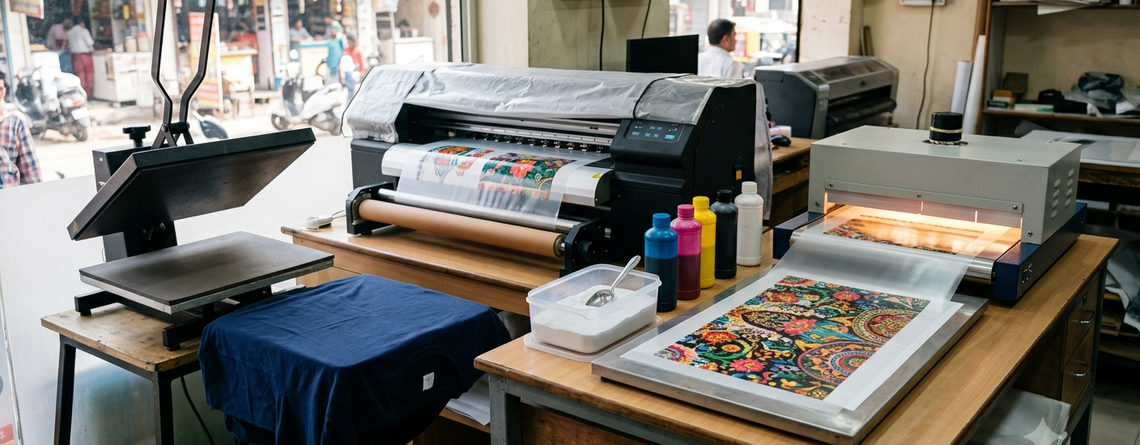
DTF Transfer Durability: Proven Guide to Long-Lasting Prints
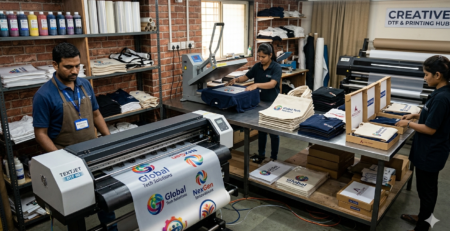
DTF printing has become a practical choice for custom T-shirts, hoodies, uniforms, bags, and other garments. But one question comes up again and again: how long does a DTF transfer actually last?
The answer depends on more than the printer.
Chat with our team for printers, consumables, film, powder and business setup guidance.
The film, DTF ink, hot melt adhesive powder, curing temperature, heat-press settings, fabric, and washing method all affect the final result.
In simple terms, DTF transfer durability can be very good when the complete process is done correctly. A transfer that is poorly cured or badly pressed can start showing problems much sooner.
Some published DTF guidance puts typical durability around several dozen washes when the correct materials and application process are used. FESPA also recommends careful washing practices to extend the life of DTF garments.
So, instead of asking only “Which powder is best?”, it is better to ask: “Is the complete DTF process producing a properly bonded transfer?”
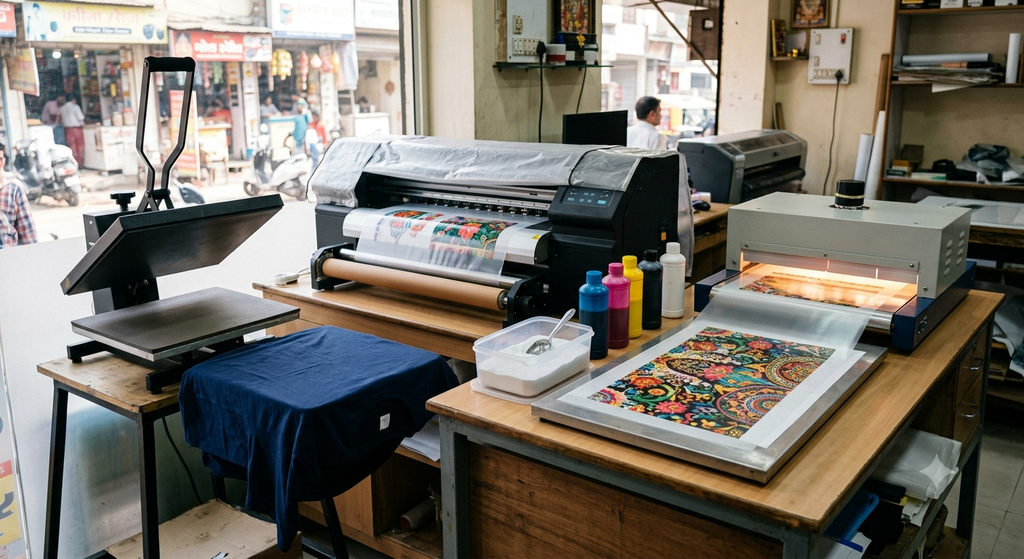
Introduction to Hot Melt Adhesive Powder in DTF Printing
Hot melt adhesive powder is one of the most important materials in DTF printing.
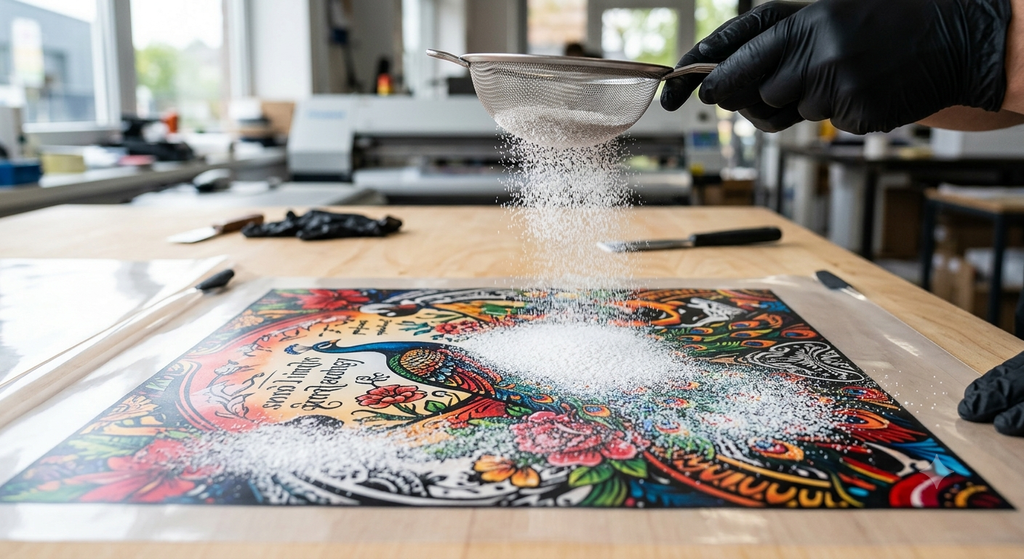
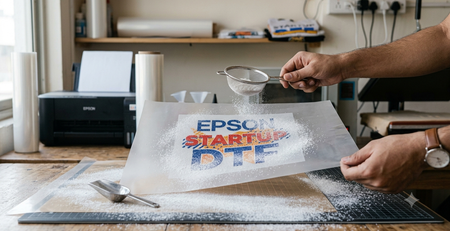
The basic process is simple. The design is printed onto PET film using DTF ink. While the print is still ready for powder application, hot melt adhesive powder is spread across the printed area.
The excess powder is removed, and the remaining powder is cured.
During curing, the powder melts and forms the adhesive layer that helps the printed design bond with the garment.
That adhesive layer has a direct connection with DTF transfer durability.
If the powder does not melt properly, the transfer may not bond well. If too much powder is applied, the finished print may feel heavier than expected. If the powder is not distributed evenly, some areas can have weaker adhesion than others.
FESPA’s DTF guidance also describes applying adhesive powder evenly, removing excess powder, and baking the powder before transferring the print to fabric.
Why Hot Melt Powder is Essential for DTF Transfers
Think of hot melt powder as the bonding layer between the printed design and the fabric.
Without proper adhesive powder, the ink sitting on the film cannot create the same type of fabric bond required for a normal DTF transfer.
This is why DTF transfer durability is closely connected with powder quality and curing.
A good transfer should remain attached when the garment is stretched normally, worn regularly, and washed according to recommended care instructions.
However, powder alone cannot solve every problem.
For example, if the heat press temperature is incorrect, the powder may not bond properly. The same can happen when pressure is too low or pressing time is too short.
This is why two printers using the same powder can sometimes get different wash-test results.
Key Features to Look for in Quality DTF Adhesive Powder
When buying DTF hot melt powder, do not look only at the price per kilogram.
Check these points:
1. Consistent particle size
A consistent powder helps create a more even adhesive layer.
2. Good melting behavior
The powder should melt according to the supplier’s recommended curing conditions.
3. Strong fabric adhesion
The final transfer should bond well to the intended garment.
4. Suitable hand feel
A good transfer should not feel unnecessarily thick or rubbery.
5. Wash resistance
This is one of the most important factors when testing DTF transfer durability.
6. Compatibility
Different powders may perform differently depending on the ink, film, fabric, curing method, and press.
A practical test is to use the same artwork, film, ink, fabric, and heat-press settings while comparing different powders. That gives a more useful result than comparing marketing claims.
Top Hot Melt Adhesive Powder Brands Available in India
The Indian market has several suppliers and sellers offering DTF hot melt powder. Availability and pricing can change, so buyers should check the current specifications before placing a large order.
Living Lion
Living Lion offers TPU hot melt powder for DTF printing. Its published product information lists a 1 kg pack and describes the material as suitable for DTF PET films.
For a production setup, check the particle size, softening point, recommended application method, and minimum order quantity before purchasing.
The important point is consistency. If a printer is producing customer orders every day, consistent powder behavior is more useful than simply choosing the lowest price.
BhartiPrint (Bharti Creation)
BhartiPrint lists TPU hot melt powder for DTF heat-transfer printing. Its product information highlights wash resistance and compatibility with different textile materials.
For someone testing DTF transfer durability, a product such as this can be included in a controlled side-by-side test.
Print the same artwork on identical film, use the same garment type, and keep curing and pressing conditions consistent.
Desmat Sublimation (Koncept)
Desmat Sublimation, also known as Koncept in the supplied brand list, is another seller to consider when comparing DTF consumables.
When comparing powders, focus on measurable details rather than brand names alone.
Ask about particle size, curing requirements, fabric compatibility, packaging, and batch consistency.
3alps Digital Printers
3alps Digital Printers is another name appearing in the Indian DTF powder market.
For a small print shop, availability can be just as important as theoretical performance. A powder that is easy to source consistently can make production easier.
Still, conduct your own wash test before moving a new powder into regular customer production.
Shagun Enterprise
Shagun Enterprise is another supplier name found in the Indian DTF consumables market.
For local businesses, supplier communication and availability may matter when buying consumables repeatedly.
The safest approach is to test a sample first rather than immediately buying a large quantity.
InksfyDTF (Etsy India)
InksfyDTF is another marketplace-based option for buyers looking for DTF materials in smaller quantities.
Marketplace sellers can be useful when you want to test a product without committing to a large bulk purchase.
Check product specifications, seller information, reviews, shipping costs, and return conditions before ordering.
Kamicraftsales (Etsy India)
Kamicraftsales is another online marketplace seller that can be considered for DTF-related materials.
Again, the best test is your own production sample. A powder that works well on one printer and garment combination may not behave exactly the same way on another setup.
Price Range of DTF Hot Melt Powder in India (per kg)
Prices vary according to grade, particle size, packaging, supplier, and order quantity.
A practical market range is approximately:
| Quality level | Approximate price per kg |
|---|---|
| Economy | ₹450–₹800 |
| Standard | ₹700–₹1,200 |
| Premium | ₹1,100–₹2,000+ |
These are approximate ranges, not fixed market prices.
For example, Living Lion’s published listing has shown hot melt powder around ₹450/kg, while BhartiPrint has listed TPU hot melt powder around ₹500/kg.
Bulk quantities can have different pricing.
Do not choose powder only because it is cheaper. If a low-cost powder causes peeling or poor bonding, the cost of rejected garments can easily become higher than the original saving.
Comparison of Indian Brands: Performance & Quality
There is no single powder that will automatically give the same result on every DTF printer.
Your DTF transfer durability depends on the complete workflow.
| Factor | What to check |
|---|---|
| Adhesion | Does the print remain bonded after washing? |
| Softness | Is the transfer comfortable after curing? |
| Detail | Are small design areas properly bonded? |
| Wash resistance | Does the print crack, peel, or lift? |
| Consistency | Do different batches behave similarly? |
| Compatibility | Does it work with your ink, film and fabric? |
A simple wash test can tell you much more than a product description.
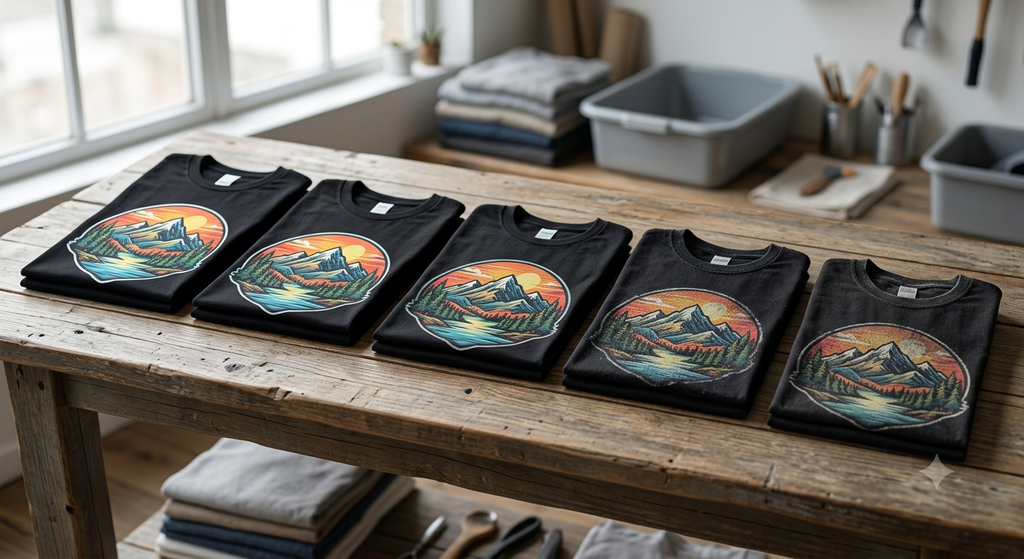
Print five identical transfers. Apply them to the same type of T-shirt. Wash them under the same conditions.
Check the garments after 5, 10, 20, and more wash cycles.
Look for edge lifting, cracking, fading, peeling, and changes in texture.
Where to Buy Hot Melt Adhesive Powder in India (Online & Offline)
DTF hot melt powder is available through DTF suppliers, printing-material dealers, B2B marketplaces, and online DTF stores.
For online purchases, check:
- Product specifications
- Particle size
- Packaging size
- Minimum order quantity
- Shipping cost
- Seller support
- Recommended curing conditions
For offline purchases, ask for a small sample before committing to a bulk order.
A good supplier should be able to tell you how the powder is intended to be used.
For DTF equipment and related consumables, DTFshop.in also lists DTF printers, films, inks, powder, spare parts, and accessories.
Tips for Storing and Using DTF Hot Melt Powder
Store powder in a dry, sealed container.
Humidity can affect powder handling and production consistency. Avoid leaving an opened bag exposed to air for long periods.
Also avoid mixing different powders in the same container.
During production, make sure the powder is spread evenly across the wet printed area. Remove excess powder before curing.
Curing is another important step. Follow the powder and film supplier’s recommended conditions instead of copying settings from another machine.
When transferring the design, use the recommended heat, time, and pressure for the fabric and transfer system.
This is especially important for DTF transfer durability because a good powder can still perform poorly when the curing or pressing stage is incorrect.
What Do Wash Tests Actually Tell You?
A wash test is more useful when the test conditions are recorded.
For example:
- Fabric type
- Washing temperature
- Detergent
- Washing cycle
- Drying method
- Number of washes
- Heat-press settings
- Powder used
- Ink and film used
Published tests can show useful examples, but they should not be treated as a guarantee for every printer.
One independent DTF transfer test reported transfers going through 50 wash cycles at 40°C on cotton and polyester-blend fabrics without cracking, peeling, or edge lifting under its stated test conditions.
FESPA guidance, meanwhile, recommends gentler garment care, including turning garments inside out and avoiding high-temperature washing and tumble drying where possible.
So the practical answer is this:
DTF transfer durability can reach many dozens of washes when the materials, curing, pressing, garment, and washing conditions are all suitable.
Frequently Asked Questions (FAQs)
How long do DTF transfers last?
A properly produced DTF transfer can last through many washing cycles. Actual life depends on ink, film, adhesive powder, curing, pressing, fabric, and washing conditions.
How many washes can DTF transfers survive?
There is no universal number. Some published tests report around 50 wash cycles under controlled conditions. Your own process should be tested before making a durability claim to customers.
Does DTF powder affect wash durability?
Yes. The adhesive powder forms the bonding layer between the printed design and fabric, so powder quality and curing can affect wash performance.
Why is my DTF print peeling after washing?
Possible causes include poor curing, incorrect heat-press settings, insufficient pressure, incompatible materials, poor powder coverage, or unsuitable washing conditions.
Is TPU powder good for DTF?
TPU is widely used as a hot melt adhesive material for DTF. The correct product still depends on the printer, film, ink, fabric, and curing process.
Can DTF prints be washed in a washing machine?
Yes, but gentle washing is preferable. Turn the garment inside out and avoid unnecessarily high temperatures. Follow the transfer and garment manufacturer’s care instructions.
Does a more expensive powder always last longer?
No. Price alone does not prove durability. A controlled sample test is a better way to compare powders.
How should I test DTF transfer durability?
Use identical designs, identical garments, identical pressing conditions, and the same washing method. Record the result after several wash cycles and look closely at edges, cracks, peeling, and surface changes.
Conclusion: Best Brand Recommendation for Indian DTF Businesses
There is no universal powder that will be the right choice for every Indian DTF business.
The better approach is to compare products using your own printer, ink, film, garment, curing setup, and heat press.
For a small shop, start with a manageable quantity. Run a wash test before buying in bulk.
For larger production, consistency becomes especially important. A powder that gives predictable results from batch to batch can make production easier and reduce reprints.
Most importantly, remember that DTF transfer durability is a complete-process result. Good powder helps, but proper printing, powder application, curing, pressing, and garment care all work together.
A transfer that looks perfect immediately after pressing is not necessarily a durable transfer. The real test starts after washing.
Credit: Information references from Fespa, PrintIndustry, and other public sources.
Product Suggestions
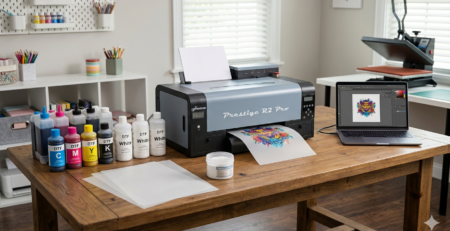
For readers comparing DTF printing equipment, these products from DTFshop.in can be mentioned naturally alongside the material discussion:
- <span style=”color:blue”>🔵 ProlificGeeks DTF Printer L1800</span> — a compact option often considered for smaller or entry-level production.
- <span style=”color:blue”>🔵 XP600</span> — a printer platform suited to businesses looking for higher production speed than basic converted setups.
- <span style=”color:blue”>🔵 i3200</span> — commonly used in higher-production DTF configurations.
- <span style=”color:blue”>🔵 24-Inch XP600 DTF Printer</span> — useful when a business needs a wider production workflow.
- <span style=”color:blue”>🔵 Dual Head XP600 DTF Printer</span> — intended for businesses handling larger production volumes.
These products should be evaluated according to print volume, budget, maintenance requirements, available workspace, and required production width rather than simply choosing the most expensive setup.
External References + Credits
- FESPA — DTF printing workflow, adhesive powder application, curing, suitable textiles, and garment-care guidance.
- DTFshop.in — Indian DTF powder information, pricing examples, equipment information, and supplier/product references.
- Living Lion — published TPU hot melt powder specifications and pricing example.
- BhartiPrint / Bharti Creation — published TPU hot melt powder information and listed price.
- Independent DTF wash-test reference — example of a 50-cycle controlled wash test.
Credit: Information references from Fespa, PrintIndustry, and other public sources.

LEAVE A COMMENT