
DTF Printing Business Case Study: Success Story From Bengaluru
1. Introduction to DTF Printing Business Case Study from Bengaluru
Starting a printing business does not always require a large shop or a huge investment. Sometimes, one reliable machine, a small workspace, and a few regular customers are enough to begin.
This DTF printing business case study explores a practical example of how a small printing setup in Bengaluru could develop into a steady custom apparel business. The example is illustrative, not a verified customer interview. The investment, pricing, and order figures are planning estimates rather than audited business results.
Chat with our team for printers, consumables, film, powder and business setup guidance.
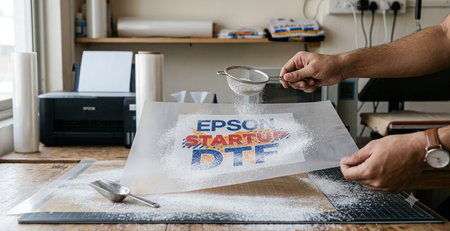
DTF stands for Direct-to-Film printing. The process involves printing a design onto PET film, applying adhesive powder, curing it, and transferring the design onto fabric using a heat press.
The method is useful for custom T-shirts, uniforms, hoodies, bags, and promotional clothing. It also allows a small business to handle single-piece orders alongside bulk requirements.
The main lesson from this DTF Printing Business Case Study is simple: success depends on consistent print quality, sensible pricing, reliable delivery, and customer relationships—not just buying an expensive printer.
2. Why Bengaluru Is a Strong Market for DTF Printing
Bengaluru has a diverse business environment. Startups, colleges, technology companies, sports groups, cafés, and independent clothing labels regularly need customized apparel.
Consider these potential customer groups:
- Corporate companies: Employee T-shirts, event uniforms, and promotional merchandise.
- Colleges: Fest T-shirts, club merchandise, and department apparel.
- Startups: Branded T-shirts for product launches and team events.
- Sports groups: Jerseys, player names, and team logos.
- Small clothing brands: Limited-edition designs and sample collections.
- Individuals: Birthday T-shirts, personalized gifts, and matching group outfits.
A business does not need to target every customer at once. For example, a new operator might begin with college groups and local startups before approaching larger corporate buyers.
DTF printing can support this approach because the business can produce different designs without preparing a separate screen for every design. It is particularly useful for short runs and personalized orders, although actual production costs depend on the design, materials, and quantity.
3. The Business Background: A Small DTF Printing Setup in Bengaluru
Imagine a small operator working from a spare room or compact workshop in Bengaluru.
Initially, the operator accepts custom T-shirt orders through friends, local businesses, and Instagram. Rather than maintaining a large stock of printed garments, the business purchases blank T-shirts when required and prints designs after receiving customer approval.
The first customers might order ten T-shirts for a college club, five for a startup team, or a single personalized shirt.
At this stage, the operator focuses on three things:
- Producing clean prints with consistent colors.
- Delivering orders when promised.
- Keeping expenses under control.
Instead of renting an expensive commercial space immediately, the operator uses a modest workspace with suitable ventilation, organized material storage, and a dedicated printing area.
This is the practical starting point of our DTF printing business case study. The business grows by earning repeat orders, not by assuming that every inquiry will become a sale.
4. Starting Investment and Equipment Used in the DTF Printing Business
The starting investment depends on printer configuration, workspace, equipment quality, and whether the operator handles every production stage in-house.
The following figures are illustrative planning ranges, not quotations. Actual prices should be confirmed with suppliers.
| Equipment or expense | Indicative budget |
|---|---|
| Entry-level DTF printer | ₹60,000–₹1,20,000 |
| Heat press machine | ₹15,000–₹30,000 |
| Manual powder application setup | ₹2,000–₹8,000 |
| Curing oven or suitable curing equipment | ₹10,000–₹25,000 |
| Initial PET film, ink, and powder | ₹10,000–₹20,000 |
| Computer, software, and basic setup | ₹15,000–₹35,000 |
| Workspace preparation and electrical accessories | ₹5,000–₹15,000 |
These amounts may overlap with package inclusions, so do not simply add every figure without checking the quotation. A practical starter budget could fall around ₹1.2 lakh–₹2.5 lakh, depending on the configuration and equipment already available.
A manual powder application setup can help reduce initial expenditure, but it requires careful handling and consistent application. A powder shaker machine becomes worth considering when order volume and labor requirements justify it.
For a starter setup, consider the 🔵 ProlificGeeks DTF Printer L1800, alongside a suitable 🔵 Heat Press Machine, 🔵 PET Film, 🔵 DTF Ink, and 🔵 DTF Powder.
Before purchasing, check machine compatibility, after-sales support, warranty conditions, and the availability of consumables.
5. How the Bengaluru DTF Printing Business Found Its First Customers
The first customers usually come from nearby networks rather than expensive advertising.
In this example, the owner starts by printing sample designs for a small portfolio. The samples demonstrate different colors, garment types, and logo sizes.
The owner then approaches:
- College clubs organizing events.
- Small companies needing branded apparel.
- Local gyms and sports teams.
- Cafés, boutiques, and independent designers.
- Friends and community groups planning celebrations.
A simple offer works well: customers can send their artwork, receive a quotation, and approve a digital mock-up before production.
The business also shares sample photographs and short production videos on Instagram. Every finished order becomes an opportunity to request a review or referral.
The important point is that the operator does not promise the lowest price. The operator promises clear communication, acceptable quality, and dependable delivery.
6. Products and Services Offered by the DTF Printing Business
A small DTF printing business can offer more than basic T-shirts.
Its initial services may include:
- Custom T-shirt printing.
- Company logo transfers.
- College and event merchandise.
- Personalized names and numbers.
- Hoodies and sweatshirts.
- Tote bags and suitable fabric accessories.
- DTF transfer sheets for other garment businesses.
Some customers supply their own garments, while others prefer a complete package that includes blank clothing, printing, and delivery.
This distinction matters because garment sourcing introduces additional costs and risks, including size exchanges, stock availability, and fabric quality.
A business can also sell transfer sheets to local tailors or clothing brands that already own a heat press. This may reduce the need to manage finished garments for every order.
The service mix should match the equipment, skills, and available workspace.
7. Pricing Strategy and Profit Margins in DTF Printing
Pricing is one of the most important parts of the DTF printing business case study.
Suppose a customer wants one printed T-shirt. The business must calculate the cost of the blank garment, transfer, pressing, labor, packaging, and any delivery expense.
Here are illustrative retail price ranges for planning:
| Product or service | Example selling price |
|---|---|
| Single custom T-shirt | ₹299–₹499 |
| Small logo print | ₹40–₹100 |
| Name or number addition | ₹30–₹80 |
| Event T-shirt, bulk quantity | ₹180–₹300 each |
| Premium custom hoodie | ₹699–₹1,199 |
Prices vary with fabric quality, print size, garment quantity, design complexity, and local competition. A logo transfer price is not the same as the price of a complete printed garment.
Consider a simple example for one custom T-shirt:
| Cost component | Illustrative cost |
|---|---|
| Blank T-shirt | ₹120 |
| Ink, film, and powder | ₹25 |
| Electricity and curing | ₹5 |
| Labour and pressing | ₹15 |
| Packaging and wastage allowance | ₹15 |
| Total estimated cost | ₹180 |
| Selling price | ₹349 |
| Contribution before overheads | ₹169 |
The ₹169 difference is not net profit. Rent, marketing, software, repairs, depreciation, taxes, and other business expenses still need to be accounted for.
For accurate costing, calculate:
Cost per order = Materials + Labor + Electricity + Wastage + Maintenance allowance + Packaging + Delivery.
Then subtract the total cost from the selling price. Review the calculation regularly, particularly when ink or blank garment prices change.
For bulk orders, lower per-piece pricing can make sense because setup and handling costs are spread across more garments. However, a discount should never push the order below its sustainable cost.
8. How the Business Managed Bulk T-Shirt and Custom Apparel Orders
Bulk orders require planning before printing begins.
Imagine a startup requesting 100 T-shirts for an upcoming event. The owner confirms garment sizes, quantities, colors, logo placement, and the final artwork before accepting the job.
A written order summary prevents misunderstandings. The business also agrees on an advance payment, delivery date, and the number of permitted design revisions.
For urgent orders, the owner checks material availability and machine capacity before confirming a deadline. A rush order should carry an additional charge when it requires overtime, priority production, or special delivery.
The operator groups identical designs together to reduce setup time. For mixed orders, each garment is labelled by size or customer to avoid packing mistakes.
Most importantly, the owner leaves room for test prints, quality checks, and unexpected delays instead of planning production at full capacity.
9. Marketing Strategy: Instagram, WhatsApp, Local SEO, and Repeat Customers
The business uses simple marketing channels that customers already understand.
Instagram Reels: Short videos show the printing process, finished garments, and close-up details. Before-and-after clips can demonstrate how a transfer looks after pressing.
WhatsApp Business: A catalogue displays available services, sample prices and order instructions. Quick replies answer common questions about quantities, turnaround times and artwork.
Google Business Profile: An eligible business can maintain accurate contact information, operating hours, photographs and customer reviews. This helps nearby customers discover the service.
College and corporate contacts: The owner contacts event organisers, HR teams and local clubs with a short introduction and a few relevant samples.
Repeat customers: After completing an order, the business asks whether the customer has upcoming events or seasonal requirements.
The aim is to build trust and make reordering easy. Consistent communication often matters as much as promotional offers.
10. Daily Workflow of a Successful DTF Printing Business
A practical daily routine keeps orders organised.
- Design approval: Confirm the artwork, size, colours and placement.
- Film printing: Prepare the file in compatible RIP software and print it onto PET film.
- Powder application: Apply adhesive powder evenly and remove excess material.
- Curing: Follow the film and powder manufacturers’ recommended settings.
- Heat pressing: Transfer the design using suitable temperature, pressure and time.
- Quality checking: Inspect placement, edges, colour and adhesion.
- Packing and delivery: Count each item and label the order.
A small shop can review orders each morning, check printer condition before production and reconcile completed jobs at the end of the day.
Once a week, the owner can review material stock, maintenance records, customer feedback, outstanding payments and the following week’s workload.
11. Challenges Faced by the Bengaluru DTF Printing Business
Every printing setup encounters problems. Common issues include white ink settling, blocked nozzles, film jams, uneven powder application, colour differences and missed deadlines.
Customer revisions can also consume time. A design approved after several changes may not match the original delivery schedule.
The business manages these risks by approving artwork before printing, keeping essential consumables in stock and scheduling preventive maintenance.
It also avoids accepting large orders that exceed its realistic production capacity. Reliable delivery builds a better reputation than accepting every order and disappointing customers later.
12. How the Business Reduced Wastage and Improved Print Quality
Reducing wastage starts with small habits.
The operator checks the nozzle pattern, confirms RIP settings and prints a test sample when changing materials or designs. Properly arranged artwork helps fit multiple logos onto the same film without compromising spacing.
Quality consumables matter too. Compatible 🔵 DTF Ink, 🔵 PET Film and 🔵 DTF Powder help produce more consistent results when used with suitable printer settings.
The operator follows manufacturer guidance for curing and heat pressing instead of using one temperature setting for every film and garment.
Finished samples are checked for adhesion and wash performance. When a print fails, the operator investigates the cause before repeating the entire batch.
Regular cleaning and maintenance are particularly important for white ink systems. Excessive cleaning cycles, neglected nozzles and long idle periods can increase operating costs.
13. Results: Monthly Orders, Revenue Growth and Business Lessons
Because this is an illustrative case study, the following figures show a possible planning scenario rather than verified results from an actual Bengaluru company.
Suppose the business completes 250 T-shirts in a month at an average selling price of ₹280. It also earns ₹20,000 from separate transfer-sheet and logo-printing orders.
| Monthly calculation | Amount |
|---|---|
| T-shirt sales: 250 × ₹280 | ₹70,000 |
| Other printing sales | ₹20,000 |
| Total monthly revenue | ₹90,000 |
| Materials and production costs | ₹45,000 |
| Other operating expenses | ₹20,000 |
| Illustrative operating surplus | ₹25,000 |
The actual result could be higher or lower depending on order mix, equipment efficiency, rent, staffing and wastage. The surplus shown is before any applicable taxes, financing costs and owner-specific adjustments.
The useful lesson is to track completed orders and actual expenses every month. Revenue alone does not show whether the business is healthy.
14. Why DTF Printing Works for Small Businesses in India
DTF printing gives small operators a way to serve customers who need different designs, short production runs and personalised garments.
Unlike screen printing, which often involves separate screens and setup for different colours, DTF can be convenient for varied designs and small quantities.
It can also work across many suitable fabrics, including cotton, polyester and blends, subject to material compatibility and transfer testing.
However, DTF is not automatically the cheapest option for every order. Large, identical runs may favour other production methods, depending on setup costs and volume.
A sensible operator chooses the method that fits the customer’s quantity, artwork, budget and quality requirements.
15. How to Start a Similar DTF Printing Business in Bengaluru
Begin with a clear customer segment and a realistic budget.
A home-based operator serving local custom orders may initially need a different machine from a shop producing hundreds of transfers each day.
An entry-level 🔵 ProlificGeeks DTF Printer L1800 may suit a smaller operation if its output capacity, maintenance needs and support meet the business requirements.
An 🔵 XP600 DTF Printer can be considered when the operator needs a different production configuration. An 🔵 i3200 DTF Printer is worth evaluating for higher-volume production where the additional investment is justified.
Compare print width, reliable output speed, service availability, software compatibility and total ownership cost. Advertised speed alone is not enough.
Start with samples, find paying customers and upgrade only when actual orders support the expense.
16. Best Products and Equipment for a Profitable DTF Printing Setup
Choose equipment as a complete workflow rather than buying isolated products.
- 🔵 ProlificGeeks DTF Printer L1800 — an entry-level option to evaluate for smaller workloads.
- 🔵 XP600 DTF Printer — an option to compare for growing production needs.
- 🔵 i3200 DTF Printer — a configuration to evaluate for higher-volume operations.
- 🔵 DTF Ink and 🔵 PET Film — compatible consumables that influence print quality and reliability.
- 🔵 DTF Powder and 🔵 Curing Oven — components for the adhesive application and curing stages.
- 🔵 Powder Shaker Machine — useful to consider when manual powder application becomes a production bottleneck.
- 🔵 DTF Maintenance Kit — supplies for routine care, used according to the machine manufacturer’s instructions.
Explore the DTF business investment guide at DTFshop.in and DTF printer comparison guide before requesting supplier quotations.
17. Step-by-Step Checklist to Launch a DTF Printing Business
Use this checklist before accepting your first commercial order.
- Identify target customers and local demand.
- Prepare a budget for equipment, consumables and repairs.
- Compare printers, warranties and after-sales support.
- Arrange a suitable workspace and electrical supply.
- Purchase compatible ink, film and adhesive powder.
- Set up design and RIP software.
- Test transfers on the actual garments you plan to sell.
- Calculate cost per print and establish minimum order prices.
- Prepare sample designs and an Instagram portfolio.
- Set up WhatsApp Business and an eligible Google Business Profile.
- Define artwork approval, payment and delivery terms.
- Track sales, wastage, maintenance and customer feedback.
The checklist applies to Bengaluru and other Indian cities. Local rent, delivery costs, demand and supplier availability will affect the final plan .
18. Conclusion: Lessons From This DTF Printing Business Case Study
This DTF Printing Business Case Study shows how a small apparel-printing operation could build a customer base by starting with manageable orders and improving its workflow over time.
Bengaluru offers potential customers across startups, colleges, sports groups, events and independent clothing brands. However, demand alone does not guarantee success.
The practical priorities are straightforward: select equipment based on real requirements, calculate every major cost, maintain print quality and deliver orders on time.
Start small, collect customer reviews and reinvest carefully when repeat orders justify expansion. A dependable printing business is built through consistent work and sensible decisions, one order at a time.
Credit: Information references from Fespa, PrintIndustry, and other public sources.
19. Product Suggestions
The following products are relevant to the equipment and consumables discussed in this article. Check current specifications, package contents and availability directly with the supplier before ordering.

🔵 ProlificGeeks DTF Printer L1800
A printer option to evaluate for a smaller setup handling samples and short production runs.Explore the L1800 setup guide

🔵 XP600 DTF Printer
Consider this configuration when comparing production speed, print width, service support and budget.Compare DTF printer configurations

🔵 DTF Ink, PET Film and DTF Powder
These consumables work together to influence transfer quality, adhesion, wastage and production consistency.Explore DTF setup supplies

🔵 Powder Shaker Machine and Curing Oven
Useful equipment to evaluate when manual powder application and curing become difficult to manage at higher volumes.

🔵 Heat Press Machine
Choose a press with suitable dimensions, reliable temperature control and appropriate pressure adjustment.
20. External References + Credits
These sources provide technical background for the printing process. The Bengaluru business scenario and financial calculations in this article are illustrative, not reported findings from these publications.
1. FESPA — Direct-to-film printing technology and textile applications. Explains the DTF process, material compatibility and how printed film is transferred onto garments. Read the technical overview.
FESPA
2. FESPA — DTF: A new way to personalise textile printing. Covers PET film, adhesive powder, curing and garment transfer considerations. Read the DTF guide.
FESPA
3. DTFshop.in — DTF business cost in India. Provides an equipment and startup-cost breakdown that readers can use as a starting point for supplier comparisons. Prices and configurations should be independently confirmed. Read the investment guide.
Complete Startup Guide
4. Epson — DTF Film Printing Guide. Describes the printing, powder application, heat processing and transfer workflow. Read the manufacturer’s guide





LEAVE A COMMENT