
How to Protect DTF Printer Operators From Ink Fume Exposure
1. Introduction to Ink Fume Exposure in DTF Printing
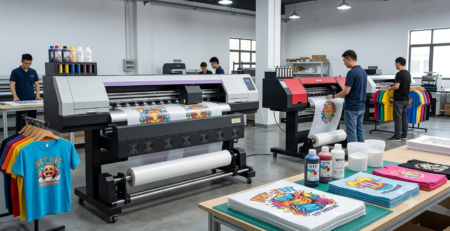
DTF printing is becoming popular in India. From small home-based businesses to large T-shirt printing workshops, many operators work with DTF printers for several hours every day.
But one important issue often gets ignored: ink fume exposure.
Chat with our team for printers, consumables, film, powder and business setup guidance.
DTF printers use special inks, cleaning liquids, adhesive powder, and heat-curing equipment. These materials can release vapors, airborne particles, or unpleasant smells during printing and maintenance.
A slight smell does not always mean the air is unsafe. Similarly, the absence of smell does not guarantee clean air.
Good DTF ink fume safety practices help operators work more comfortably while reducing unnecessary exposure.
2. Why Is Ink Fume Exposure a Concern for DTF Printer Operators?
An operator may spend 8–10 hours daily near a printer, refilling ink, checking prints, and cleaning the printhead.
Without proper ventilation, airborne contaminants may build up, especially in small rooms.
Possible problems include
- Headaches and dizziness
- Eye or throat irritation
- Coughing
- Unpleasant chemical smells
- Breathing discomfort
The level of risk depends on the ink formulation, cleaning chemicals, curing temperature, exposure duration, and ventilation.
Practical tip: Never assume that a familiar printer smell is harmless. Check product safety data sheets (SDS) and investigate persistent odors.
3. Common Sources of Ink Fumes in a DTF Print Shop
Ink exposure does not happen only while printing. Several routine activities can release vapors or create airborne contaminants.
Common sources include:
- DTF ink refilling: Open bottles and tanks expose liquid ink to room air.
- Printhead cleaning: Cleaning fluids may release noticeable vapors.
- Capping station cleaning: Ink residue and cleaning chemicals can create strong smells.
- Spilled ink: Exposed liquid increases the chance of contact and odor.
- Open ink bottles: Poorly closed containers allow unnecessary evaporation.
- Powder shaker: Loose adhesive powder can become airborne.
- Curing oven: Heating printed film and adhesive powder may release fumes and particles.
White ink requires regular circulation and maintenance because its pigments can settle. Frequent cleaning, rather than the white color itself, may increase exposure to cleaning chemicals.
Good DTF ink fume safety starts with identifying these sources.
4. Signs That a DTF Operator Is Being Affected by Ink Fumes
A normal operating smell may be mild and familiar. A strong or unusual chemical smell deserves attention, particularly after opening a cleaning solution or starting the curing oven.
Watch for symptoms such as:
| Warning sign | What to do |
|---|---|
| Mild, unfamiliar odor | Check ventilation, equipment, and chemical containers. |
| Strong chemical smell | Stop the affected process if safe and investigate. |
| Headache or dizziness | Move to fresh air and stop exposure. |
| Eye irritation | Leave the exposure area; rinse eyes with clean water if splashed. |
| Throat irritation or coughing | Move away from the source and assess ventilation |
| Breathing difficulty | Seek urgent medical attention. |
Symptoms are not proof that ink fumes are the cause, but they should never be ignored.
If symptoms continue, return, or become severe, seek medical advice. Do not resume the same work until the suspected exposure problem has been addressed.
5. Health Risks of Long-Term Ink Fume Exposure
Repeated exposure to certain chemical vapors, aerosols, and adhesive powder particles may affect health over time.
Depending on the substances involved, potential concerns include respiratory irritation, skin sensitivity, and other effects identified in the chemical’s SDS.
Not every DTF ink has the same hazards. Water-based inks and different cleaning formulations can have very different exposure profiles.
The most reliable approach is to check the actual chemicals used rather than judging safety by smell alone.
For additional workplace safety information, operators can consult OSHA and CDC/NIOSH.
6. How to Set Up Proper Ventilation for DTF Printers
Ventilation is one of the most important parts of DTF ink fume safety.
A small, closed room can accumulate fumes and particles faster than a well-ventilated workshop.
Basements and rooms without windows are especially challenging because fresh-air exchange may be limited.
A practical ventilation setup should:
- Bring clean replacement air into the room.
- Capture emissions close to the printer, shaker, and curing equipment.
- Discharge contaminated air outdoors where permitted and safe.
- Avoid sending exhaust toward neighbors, windows, or air intakes.
- Prevent strong drafts from blowing dust onto the printhead or transfer film.
For a home-based DTF business, a properly designed local exhaust system can be more effective than simply leaving the door open.
Important: Ventilation capacity should be selected for the actual room, machines, and chemicals. A qualified ventilation professional can help determine the required airflow.
7. How to Use Exhaust Fans and Air Purifiers Safely
A suitable 🔵 exhaust fan can help remove contaminated air, but placement matters.
Install extraction close to the source of emissions, using equipment designed for the application. The curing oven and powder shaker may require dedicated extraction.
A 🔵 air purifier with appropriate particle filtration and a suitable gas-phase filter may help reduce some airborne contaminants.
However, a normal HEPA filter does not remove chemical vapors. Activated carbon performance also depends on the contaminant, filter design, and replacement schedule.
An air purifier should supplement effective exhaust ventilation, not replace it.
Keep airflow gentle around the printing surface. Strong fans directed at the printer can move dust onto wet ink or sensitive components.
8. Best Placement of DTF Printer, Powder Shaker, and Curing Oven
Machine placement affects both safety and print quality.
For a small workshop, arrange the equipment so operators can move between machines without standing directly in the curing exhaust.
A useful layout is
Illustrative workshop layout only. Actual extraction must be designed for the equipment and room.
Keep enough clearance for maintenance and cleaning. Do not place the printer directly beside food storage, cooking equipment, or a busy customer waiting area.
For shops using multiple printers, calculate ventilation requirements for the combined equipment rather than assuming one small fan is enough.
9. Personal Protective Equipment for DTF Printer Operators
Personal protective equipment helps reduce exposure when selected correctly.
Useful accessories include
- 🔵 Safety Gloves: Chemical-resistant gloves selected using the chemical SDS, often suitable nitrile gloves.
- 🔵 Safety Goggles: Protect against splashes during ink refilling and cleaning.
- 🔵 Safety Mask: A basic disposable mask may help with some dust, but it does not protect against chemical vapors.
- 🔵 Respirator: A properly selected, fitted respirator with suitable filters or cartridges may be needed for specific chemical or particle hazards.
A simple mask and a chemical respirator are not interchangeable.
Respirators require correct selection, fit testing where applicable, training, and maintenance. Cartridge selection should follow the chemical SDS and a workplace exposure assessment.
Remember: PPE is additional protection. It is not a substitute for controlling fumes at their source.
10. How to Handle DTF Ink Safely During Refilling and Cleaning
Safe ink handling is an everyday part of DTF ink fume safety.
Before refilling, switch the machine to the manufacturer’s recommended maintenance state. Prepare a stable work surface and keep absorbent materials nearby.
When using 🔵 DTF Ink, pour carefully using a suitable clean filling tool. Avoid overfilling tanks or leaving bottles open.
During cleaning:
- Wear suitable gloves and splash protection.
- Use only the cleaning liquid recommended for the printer and ink.
- Keep your face away from open tanks, dampers, ink tubes, and the cleaning area.
- Use small amounts of cleaning solution.
- Close containers immediately after use.
For printhead and capping station maintenance, follow the printer manufacturer’s instructions.
Never mix different cleaning chemicals unless their compatibility is confirmed.
11. How to Prevent Ink Spills, Skin Contact, and Inhalation Risks
Ink spills are common during rushed refilling or maintenance.
To reduce spills, use stable containers, avoid crowded worktables, and keep a suitable spill kit available.
If a spill happens, keep untrained people away and follow the ink’s SDS.
For a small spill that trained staff can safely handle, wear the recommended PPE and use compatible absorbent material. Avoid dry brushing, spraying chemicals, or creating airborne mist.
Dispose of contaminated materials according to local waste requirements.
If ink contacts skin, wash with soap and water. For eye splashes, rinse promptly with clean running water and obtain medical advice as appropriate.
12. Safe Storage of DTF Ink, Cleaning Solution, and Chemicals
Good storage reduces spills, contamination, and unnecessary chemical exposure.
Store 🔵 DTF Ink and 🔵 DTF Printer Cleaning Solution in tightly closed, clearly labeled containers.
Keep them:
- Away from direct sunlight and excessive heat.
- Away from food, drinks, and eating areas.
- Protected from dust and accidental knocks.
- Away from children and untrained staff.
- Within the temperature range recommended by the manufacturer.
Use compatible 🔵 Ink Storage Containers where needed, and never transfer chemicals into drinking-water bottles.
Keep SDS documents accessible to staff and separate incompatible chemicals.
13. Daily Safety Routine for DTF Printer Operators
A daily routine makes DTF ink fume safety easier to manage.
Daily operator checklist
0 of 7 completeCheck ventilation and extraction before startingInspect ink bottles, tanks, and tubes for leaksCheck powder shaker and curing exhaustWear appropriate PPE for refilling and cleaningKeep chemical containers closedClean work surfaces using approved methodsReport unusual odours or symptoms
Reset checklist
For example, on Monday morning after a weekend closure, inspect the workshop and start ventilation before beginning production.
Do not ignore a strong chemical smell that developed while the room was closed.
14. Weekly and Monthly Workshop Safety Checklist
Daily checks are useful, but fans, filters, and equipment also need regular inspection.
WeeklyMonthlyInspect exhaust ducts and accessible filtersCheck printer and shaker for ink or powder buildupReview chemical labels and storageInspect gloves, goggles, and other PPE
0 / 4 completedReset
If operators report repeated headaches or irritation, arrange an assessment rather than waiting for the next scheduled inspection.
15. Common Ink Safety Mistakes to Avoid in Indian DTF Print Shops
Small Indian print shops sometimes operate in compact rooms where ventilation receives less attention than machine performance.
Common mistakes include:
- Running a curing oven in a closed room.
- Leaving ink and cleaning bottles uncapped.
- Using household fans that blow powder across the workspace.
- Wearing a cloth mask for chemical vapour protection.
- Eating near printing and cleaning chemicals.
- Ignoring repeated headaches or eye irritation.
- Using unknown cleaning liquids to save money.
A common example is a busy T-shirt shop where two printers and a powder shaker operate in one room. The owner may notice more heat and odour during bulk orders.
Instead of simply adding a ceiling fan, the better approach is to evaluate source extraction, fresh-air supply, and overall room ventilation.
16. How to Create a Safe Working Environment for Small DTF Businesses
A safer workshop does not always require a complete renovation.
Start with practical improvements.
Separate chemical storage from the printing area. Keep walkways clear. Provide handwashing facilities and train operators to report unusual smells or symptoms.
In a home-based setup, keep printing and curing activities away from bedrooms, kitchens, and shared living spaces.
For operators working long shifts, provide regular breaks in a clean-air area.
A clean, well-organised workshop can also help prevent dust contamination, reduce avoidable maintenance, and create a better experience for visiting customers.
DTF ink fume safety should become part of normal workshop management, not something considered only after an operator becomes uncomfortable.
17. Best Products and Accessories to Reduce Ink Fume Exposure
The right accessories can support safer printing and easier maintenance.
Here are useful options to consider when selecting equipment from DTFshop.in or another suitable supplier.
| Product | Practical use |
|---|---|
| 🔵 DTF Printer with XP600 Printhead | Choose a setup with accessible, manufacturer-approved maintenance procedures |
| 🔵 DTF Printer with i3200 Printhead | Suitable for evaluating higher-volume workflows with planned ventilation |
| 🔵 DTF Ink | Use compatible, documented ink with available safety information |
| 🔵 DTF Printer Cleaning Solution | Use the correct cleaning product and avoid unnecessary chemical mixing |
| 🔵 Exhaust Fan / Ventilation System | Capture and remove fumes at the source |
| 🔵 Safety Gloves and Goggles | Reduce accidental skin and eye contact |
| 🔵 Respirator | Provide task-specific protection when a risk assessment requires it |
| 🔵 DTF Printer Maintenance Kit | Keep approved cleaning supplies organised |
These are product categories to look for, not confirmed individual DTFshop.in listings. Check actual availability, specifications, and suitability before purchasing.
Remember that a more expensive printer does not automatically create a safer working environment.
18. Conclusion: Protect Your Operators and Build a Safer DTF Print Shop
A successful DTF printing business needs more than a reliable printer and good-quality ink. It also needs a safe place for people to work.
Proper ventilation, careful ink handling, correct PPE, and regular maintenance all help reduce unnecessary exposure.
Whether you operate one printer at home or several machines in a commercial workshop, DTF ink fume safety deserves daily attention.
Start with the basics: identify emission sources, control fumes close to the equipment, keep chemicals closed, and take operator complaints seriously.
A safer workshop supports healthier working conditions, more consistent production, and long-term business reliability.
19. Product Suggestions
These internal links point to relevant DTFshop.in product categories. Individual product availability and specifications should be checked before ordering.

🔵 DTF Ink
Suitable, manufacturer-approved ink is essential for reliable printing. Check compatibility and SDS information.Browse DTF consumables

🔵 DTF Printer Cleaning Solution
Helps maintain printheads and remove compatible ink residue when used according to manufacturer instructions.Browse cleaning solutions

🔵 DTF Printer Maintenance Kit
Supports routine equipment care and organised maintenance work.Browse maintenance parts and accessories

🔵 Exhaust Fan / Ventilation System
Consider appropriately engineered extraction for printer maintenance, powder handling, and curing emissions.Confirm availability and technical suitability with the supplier.

🔵 Safety Gloves and Safety Goggles
Help prevent direct skin contact and accidental eye splashes during approved maintenance work.Select chemical-compatible protection using the SDS.
20. External References + Credits
The following resources support the article’s general workplace safety recommendations. They are not DTF-specific exposure measurements.
1. OSHA — OSHA.gov. General workplace chemical safety, hazard communication, and ventilation guidance.
2. CDC/NIOSH — A Guide to Air-Purifying Respirators. Explains respirator types, limitations, and contaminant-specific selection.
CDC
+1
3. FESPA — FESPA.com. Printing industry information and technical resources.



LEAVE A COMMENT