
DTF Printing vs Embroidery: Which Earns More Per Piece in India?
1. Introduction to DTF Printing vs Embroidery in India
If you run a custom t-shirt shop in India or plan to start one, you have probably considered two popular methods: DTF printing and embroidery.
Both can make good money. But which one actually gives you more profit per piece?
Chat with our team for printers, consumables, film, powder and business setup guidance.
The answer depends on your customers, design type, order quantity, and production costs.
For example, a shop printing colorful birthday t-shirts may earn more using DTF. Meanwhile, a business supplying premium corporate polo shirts may earn more through embroidery.
In this DTF Printing vs. Embroidery guide, we will compare realistic Indian production costs, selling prices, profit margins, machine investments, and business opportunities.
The goal is simple: help you choose the method that makes financial sense for your shop.
2. What Is DTF Printing and How Does It Make Money?
DTF stands for Direct-to-Film printing.
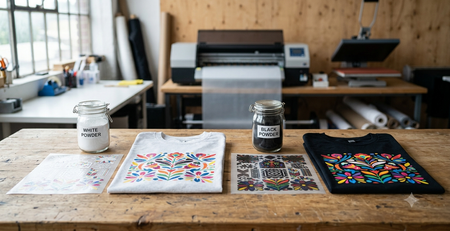
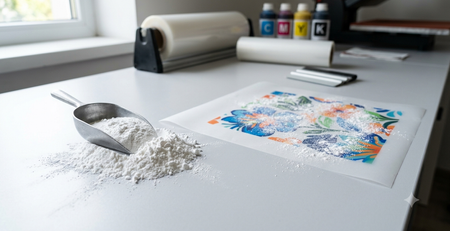
In this process, a design is printed on special PET film using DTF ink. Hot melt adhesive powder is applied, the print is cured, and the design is transferred onto fabric using a heat press.
DTF works on cotton, polyester, blends, and many other suitable fabrics.
It is especially useful for:
- Full-color graphics and photographs
- Custom t-shirts and hoodies
- College fest merchandise
- Birthday and personalized gift orders
- Small-batch clothing brands
The main advantage is design flexibility. A colorful graphic can often be produced without the stitch-count restrictions of embroidery.
For example, suppose a customer orders one personalized t-shirt for ₹300.
If the blank t-shirt and total production cost come to ₹185, your gross production profit is:
₹300 – ₹185 = ₹115 per piece
That is why DTF can work well for small custom orders.
However, larger prints use more film, ink, powder, and pressing time. These costs must be included when calculating DTF printing profit per piece.
3. What Is Embroidery and How Does It Make Money?
Embroidery uses a machine and thread to stitch a design directly onto fabric.
It is commonly used for company logos, school uniforms, caps, polo shirts, jackets, and premium workwear.
Embroidery has a textured, professional appearance. Many corporate buyers prefer it for small chest logos because it looks premium and lasts well when produced correctly.
Embroidery cost depends heavily on:
- Stitch count
- Design size and complexity
- Number of thread colors
- Fabric type
- Machine running time
- Digitizing and setup charges
A small logo with 5,000 stitches usually costs less to produce than a large design containing 25,000 stitches.
Suppose a corporate polo shirt sells for ₹450 and its complete production cost is ₹290.
₹450 – ₹290 = ₹160 profit per piece
With repeat orders, embroidery business profit in India can become attractive because the same digitized logo can be reused.
4. DTF Printing vs Embroidery: Main Differences
Before investing in equipment, compare the two methods on the factors that directly affect your earnings.
| Comparison | DTF Printing | Embroidery |
|---|---|---|
| Setup cost | Lower entry cost with outsourced transfers | Usually higher for commercial in-house production |
| Per-piece decoration cost | Around ₹20–₹100 | Around ₹20–₹150+ |
| Production speed | Fast for colorful designs and batches | Depends on stitch count and machine heads. |
| Design flexibility | Excellent for photos and multicolour artwork | Best for logos, lettering, and stitched patterns |
| Durability | Good with proper materials and washing | Often excellent for suitable designs |
| Order size | One piece to bulk orders | Small and repeat bulk orders |
| Target customers | T-shirt brands, gifts, colleges | Corporate clients, schools, uniform suppliers |
| Profit potential | Strong for custom graphics | Strong for premium logo work |
Indicative Indian production ranges, not fixed supplier quotations. Decoration costs exclude the blank garment and vary with artwork, equipment, and quantity.
In DTF printing vs. embroidery, neither method wins every category.
DTF gives more freedom with colors and artwork. Embroidery gives a premium stitched finish and can command higher prices for certain customers.
The most profitable method is the one that matches what your customers regularly buy.
5. Cost Per Piece in DTF Printing in India
Let’s calculate a realistic DTF printing cost in India for a basic cotton t-shirt with a medium-sized design.
| Expense | Cost per piece |
|---|---|
| Blank t-shirt | ₹100 |
| DTF ink | ₹12 |
| PET film | ₹8 |
| Hot melt powder | ₹4 |
| Labour and pressing | ₹15 |
| Electricity | ₹3 |
| Consumables and wastage allowance | ₹8 |
| Machine depreciation | ₹10 |
| Packaging | ₹5 |
| Total production cost | ₹165 |
| Selling price | ₹300 |
| Profit per piece | ₹135 |
This example assumes the shop already has suitable production equipment and achieves reasonable utilization.
The basic formula is:
Selling Price – Total Production Cost = Profit Per Piece
₹300 – ₹165 = ₹135.
That gives a gross production margin of 45%.
But remember that ₹135 is not final take-home profit. Rent, marketing, delivery, GST treatment, and other business expenses may still reduce it.
A larger front print can increase ink, film, and powder consumption. A small chest logo usually costs less.
For better costing, measure how many designs fit on one sheet or meter of film instead of assigning the same printing cost to every job.
6. Cost Per Piece in Embroidery in India
Now consider a polo shirt with a small embroidered company logo.
Assume the logo contains around 6,000 stitches and the order is large enough to spread setup costs across multiple garments.
| Expense | Cost per piece |
|---|---|
| Blank polo shirt | ₹180 |
| Embroidery thread | ₹10 |
| Stabilizer and consumables | ₹8 |
| Labour and handling | ₹25 |
| Electricity | ₹4 |
| Machine depreciation | ₹15 |
| Digitizing cost allocation | ₹8 |
| Maintenance and rejection allowance | ₹10 |
| Packaging | ₹5 |
| Total production cost | ₹265 |
| Selling price | ₹450 |
| Profit per piece | ₹185 |
Here:
₹450 – ₹265 = ₹185 profit per piece
This example shows why embroidery can earn more on premium corporate orders.
However, stitch count matters. If the logo becomes much larger, machine time and thread consumption increase. A complicated design may require a higher selling price to remain profitable.
7. DTF Printing vs Embroidery: Profit Per Piece Comparison
Here is a practical comparison using illustrative Indian selling prices and fully allocated production costs.
| Product | DTF profit/piece | Embroidery profit/piece |
|---|---|---|
| Custom t-shirt | ₹135 | ₹80 |
| Corporate polo | ₹130 | ₹185 |
| Hoodie | ₹140 | ₹155 |
| Cap | ₹35 | ₹75 |
| Bulk uniform shirt | ₹65 | ₹90 |
These are example scenarios, not guaranteed market profits. Design coverage, garment quality, order size, and customer pricing can change the results substantially.
For a simple ₹500 hoodie example:
DTF hoodie: ₹500 selling price – ₹360 production cost = ₹140 profit.
Embroidered hoodie: ₹500 selling price – ₹345 production cost = ₹155 profit.
This assumes a small embroidered logo versus a larger printed graphic. If the hoodie needs a large, complex embroidered design, the result may reverse.
The key lesson from DTF printing vs. embroidery is that selling price and design requirements matter just as much as production cost.
8. When DTF Printing Earns More Per Piece
DTF is often more profitable when customers want colorful, personalized designs in small quantities.
Consider a customer ordering a t-shirt with a photograph and personalized text.
With DTF, the design can be prepared digitally and transferred without embroidery digitizing.
This makes DTF suitable for:
- Single-piece personalized orders
- Full-color photo prints
- College event t-shirts
- Graphic streetwear
- Custom gifts and promotional clothing
For a custom t-shirt printing business in India, DTF also makes it easier to test new designs without stocking large quantities of finished garments.
You can print according to demand and avoid keeping unsold designs in inventory.
9. When Embroidery Earns More Per Piece
Embroidery can generate better margins when customers value a professional stitched logo.
For example, a company ordering 200 polo shirts may willingly pay more for embroidered branding than for a basic printed logo.
Embroidery works particularly well for premium corporate polos, school uniforms, caps, jackets, and repeat uniform contracts.
It can also become efficient when the same logo is produced repeatedly.
Once a design is digitized, the file can be reused for future orders. That reduces the setup cost per garment over time.
However, embroidery is not automatically more profitable. High stitch counts, thread changes, operator time, and machine downtime can reduce earnings.
10. Small Orders vs Bulk Orders: Which Method Is More Profitable?
Order quantity changes the economics of both methods.
For a single custom t-shirt, DTF often has an advantage because there is no embroidery digitizing charge, and colorful artwork is easier to reproduce.
For 50 college fest t-shirts, DTF can remain competitive because the same design can be printed repeatedly.
For 500 corporate uniforms with a small logo, embroidery may become attractive if the machine is used efficiently and the customer pays a premium for stitched branding.
Repeat customers also improve profit potential.
A customer who orders the same 100 embroidered polos every quarter saves design preparation time. Similarly, a DTF customer who reorders a proven graphic reduces artwork and approval costs.
Always compare the actual profit per piece at the requested quantity, not just the total order value.
11. Hidden Costs That Affect Your Per-Piece Profit
Many new shop owners calculate only the blank garment and decoration cost.
That can make a profitable-looking order turn into a disappointing one.
Important hidden costs include rejected prints, failed transfers, wasted film, embroidery thread breaks, machine maintenance, operator salary, electricity, courier charges, packaging, marketing, and design work.
GST also needs careful treatment. If you are registered, distinguish GST collected from customers, eligible input tax credit and the actual revenue available to your business.
For example, a ₹100 production profit may fall to ₹65 after allocating delivery, marketing, rent and other operating expenses.
Also, do not treat machine depreciation as optional. Even a fully paid machine will eventually need major repairs or replacement.
12. Which Business Is Better for a New Indian Print Shop?
Your starting budget should guide the decision.
A heat-press-based business using outsourced DTF transfers may start with a comparatively small investment. A new owner can test demand before buying a printer.
Indicative planning ranges include:
| Equipment | Approximate investment |
|---|---|
| Heat press machine | ₹10,000–₹35,000 |
| Entry-level DTF printer | ₹1 lakh–₹3 lakh |
| Commercial DTF setup | ₹3 lakh–₹10 lakh+ |
| Single-head embroidery machine | ₹2.5 lakh–₹7 lakh+ |
| Multi-head embroidery machine | ₹8 lakh–₹25 lakh+ |
These are broad budgeting estimates. DTF printer price in India and embroidery machine price in India vary by head configuration, supplier, automation, warranty and included accessories.
For a new shop focused on personalised gifts and graphic t-shirts, outsourced DTF transfers plus a heat press may provide a faster return on investment.
For an established uniform supplier with regular corporate orders, embroidery may justify its higher initial investment.
13. How to Increase Profit in DTF Printing and Embroidery
To improve per piece profit DTF printing, optimise film layouts, control ink consumption, avoid unnecessary print sizes and keep the printer maintained.
Reliable 🔵 DTF Ink, 🔵 DTF Film and 🔵 Hot Melt Powder are important because low-quality consumables can create rejected prints and repeat work.
For embroidery, optimise stitch count without compromising appearance, group similar jobs, reduce unnecessary thread changes and reuse approved digitised files.
Both businesses should charge separately for difficult artwork, urgent orders and special packaging.
A useful habit is to maintain a costing sheet for every order. Track material cost, labour time, wastage and final realised selling price.
This gives a more reliable picture of profit than simply counting how many garments were sold.
14. Real Indian Business Examples: T-Shirts, Uniforms, Caps and Hoodies
Example 1: Small T-Shirt Shop in Varanasi
Imagine a local Varanasi shop receiving an order for 30 custom t-shirts for a college event.
The customer wants a colourful front design and pays ₹280 per shirt.
If the total DTF production cost is ₹175 per piece:
Profit per piece = ₹105.
Total gross production profit = 30 × ₹105 = ₹3,150.
Embroidery would likely be less practical for this particular artwork because of its colours, design coverage and stitch requirements.
Example 2: Corporate Polo Order
Now consider a uniform supplier receiving an order for 100 polo shirts with a small embroidered chest logo.
Selling price: ₹450 per piece.
Production cost: ₹265 per piece.
Profit per piece: ₹185.
Total gross production profit = 100 × ₹185 = ₹18,500.
This is an example of embroidery earning more because the customer values the stitched appearance.
For a repeat order, reused digitising files and improved production planning may further improve the result.
15. Product Suggestions
These products fit naturally into the DTF side of the profit comparison. The links lead to relevant product or category pages on DTFshop.in.

🔵 ProlificGeeks A3 DTF Printer
Suitable for smaller custom t-shirt orders and shops testing in-house DTF production.

Useful for growing shops with regular transfer orders and higher production requirements.

🔵 DTF Ink
Ink quality and consumption directly influence print cost, consistency and rejected transfers.

🔵 DTF Film
Film size and layout efficiency affect how many designs can be produced at a given material cost.

Appropriate adhesive powder helps produce reliable transfers and minimise avoidable rework.
These links are intended as helpful internal references, not endorsements of a particular machine. Check compatibility, specifications, warranty and current prices before purchasing. DTFshop.in lists printers, inks, PET films, powder and related equipment.
Dtfshop
+2
16. External References + Credits
The following references can support the technical explanations and further reading in the article.
1. FESPA — DTF: A New Way to Personalisation Textile Printing — Explains DTF materials, printing processes, adhesive powder and garment transfers.
FESPA
2. FESPA — Printing Direct-to-Film Transfers — Discusses fabric compatibility, production methods and multiple-logo printing.
FESPA
3. DTFshop.in — DTF Printer Price in India — Provides Indian equipment investment and operating-cost examples. These are supplier estimates, not independently audited industry averages.
Dtfshop
For additional industry reading, see PrintIndustry.com.
The article’s profit tables are illustrative business calculations, not figures directly verified by these references.







LEAVE A COMMENT