
How to Create a Portfolio Website for Your DTF Print Business
1. Introduction to Creating a Portfolio Website for Your DTF Print Business
Running a DTF printing business is not just about producing good prints. Customers also need to see what you can create before placing an order.
A DTF print business portfolio website works like a digital showroom. It displays your printed t-shirts, hoodies, uniforms, tote bags, and custom designs in one professional place.
Chat with our team for printers, consumables, film, powder and business setup guidance.
Imagine a customer searching for custom t-shirt printing in Varanasi. If your website shows clear product photos, printing details, and an easy WhatsApp inquiry option, that customer can quickly understand your services.
You do not need an expensive website to get started. A simple website with real photos, useful information, and clear contact details can make a strong impression.
2. Why Does Your DTF Print Business Need a Portfolio Website?
Many DTF print shops depend completely on Instagram, Facebook, and WhatsApp. These platforms are useful, but customers may struggle to find older work samples or detailed service information.
A professional DTF print business portfolio website keeps everything organized.
For example, a school owner looking for 200 printed uniforms can directly check your bulk-printing samples instead of scrolling through hundreds of social media posts.
A website also helps customers discover your business through Google searches.
Social Media vs. Portfolio Website
| Social Media Page | Portfolio Website |
|---|---|
| Posts move down quickly. | Work samples stay organized. |
| Limited service details | Dedicated service pages |
| Mainly reaches followers | Can attract Google visitors |
| Enquiries through messages | Forms, WhatsApp, and quote requests |
| The platform controls the layout. | You control the presentation. |
Both are useful. Social media attracts attention, while your website helps interested customers explore your work and contact you.
3. What Should a DTF Print Business Portfolio Website Include?
A good DTF printing website should be easy to understand. Visitors should quickly find your work, services, and contact details.
Include these important pages:
- Home: Introduce your printing business and highlight your best work.
- Portfolio/Gallery: Display completed printing projects.
- Services: Explain your printing options.
- About: Share your business story and experience.
- Contact: Provide WhatsApp, phone, and location details.
- Pricing/Quote Request: Help customers request estimates.
- FAQ: Answer common printing questions.
- Reviews: Show genuine customer feedback.
Your DTF print business portfolio website should guide visitors naturally from viewing samples to requesting a quotation.
4. Choose the Right Platform for Your DTF Portfolio Website
You do not need advanced coding knowledge to build a portfolio website.
Three practical options are
| Platform | Best For |
|---|---|
| WordPress | Growing DTF printing businesses |
| Wix | Beginners wanting simple editing |
| Hostinger Website Builder | Small businesses needing a quick setup |
WordPress offers flexibility for adding galleries, enquiry forms, and SEO tools.
Wix provides drag-and-drop editing. Hostinger also offers website-building tools suitable for small businesses.
Choose a platform you can update yourself. A simple website that stays current is better than a complicated website nobody maintains.
5. Select a Clean and Professional Website Design
Your website design should make your printing work stand out.
Use a light background, readable fonts, and consistent colors. Avoid unnecessary animations or too many moving banners.
For a DTF print business portfolio website, product photographs should receive more attention than decorative graphics.
For example, a clear photograph of a finished black t-shirt with a colorful print is more useful than a large animated welcome message.
Keep navigation simple and make your WhatsApp enquiry option easy to find.
6. Create a Strong Homepage That Builds Trust
Your homepage is often the first page a potential customer visits.
Start with a clear headline such as
Custom DTF Printing for T-Shirts, Uniforms, and Personalized Gifts
Below it, add a short introduction explaining what you print and whom you serve.
Include three or four strong photographs, a summary of your services, genuine customer reviews, and a visible enquiry button.
You can also mention your location and typical order types.
For example:
DTF printing service in Varanasi for custom clothing, school merchandise, and bulk business orders.
Only mention services and capabilities your business actually provides.
7. How to Build a Portfolio Gallery for Your DTF Print Work
The gallery is one of the most important sections of your DTF print business portfolio website.
Instead of uploading 100 average photographs, select your best 10–20 projects.
Organize them into categories such as
- T-shirts and hoodies
- Caps and tote bags
- School uniforms and merchandise
- Corporate uniforms and workwear
- Wedding gifts and personalized products
- Custom artwork and special designs
Show finished garments, close-up print details, and before-and-after comparisons where useful.
You can also mention fabric type, print dimensions, and special customer requirements.
For example:
Black cotton t-shirt, 10 × 12-inch DTF print, custom college event design.
A commercial printing shop might highlight corporate uniforms, while a home-based business may focus on personalized birthday gifts.
8. How to Photograph DTF Prints for Your Website
You do not need an expensive camera to take good portfolio photographs.
A modern smartphone can produce clear images when used correctly.
Photograph garments near a window with soft natural light. Use a clean background and keep the camera lens free from dust.
Tap the printed area on your phone screen to focus. Avoid digital zoom and use the highest practical image quality.
Take photographs from different angles:
- Full garment view
- Close-up of the print
- Fabric texture
- Finished product packaging
Avoid heavy filters. Customers want to see realistic print colors and details.
Blurry, dark, or excessively edited photographs can reduce trust because buyers cannot judge the actual work.
9. Add Services, Pricing Samples, and Ordering Information
Customers should understand what they can order without contacting you for every basic detail.
Create separate service sections for custom DTF printing, bulk t-shirt printing, gang sheet printing, ready-to-press transfers, and personalized gifts.
Your DTF print business portfolio website can display sample pricing without publishing every rate.
For example, you could show:
| Service | Information to Display |
|---|---|
| Custom t-shirt printing | Starting price or quote request |
| Bulk uniform printing | Quantity-based quotation |
| Gang sheet printing | Available sheet dimensions |
| Ready-to-press transfers | Size and quantity options |
| Personalized gifts | Design and material options |
Mention minimum order quantity, estimated production time, delivery coverage, and accepted artwork formats.
If pricing depends on design size or quantity, explain that final quotations are provided after reviewing the order.
10. Write an About Page That Connects With Customers
Your About page should sound like a real printing business, not a corporate advertisement.
Explain when you started, where you operate, what products you specialize in, and how you check print quality.
For example:
We are a small DTF printing business based in Varanasi. We work with local clothing sellers, schools, and small businesses to create custom printed garments.
You can also mention your printing capacity, equipment, and experience if those details are accurate.
Customers appreciate knowing who will handle their orders.
11. Add Customer Reviews, FAQs, and Contact Details
A good portfolio is stronger when supported by genuine customer experiences.
Ask satisfied customers for permission to display their feedback. Add their review alongside a relevant project photograph when possible.
Your contact page should include a phone number, WhatsApp button, enquiry form, social media links, and Google Maps location if customers can visit your shop.
A useful enquiry form can ask for garment type, quantity, print dimensions, delivery location, and artwork requirements.
This helps you prepare quotations faster.
12. Make Your DTF Portfolio Website Mobile-Friendly and Fast
Many Indian customers browse websites using smartphones.
Your DTF print business portfolio website should therefore work smoothly on small screens.
Check that photographs resize correctly, text remains readable, and buttons are easy to tap.
Compress large images before uploading them. WebP images can help reduce file sizes while maintaining good visual quality.
Avoid autoplay videos, oversized banners, and unnecessary plugins.
Test your website on both mobile data and Wi-Fi. A fast website makes it easier for visitors to explore your portfolio.
13. Basic SEO Tips for Your DTF Print Business Website
Search engine optimization helps potential customers discover your printing services.
Start with descriptive page titles and meta descriptions. Use clear headings and relevant keywords naturally.
Add useful image alt text, such as
Custom cotton t-shirt displayed in a DTF printing portfolio gallery.
Use local search phrases when appropriate, such as DTF printing in Varanasi or custom t-shirt printing in Lucknow.
Link your website to your Google Business Profile and keep business details consistent.
For a DTF print business portfolio website, each important service should have enough original information to answer common customer questions.
You can learn more about website design and image preparation from Adobe and website-building options from Hostinger.
14. Common Portfolio Website Mistakes DTF Print Businesses Make
Some printing websites look attractive but fail to answer basic customer questions.
Common mistakes include uploading blurry images, showing unrelated stock photographs, hiding contact details, and leaving service descriptions incomplete.
Another mistake is displaying too many similar samples.
Twenty strong projects with useful descriptions are often more convincing than hundreds of photographs without context.
Avoid claiming unrealistic delivery times or promising print quality you cannot consistently achieve.
Realistic information builds lasting customer confidence.
15. How to Maintain and Update Your DTF Portfolio Website
A portfolio website should grow with your printing business.
Set aside 20–30 minutes each week to review it.
Add one or two recent projects, update service details, check enquiry forms, and publish new customer feedback when available.
Remove outdated offers and replace weaker photographs with better examples.
For instance, before the school admission season, a Varanasi print shop could highlight recent school t-shirt and uniform projects.
Regular updates show visitors that your business is active.
16. Step-by-Step Checklist to Launch Your DTF Portfolio Website
Website launch checklist
0 of 11 completedChoose a short, memorable domain namePurchase hosting or select a website builderChoose a clean, mobile-friendly designCreate Home, Portfolio, Services, About and Contact pagesUpload 10–20 strong print samplesAdd pricing guidance, FAQ and genuine reviewsSet up WhatsApp, phone and quote request optionsWrite page titles, meta descriptions and image alt textConnect your Google Business Profile where applicableTest images, buttons and forms on a mobile phonePublish the website and check it regularly
Copy checklist
Once these steps are complete, your website is ready for an initial launch. Continue improving it as you receive customer enquiries and feedback.
17. Conclusion: Build a DTF Portfolio Website That Wins More Customers
A successful DTF print business portfolio website does not need expensive design or complicated features.
It needs real work samples, clear service information, simple navigation, and trustworthy contact details.
Start with your best printing projects. Organise them carefully, write useful descriptions, and make enquiries easy.
Whether you run a small home printing setup or a commercial garment printing business, a well-maintained portfolio gives customers a practical way to understand your work before ordering.
Over time, your website can become a valuable source of enquiries, repeat customers, and local business opportunities.
18. Product Suggestions (Internal Linking to DTFshop.in)
These products are relevant to building and photographing a DTF printing portfolio. The links below are DTFshop.in search links rather than verified individual product listings; confirm the exact model and availability before publishing.

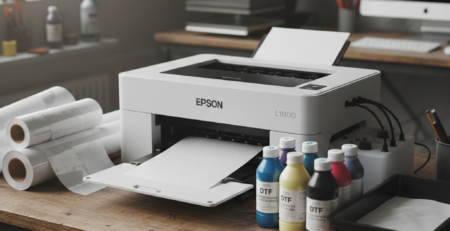
🔵 ProlificGeeks DTF Printer L1800
Useful for discussing small-scale DTF production and photographing printed sample garments. Check the listed model and specifications.

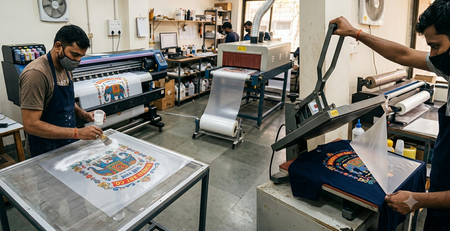
Relevant for commercial print-shop examples and larger collections of printed garments.

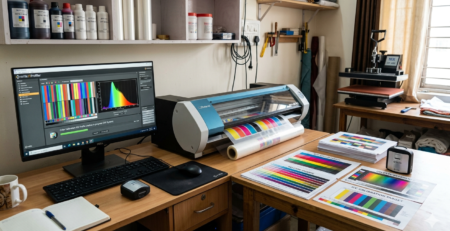
Can be mentioned when explaining print colour, production materials, and realistic sample photographs.

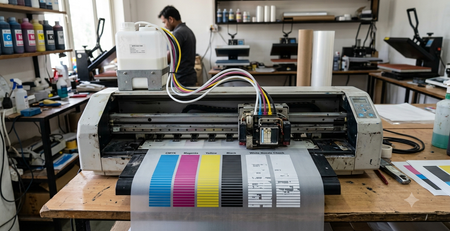
Relevant for showing transfer preparation, gang sheets, and ready-to-press samples.

Useful for explaining how transfers become finished garments ready for portfolio photographs.

Appropriate for a short explanation of DTF printing materials and the production process.
Additional relevant categories include 🔵 DTF Transfer Sheets and 🔵 Printing Accessories.
19. External References + Credits
The following websites can support further reading and editorial fact-checking.
| Website | Relevant Information |
|---|---|
| FESPA | Textile printing, print industry trends, and production technology |
| Adobe | Image editing, photography, and visual design |
| Hostinger | Domain names, hosting, website builders, and website setup |
| PrintIndustry | General print-industry information |

LEAVE A COMMENT