
Vinyl Printing – Best Comparison vs Traditional Printing (Top 7 Differences)
Vinyl printing can mean a shop-window graphic, a vehicle decal or a design for a T-shirt. Those jobs do not all use the same material. Before comparing vinyl with screen or offset printing, identify the surface, the artwork and how the finished item will be used.
A useful comparison starts with the order on your table. Twenty individually named shirts, a shop sign and five thousand identical leaflets need different production decisions. This guide separates the workflows so you can choose suitable equipment and ask better questions about cost and durability.
Chat with our team for printers, consumables, film, powder and business setup guidance.
1. Separate signage vinyl from garment HTV
Self-adhesive signage vinyl is used on suitable hard surfaces. It may be printed, contour-cut or cut from a coloured film, then installed using the method specified for that material and surface. The adhesive, finish and intended exposure matter.
Heat-transfer vinyl (HTV) is a garment-decoration material applied using heat and pressure. Coloured cut HTV and printable HTV are also different options: a printable version requires the right printer, ink and transfer system. Ordinary adhesive sign vinyl should not be treated as a garment heat transfer.

2. Understand what you are comparing
Screen printing places ink through a stencil onto a suitable substrate; it is not limited to paper. Offset printing is often considered for repeated printed matter such as leaflets and brochures. Neither is a direct replacement for every adhesive graphic or garment-transfer order.
For vinyl printing, a short personalised run can avoid the screen preparation associated with a new screen-printed design. But cutting, weeding, masking, laminating or installation can add significant work. Compare the finished job rather than the speed of the printer alone.

3. Compare setup time and repeat quantity
Imagine a sports team asking for a different name on each jersey. A suitable cut HTV can be practical because the names can change without preparing a new screen for each one. However, fine lettering and small shapes take longer to weed, and multiple layers need a compatible application method.
For a repeat design on a larger garment run, ask for a screen-printing quote as well. For full-colour personalised artwork, compare printable HTV, garment DTF and DTG where the fabric supports them. Count preparation, finishing and rejects before deciding which method is economical.
4. Keep the signage workflow separate
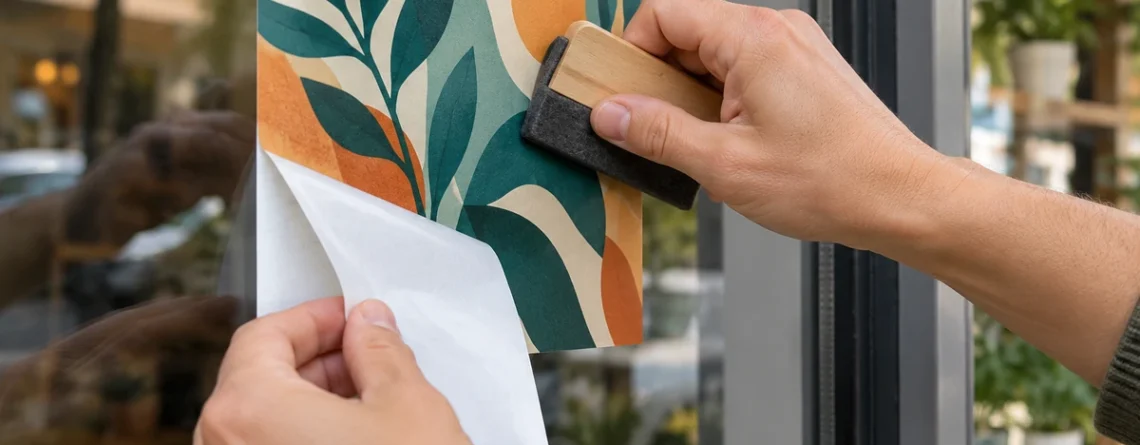
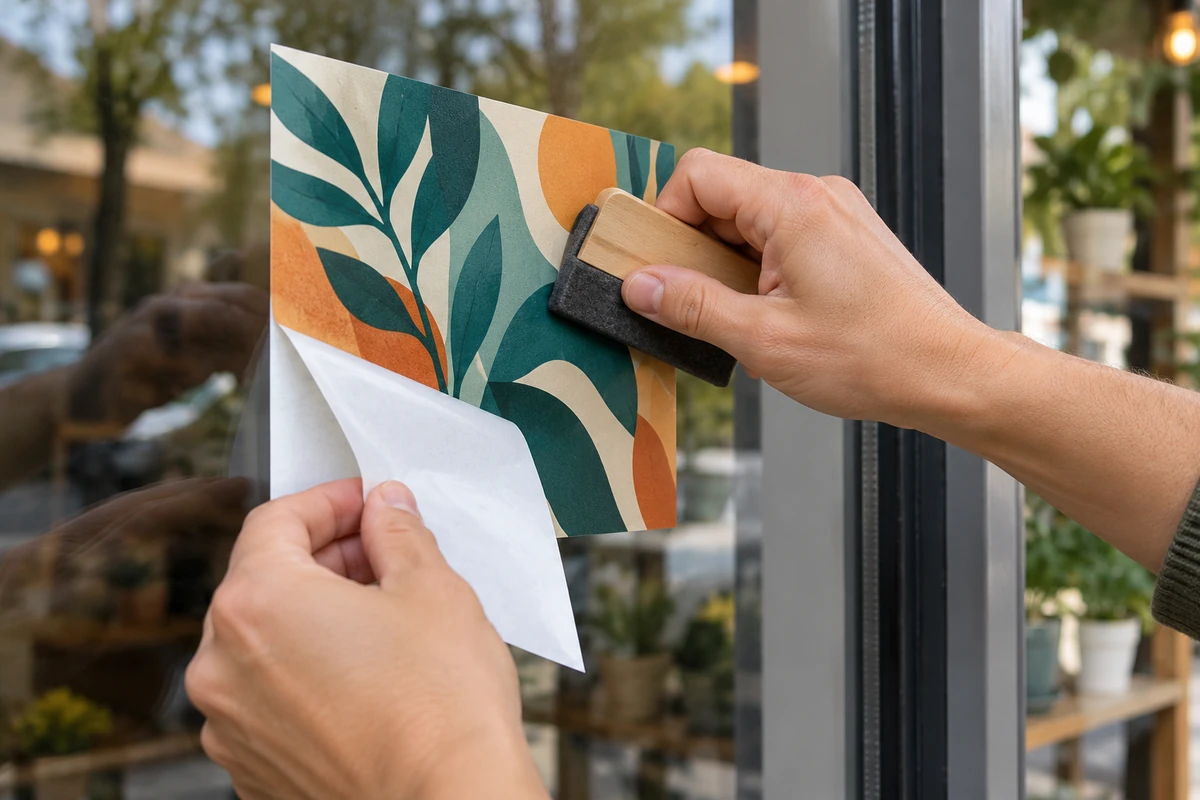
For a shop-window decal, begin with the film’s product data sheet and the condition of the glass. Check the surface, cleaning procedure, application temperature and intended indoor or outdoor exposure. A suitable installation method helps prevent bubbles and lifted edges.
Printed signage may also need a compatible protective laminate. The choice depends on the film, ink, surface and service conditions. There is no reliable universal statement that every vinyl graphic lasts a fixed number of years or that laminating always adds the same percentage of life.
5. Use the correct garment-vinyl process
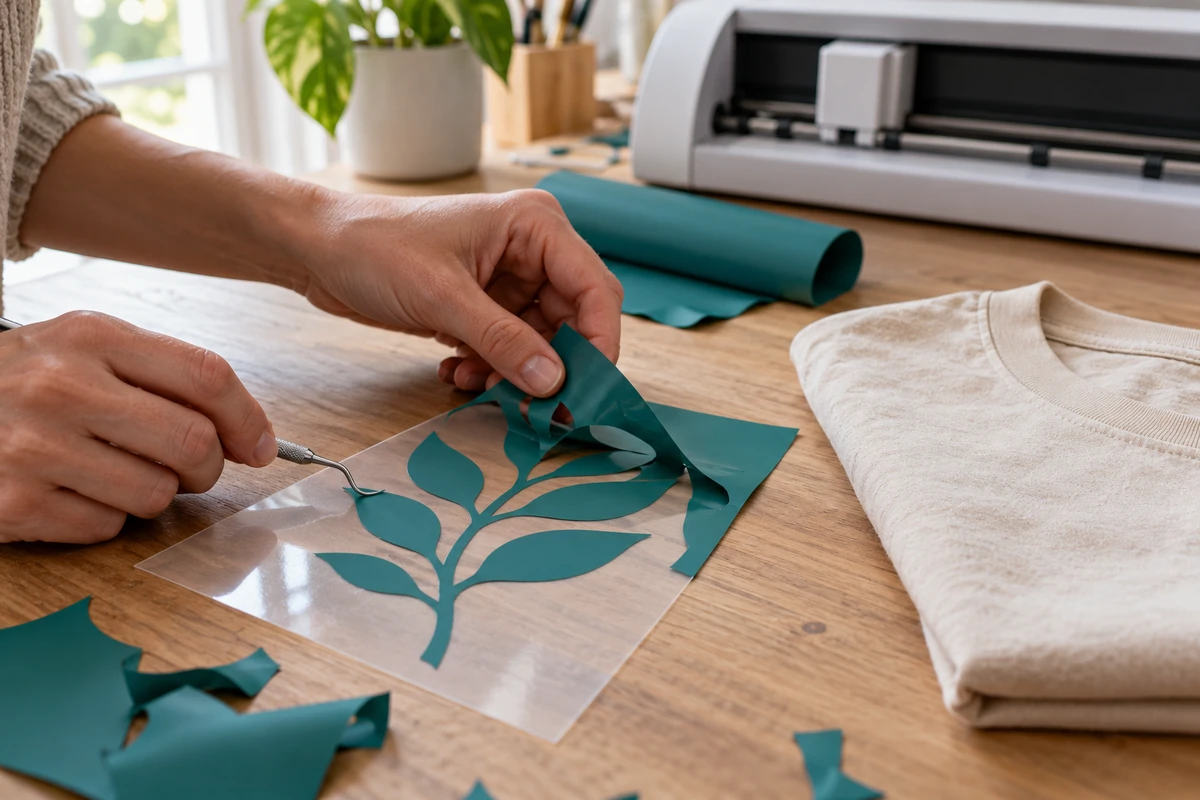
With cut HTV, prepare artwork that the cutter can follow, confirm the carrier orientation and mirror requirement, make a test cut and remove the unwanted material. Keep small interior shapes clear so the design remains readable after pressing.
Printable HTV has a different print-and-cut workflow and may need its specified application mask. Do not copy an adhesive-sign-vinyl process or a garment DTF powder process onto HTV simply because all three can involve a cutter or a carrier sheet.
For compatible garment transfers, compare a 15×15-inch heat press with a 16×24-inch heat press against your artwork size and usable platen area. Follow the HTV supplier’s instructions for temperature, pressure, time and carrier removal. A larger platen does not by itself guarantee a better bond.
6. Ask better questions about durability
For signage, ask which film and ink system the durability information covers, whether it assumes a protective laminate, and what exposure and surface conditions apply. Curved vehicle panels and a flat indoor sign are different installation problems.
For garment vinyl printing, test the actual blank, design size and material. Check edges, appearance and feel, then wash-test a sample and provide the material’s care instructions. Avoid transferring an outdoor-signage lifespan claim to a T-shirt.

7. Price the complete job
A useful vinyl-printing quote includes material area, ink where required, cutting, weeding, transfer tape or mask, lamination, application time and an allowance for test pieces. Add travel or installation work if it forms part of the order. For screen printing, include screen preparation, colour count, setup and curing.
Compare quotes for the same design, quantity, finish and delivery requirement. A low material price can be outweighed by difficult weeding or slow installation. Ask what happens if the artwork or individual names change after approval.
Common beginner mistakes
- Choosing by the word “vinyl” alone: identify whether the job needs adhesive signage film or a garment HTV system.
- Skipping a test cut: verify the blade, force and material setup before cutting the full order.
- Ignoring the application instructions: do not substitute one film’s pressing, masking or cleaning guidance for another.
- Promising a universal lifespan: use product-specific durability information and test the intended application.
- Forgetting finishing time: include weeding, masking, pressing or installation in the production schedule.
Frequently asked questions
Is vinyl printing always better than screen printing?
No. Compare the surface, artwork, quantity and finish. Changing names or small runs can favour an appropriate vinyl workflow; a repeated garment design may justify screen-printing setup. A sample and a complete quote are more useful than a blanket winner.
Can signage vinyl be pressed onto a T-shirt?
Use a material explicitly intended for the garment application. Pressure-sensitive sign film and heat-transfer vinyl have different adhesive systems and instructions.
Should I buy a DTF printer to print signage vinyl?
A garment DTF printer is a different system. If you are considering garment transfers as an alternative to HTV, read the DTF T-shirt printing guide. Do not assume garment DTF ink or film will produce adhesive vehicle or window graphics.
Keep a product-specific reference
The Siser HTV application instructions show why the material and fabric must be identified before pressing. For signage, Avery Dennison’s vinyl application-temperature guidance explains why installation conditions matter. Use the current instructions for the exact product you choose.
Choose for the finished result
Vinyl printing is valuable when the material, artwork and application fit the order. Keep signage and garment workflows distinct, compare the full production cost and approve a sample before scaling. That gives the customer a clear expectation and gives your team a process it can repeat.




LEAVE A COMMENT