
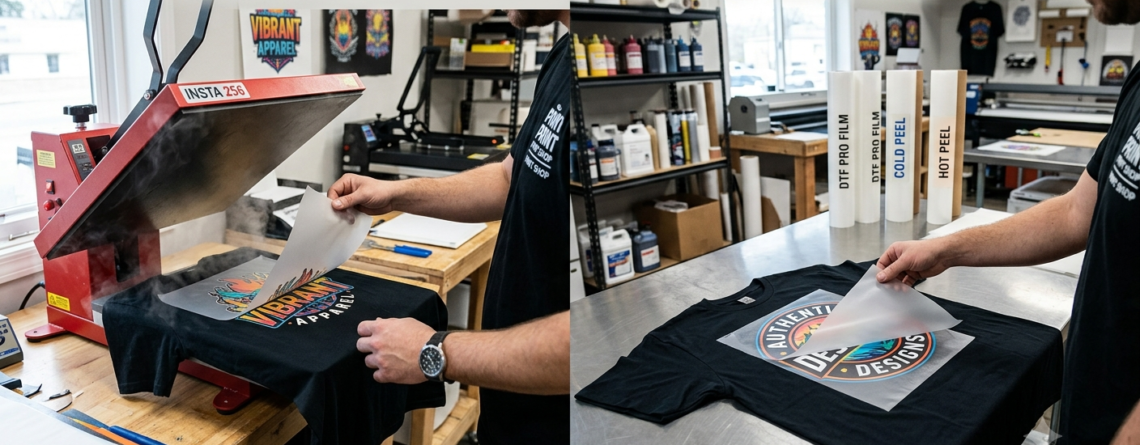
Hot Peel vs Cold Peel DTF Film: Ultimate Guide for Better Print Quality 2026
When people discuss Hot Peel vs Cold Peel DTF Film, they often focus only on the film. However, the final print quality also depends on other materials used in the DTF process, especially hot melt adhesive powder.
DTF printing has become popular because it allows printing on cotton, polyester, blends, denim, and many other fabrics. The process is simple. A design is printed on DTF film, coated with adhesive powder, cured, and then transferred to fabric using heat.
Chat with our team for printers, consumables, film, powder and business setup guidance.
The choice between hot peel and cold peel film affects production speed, print appearance, and workflow. Understanding the difference can help businesses reduce mistakes and improve output quality.

Why Hot Melt Powder is Essential for DTF Transfers
Before comparing Hot Peel vs Cold Peel DTF Film, it is important to understand the role of adhesive powder.
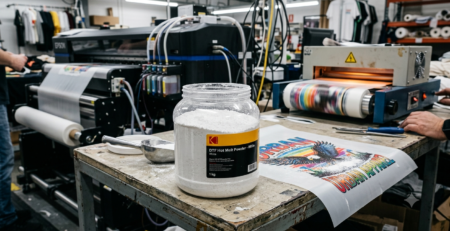
Hot melt powder acts as the bonding layer between the printed ink and the fabric. Without it, the transfer will not stick properly.
Benefits include:
- Strong fabric bonding
- Better wash durability
- Flexible print finish
- Improved color retention
- Reduced cracking and peeling
Even the best DTF film cannot perform well if poor-quality powder is used.
Understanding Hot Peel vs Cold Peel DTF Film
The main difference is the waiting time after pressing.
What is Hot Peel DTF Film?
Hot peel film can be removed almost immediately after heat pressing.
Advantages:
- Faster production
- Suitable for bulk orders
- Saves working time
- Smooth workflow
Disadvantages:
- Requires accurate peeling technique
- Slightly less forgiving for beginners
What is Cold Peel DTF Film?
Cold peel film must cool completely before removing the film sheet.
Advantages:
- Better detail retention
- More stable transfers
- Easier for new users
Disadvantages:
- Slower production process
- Extra waiting time
For many print shops, the choice in Hot Peel vs Cold Peel DTF Film depends on daily production volume.

Key Features to Look for in Quality DTF Adhesive Powder
Whether you use hot peel or cold peel film, always look for:
- Fine powder consistency
- Strong bonding performance
- Low smoke during curing
- Soft hand feel
- Good washing resistance
- Consistent melting behavior
Reliable powder improves the performance of both options in the Hot Peel vs Cold Peel DTF Film comparison.
Key Features to Look for in DTF Film
When selecting film, check:
- Coating quality
- Ink absorption
- Release consistency
- Anti-static performance
- Transfer sharpness
- Compatibility with printer and ink
Good film reduces waste and improves print success rates.
Top Hot Melt Adhesive Powder Brands Available in India
Living Lion
Living Lion is known among many DTF users for consistent powder quality and reliable transfer performance.
BhartiPrint (Bharti Creation)
BhartiPrint offers products used by small and medium printing businesses across India.
Desmat Sublimation (Koncept)
Desmat products are commonly used in textile printing environments and are known for steady performance.
3alps Digital Printers
3alps provides various DTF consumables including powders and films.
Shagun Enterprise
A known supplier for printing materials with multiple DTF product options.
InksfyDTF (Etsy India)
InksfyDTF serves custom printing users looking for smaller quantity purchases.
Kamicraftsales (Etsy India)
Offers DTF consumables for hobby users and growing businesses.
Price Range of DTF Hot Melt Powder in India (per kg)
Prices can vary depending on quality and supplier.
Approximate range:
- Economy Grade: ₹350–₹500 per kg
- Standard Grade: ₹500–₹800 per kg
- Premium Grade: ₹800–₹1,500 per kg
Higher-grade powders generally provide better wash durability and transfer strength.

Comparison of Indian Brands: Performance & Quality
| Brand | Print Quality | Wash Resistance | Value for Money |
|---|---|---|---|
| Living Lion | Good | Good | Good |
| BhartiPrint | Good | Good | Very Good |
| Desmat Sublimation | Very Good | Very Good | Good |
| 3alps Digital Printers | Good | Good | Good |
| Shagun Enterprise | Moderate | Good | Good |
| InksfyDTF | Good | Moderate | Good |
| Kamicraftsales | Moderate | Moderate | Moderate |
The powder quality can influence the final result regardless of the outcome of the Hot Peel vs Cold Peel DTF Film decision.
Hot Peel vs Cold Peel DTF Film: Which One Gives Better Results?
This is the most common question among DTF businesses.
For Fast Production
Choose hot peel film.
A shop producing 200–500 transfers daily often prefers hot peel because every minute matters.
For Maximum Print Detail
Choose cold peel film.
Fine text, small logos, and detailed graphics usually benefit from cold peel processing.
For Beginners
Cold peel is often easier because there is less risk during the peeling process.
For Experienced Operators
Hot peel can increase productivity significantly.
This practical difference makes Hot Peel vs Cold Peel DTF Film an important buying decision.
Where to Buy Hot Melt Adhesive Powder in India (Online & Offline)
You can purchase DTF materials from:
- Specialized DTF suppliers
- Printing equipment distributors
- Textile printing stores
- Online marketplaces
- Dedicated DTF websites
Many businesses also buy complete DTF solutions from DTFshop.in to ensure compatibility between printers, films, inks, and powders.
Product Suggestions (DTFshop.in)
The following products are commonly used in professional DTF setups:
🔵 ProlificGeeks DTF Printer L1800
🔵 DTF Hot Melt Adhesive Powder
These products are often selected based on production volume, print speed, and business requirements.
Tips for Storing and Using DTF Hot Melt Adhesive Powder
Good storage improves print consistency.
Follow these tips:
- Keep powder sealed when not in use.
- Avoid moisture exposure.
- Store in a cool, dry place.
- Use gloves when handling large quantities.
- Mix batches carefully.
- Avoid direct sunlight.
The same principle applies to DTF films. Proper storage improves performance in both Hot Peel vs Cold Peel DTF Film applications.
Practical Example: Hot Peel vs Cold Peel DTF Film
Imagine two print shops.
Shop A produces school uniforms and promotional T-shirts in bulk.
They use hot peel film because speed matters.
Shop B focuses on customized fashion garments with detailed artwork.
They prefer cold peel film because precision matters more than speed.
Both choices are correct. The best option depends on business goals.
This example clearly shows why Hot Peel vs Cold Peel DTF Film should be selected based on workflow rather than marketing claims.
Frequently Asked Questions (FAQs)
Which is better, hot peel or cold peel DTF film?
Neither is universally better. Hot peel is faster, while cold peel often provides more controlled results.
Is hot peel film suitable for beginners?
Yes, but beginners usually find cold peel easier to handle.
Does film type affect wash durability?
Not significantly. Durability depends more on powder quality, curing, and pressing conditions.
Which film is better for bulk production?
Hot peel film is usually preferred because it speeds up production.
Can the same printer use both films?
Yes. Most DTF printers support both hot peel and cold peel films.
How many times should Hot Peel vs Cold Peel DTF Film be evaluated?
Whenever production requirements change. Different jobs may require different film types.
Conclusion: Best Brand Recommendation for Indian DTF Businesses
The debate around Hot Peel vs Cold Peel DTF Film does not have a single winner.
If your business focuses on speed and large-volume production, hot peel film is usually the better choice.
If your priority is detailed artwork and controlled peeling, cold peel film may be more suitable.
For most Indian DTF businesses, keeping both film types available is often the smartest approach. This allows flexibility based on customer requirements.
A good printer, quality film, reliable adhesive powder, and proper curing settings matter more than choosing one film type over the other.
When evaluating Hot Peel vs Cold Peel DTF Film, always test on your actual garments before making large purchases.
External References
Credit: Information references from Fespa, PrintIndustry, and other public sources.


LEAVE A COMMENT