
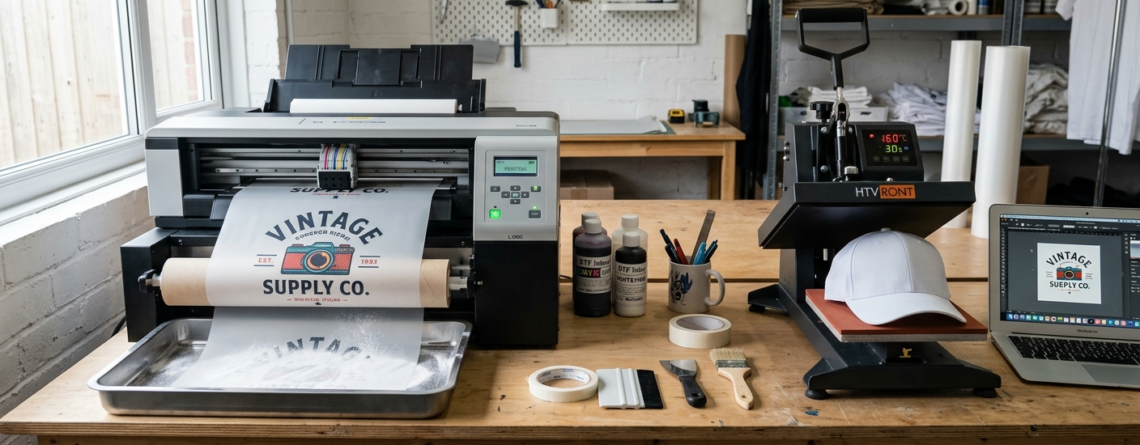
DTF Printing for Caps and Hats: 10 Easy Techniques and Film Tips
DTF printing for caps and hats is becoming very popular in small and large printing businesses. It allows you to print detailed designs on curved surfaces like caps without much hassle. Unlike vinyl or embroidery, DTF gives you full-color results with fine details.
In simple words, you print your design on a special film, apply powder, cure it, and then press it onto the cap. Sounds easy? Yes, but small mistakes can ruin the result. This guide will help you avoid that.
Chat with our team for printers, consumables, film, powder and business setup guidance.
Benefits for Caps and Hats
DTF printing for caps and hats has many advantages:
- Works on cotton, polyester, blends
- No weeding required
- Supports complex, colorful designs
- Faster than embroidery for bulk work
- Soft feel after transfer
If you run a custom printing shop, this method can save time and increase your profit.
Essential Materials and Equipment
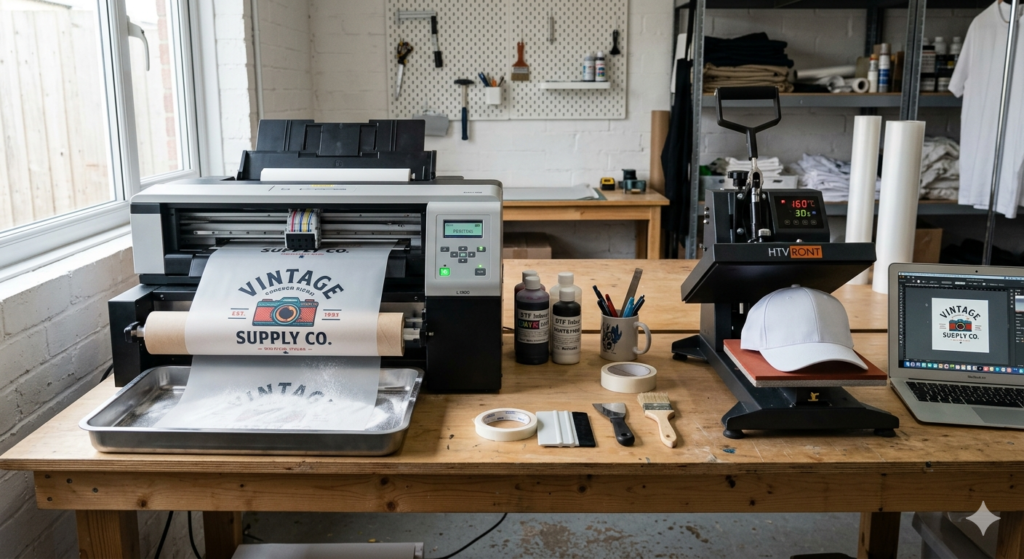
To start DTF printing for caps and hats, you need proper tools:
- DTF Printer
- DTF Ink
- PET Film
- Adhesive Powder
- Heat Press (Cap Press preferred)
You can consider machines like:
🔵 ProlificGeeks DTF Printer L1800
🔵 XP600
🔵 i3200
These printers are commonly used for stable output and good quality prints.
Design Preparation Tips
Before printing, your design must be ready.
- Use high-resolution files (300 DPI)
- Keep transparent background
- Avoid very thin lines (they may break)
- Mirror the design before printing
For caps, keep the design size small. Large prints don’t sit well on curved surfaces.
Printing on DTF Film
This is where your design comes to life.
- Load the PET film correctly
- Print in mirror mode
- Use proper ink settings
DTF printing for caps and hats requires slightly thicker ink layers to ensure strong transfer on fabric.
Make sure your printer is well-maintained. Poor nozzle condition leads to faded prints.
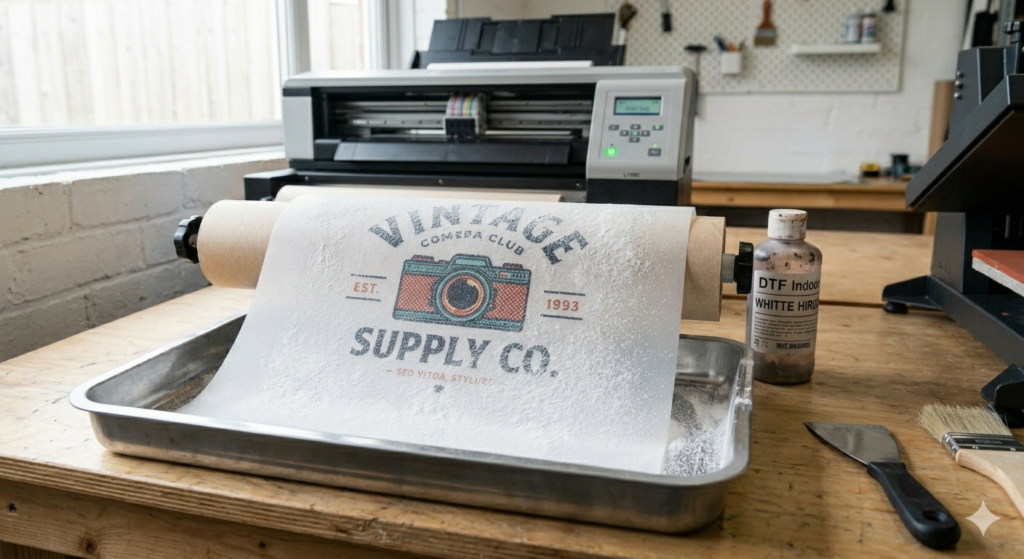
Adhesive Powder Application
Once printing is done:
- Sprinkle adhesive powder evenly
- Shake off extra powder
Uneven powder leads to patchy transfers. Always check the coating before curing.
Curing the Transfer
Now cure the film:
- Temperature: around 110–120°C
- Time: 2–5 minutes
You can use a curing oven or hover your heat press.
Don’t overheat. It can damage the design.
Hat Preparation Techniques
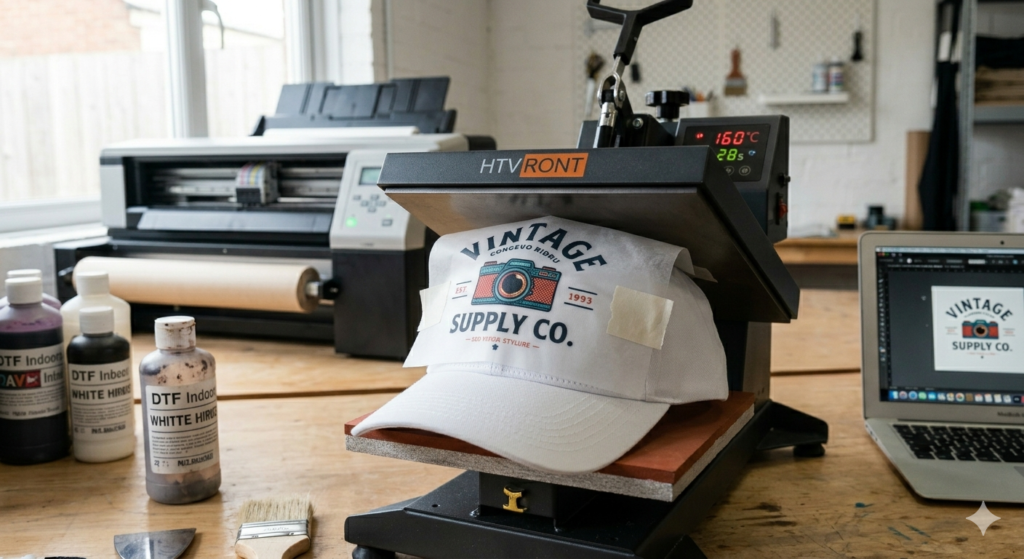
Caps are tricky because of their shape.
- Use a cap heat press
- Pre-press the hat for 5 seconds
- Remove moisture and wrinkles
This step is often ignored, but it improves final quality a lot.
Step-by-Step Transfer Process
Here’s how DTF printing for caps and hats works step-by-step:
- Place cured film on the cap
- Align carefully
- Press with medium pressure
- Heat for 10–15 seconds
- Let it cool (cold peel)
Patience is important here. Don’t rush peeling.
DTF Film Selection Guide
Not all films are the same.
Choose:
- Matte film for better grip
- Cold peel film for clean finish
- Anti-static film for smooth printing
Cheap films often cause issues like ghosting or uneven prints.
Pressing Settings for Curves
Caps are curved, so pressure must be adjusted.
- Use foam pad support
- Apply even pressure
- Avoid over-pressing
DTF printing for caps and hats requires balance. Too much pressure can distort the design.
Peeling and Finishing
After pressing:
- Wait for film to cool
- Peel slowly
- Do a second press (5 seconds)
This final press improves durability and smoothness.
Common Troubleshooting
Problem: Design not sticking
→ Check powder and curing
Problem: Cracks after wash
→ Increase pressure or second press
Problem: Faded colors
→ Clean print heads and check ink
DTF printing for caps and hats needs small adjustments. Test before bulk production.
Design Ideas and Examples
You can try:
- Logo prints
- Sports team caps
- Custom names
- Streetwear graphics
Simple designs work best on caps. Too much detail can get lost due to curve.
Care and Washing Instructions
To make prints last:
- Wash inside out
- Use cold water
- Avoid harsh detergents
- Do not iron directly on print
Good care increases life of DTF prints.
Conclusion
DTF printing for caps and hats is a smart choice for modern printing businesses. It is flexible, cost-effective, and produces high-quality results.
If you follow the right steps—good film, proper curing, correct pressure—you will get consistent output.
Start small, test different materials, and improve with experience.
Product Suggestions (Used Naturally Above)
🔵 ProlificGeeks DTF Printer L1800
🔵 XP600
🔵 i3200
External References + Credits
For deeper technical understanding, you can explore:
- PrintIndustry.com
- Fespa.com
- InkJetInsights.com
- ResearchGate
Credit: Information references from Fespa, PrintIndustry, and other public sources.

LEAVE A COMMENT