
DTF Printer for Small Business: Ultimate Guide to Choosing the Right Setup 2026
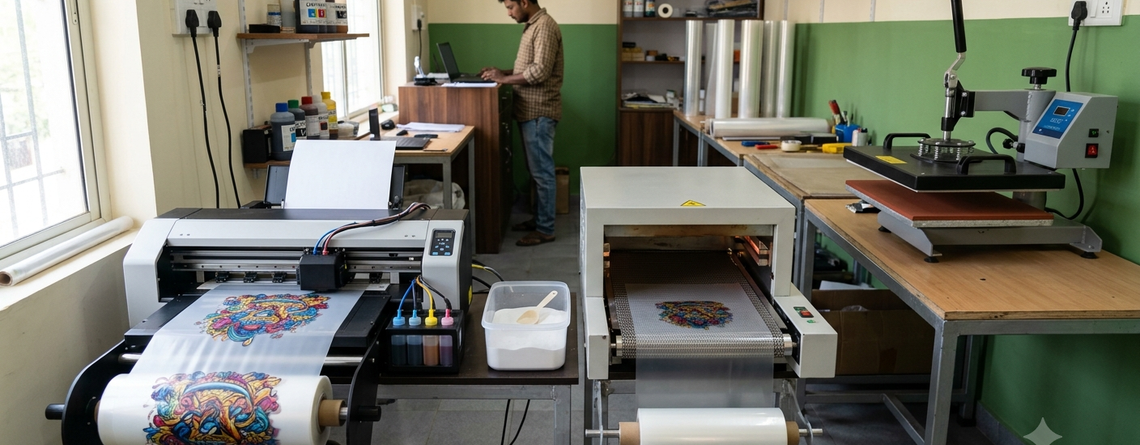
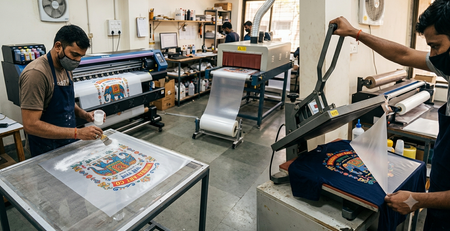
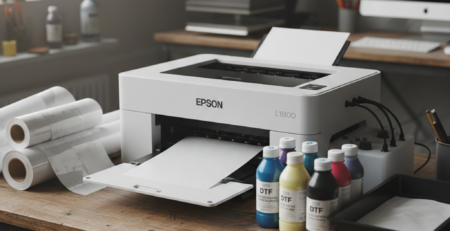
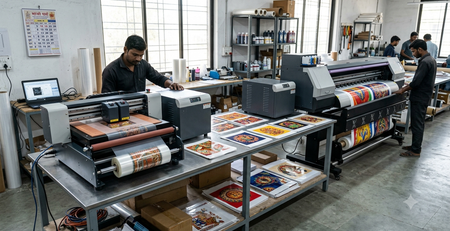
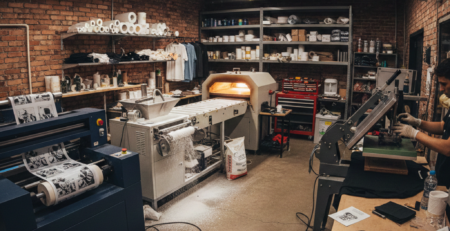
Choosing a DTF Printer for Small Business is not only about selecting the printer. The complete DTF setup matters. A good printer, quality ink, PET film, hot melt adhesive powder, curing system, and heat press all work together.
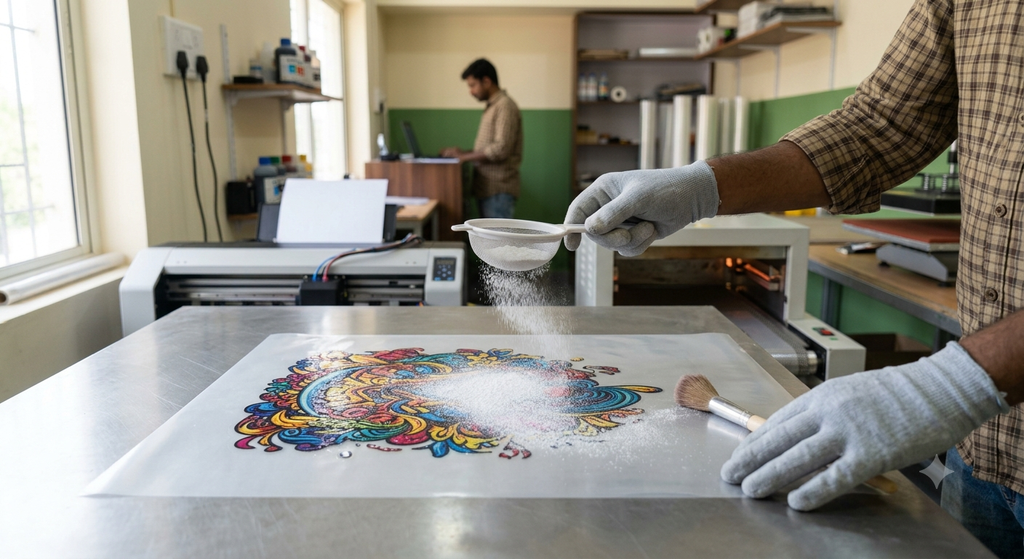
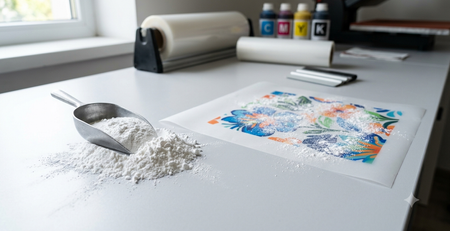
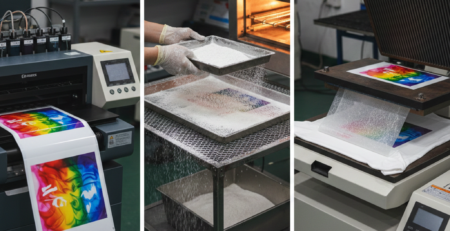
Hot melt adhesive powder is one of the most important parts of the DTF process. After the design is printed on PET film, the powder is applied to the wet printed area. Excess powder is removed, and the adhesive is cured. This creates the bonding layer that helps transfer the design from the film onto the fabric.
Chat with our team for printers, consumables, film, powder and business setup guidance.
For a small business, this matters because poor powder can spoil an otherwise good print. You may have a sharp design from your DTF Printer for Small Business, but weak or uneven adhesive can lead to poor bonding, rough texture, or reduced wash performance.
DTF is useful for custom T-shirts, hoodies, uniforms, bags, sportswear, and small personalised orders. FESPA also notes that DTF can work across several textile types and is particularly useful for handling multiple small designs and varied garment decoration jobs.
A simple way to think about a DTF setup is this:
Printer creates the image. Ink creates the colour. Film carries the design. Powder helps it bond. Heat completes the transfer.
If one part is weak, the final result can suffer.
Why Hot Melt Powder is Essential for DTF Transfers
Hot melt powder is the adhesive layer behind every DTF transfer. Without proper bonding, the printed design cannot attach securely to the garment.
For someone running a DTF Printer for Small Business, consistency is more important than chasing the cheapest material. Small businesses often work with repeat customers. A local clothing brand or school may order again only if the first batch performs well.
Quality adhesive powder helps with:
- Strong fabric bonding
- More even transfer results
- Better flexibility
- Improved wash durability
- Cleaner handling during production
- More consistent results across different jobs
The powder should coat the wet ink evenly. Too much leftover powder can make the print feel unnecessarily heavy. Too little coverage can reduce bonding.
In small manual setups, the operator usually applies and shakes off the powder by hand. Larger commercial systems may use automatic powder shakers. FESPA’s DTF guidance similarly describes even powder application, removal of excess powder, and controlled curing as key steps in the process.
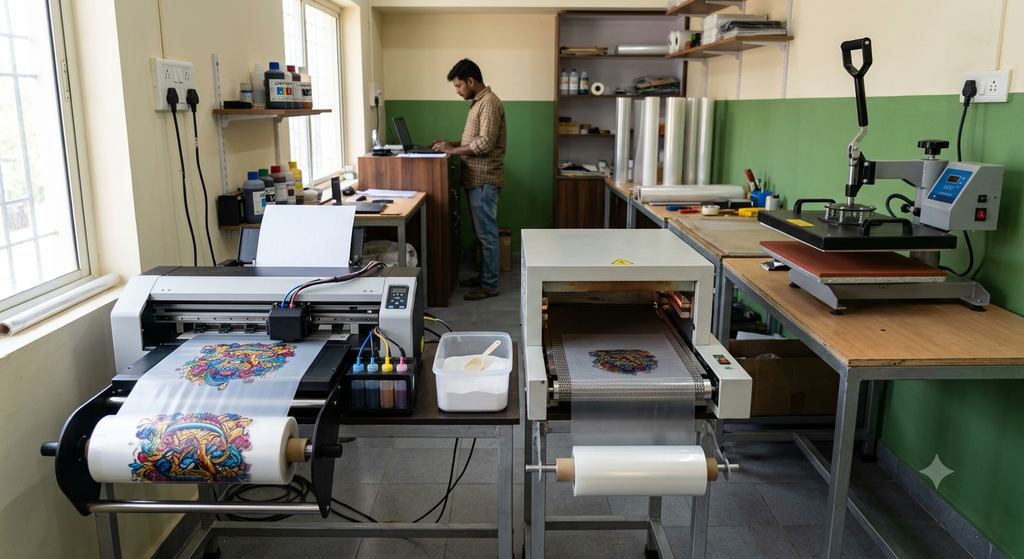
This is why a DTF Printer for Small Business should be planned as a complete workflow rather than just a machine purchase.
Key Features to Look for in Quality DTF Adhesive Powder
Not all DTF powders behave the same way. Before buying, check the following points.
1. Fine and consistent particle size
A consistent powder generally spreads more evenly over the printed design. Uneven particles can make manual application harder.
2. Good melt behaviour
The powder should melt properly under the recommended curing conditions. Always follow the product supplier’s instructions instead of using one fixed setting for every powder.
3. Strong bonding
The final transfer should attach properly to the intended fabric. Cotton, polyester, blends, and some specialty fabrics can behave differently.
4. Clean powder removal
A good powder should allow excess material to be removed cleanly from non-printed areas. This helps avoid unwanted adhesive marks.
5. Compatibility with your workflow
Your powder must work with your film, ink, curing method, and production volume. A manual DTF Printer for Small Business setup may need different handling compared with a 24-inch automated production line.
A practical tip: do not judge powder only by its price per kilogram. Calculate how consistently it performs and how much material is wasted during real production.
Top Hot Melt Adhesive Powder Brands Available in India
The Indian DTF market includes powders sold by established printing suppliers, distributors, and online sellers. Availability can change by city and batch, so it is sensible to ask for current specifications and compatibility information before purchasing.
Living Lion
Living Lion is known in the Indian printing supply market for DTF-related consumables. Before selecting any powder, check its recommended use, storage requirements, and current technical details.
BhartiPrint (Bharti Creation)
BhartiPrint or Bharti Creation is another name buyers may come across while searching for printing materials. Compare product specifications rather than relying only on brand recognition.
Desmat Sublimation (Koncept)
Desmat Sublimation products under Koncept may be considered by businesses looking for textile-printing consumables. For a DTF Printer for Small Business, testing a small quantity before committing to bulk stock is a sensible approach.
3alps Digital Printers
3alps Digital Printers is another supplier name that may appear in the Indian digital-printing market. Ask about current stock, powder grade, and recommended application process.
Shagun Enterprise
Shagun Enterprise may offer DTF-related supplies depending on current inventory. Check batch consistency and whether the powder suits your regular film and ink combination.
InksfyDTF (Etsy India)
InksfyDTF may be found through marketplace listings. Marketplace products can vary, so carefully review seller details, product specifications, and customer feedback before ordering.
Kamicraftsales (Etsy India)
Kamicraftsales is another marketplace seller name that buyers may encounter. Check shipping details, current availability, and exact product information before purchasing.
For any supplier, avoid assuming that one powder is automatically best for every DTF Printer for Small Business. Testing with your own printer, ink, film, and fabric gives more useful information than a brand name alone.
Price Range of DTF Hot Melt Powder in India (per kg)
Prices can change based on powder type, quality, packaging size, supplier, and bulk quantity. As a general buying approach, compare the final cost after shipping and GST where applicable.
For a small business, it is usually better to start with a manageable quantity and test it properly. Buying a very large bag simply because the per-kilogram price looks lower can create problems if the powder does not suit your workflow.
Also remember that your real operating cost includes more than powder. Film wastage, ink, electricity, maintenance, cleaning, curing, and rejected prints should all be included when calculating the cost of each transfer.
A practical business rule is simple:
Low material price does not always mean low production cost.
Comparison of Indian Brands: Performance & Quality
Instead of declaring one supplier the winner for every business, compare products using the same test conditions.
| Factor | What to Check |
|---|---|
| Powder spread | Does it coat the wet print evenly? |
| Melting | Does it cure cleanly under recommended conditions? |
| Bonding | Does the transfer attach consistently to your target fabric? |
| Flexibility | Does the finished design remain reasonably comfortable? |
| Batch consistency | Do repeat purchases behave similarly? |
| Waste | Is excessive powder left where it is not needed? |
| Supplier support | Can the seller provide useful compatibility guidance? |
Run the same design on the same film and fabric when comparing samples. That gives you a fairer result.
This is especially important when using an XP600 or i3200-based DTF Printer for Small Business because faster production can make small material problems more expensive. One poor batch of consumables can create a lot of rejected transfers.
Where to Buy Hot Melt Adhesive Powder in India (Online & Offline)
You can buy DTF powder through specialist printing-equipment stores, regional digital-printing suppliers, online marketplaces, and local dealers.
Online buying is convenient because you can compare product specifications. Offline buying can be useful when you want to inspect packaging, discuss compatibility, or quickly arrange replacement supplies.
If you are building a complete setup, DTFShop lists DTF printers, films, inks, powders, accessories, and other printing equipment. It is useful to check compatibility and after-sales support before combining equipment from different suppliers.
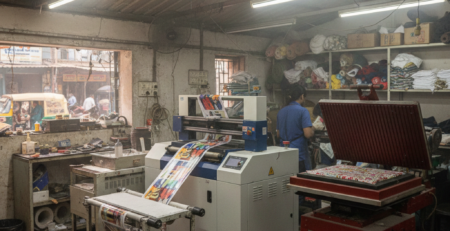
For a new DTF Printer for Small Business, try to keep your first workflow simple. Use tested combinations rather than changing printer, ink, film, and powder all at the same time.
Tips for Storing and Using DTF Hot Melt Powder
Good storage can help avoid production problems.
Keep these practical points in mind:
- Store powder in a dry, clean place.
- Keep the container properly closed when not in use.
- Avoid unnecessary moisture exposure.
- Use clean tools for handling.
- Do not mix unknown powders together.
- Label different batches clearly.
- Follow the supplier’s instructions for curing and transfer.
- Test new batches before using them for a large customer order.
For manual production, work carefully and consistently. Apply the powder evenly and remove excess material before curing.
For automated production, regularly inspect the shaker and curing workflow. A high-output printer does not automatically guarantee high-quality transfers.
Frequently Asked Questions (FAQs)
1. What is the best DTF Printer for Small Business?
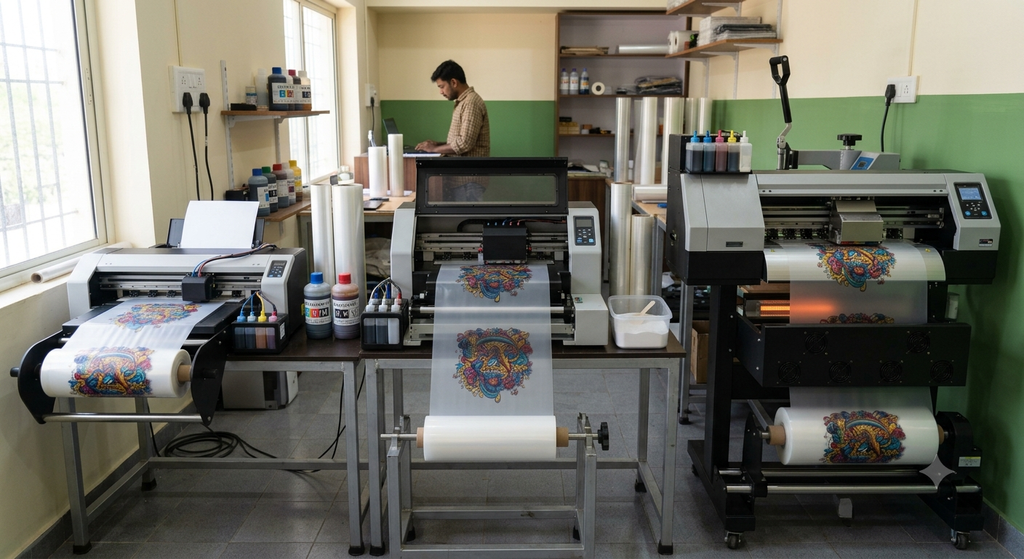
There is no single answer for every business. A lower-cost L1800-style setup may suit learning and low-volume work, while XP600-based machines can offer a stronger balance for growing production. i3200 systems are generally better suited to higher-volume professional work. DTFShop’s current buying guides make similar distinctions between L1800, XP600, and i3200 setups based on business scale.
2. Why is hot melt powder important in DTF printing?
It creates the adhesive layer that helps the printed design bond to the garment during the transfer process.
3. Can I use any DTF powder with any printer?
Not always. Powder performance depends on the complete workflow, including ink, film, curing method, and fabric. Check compatibility and test before large production.
4. Is an XP600 machine good for a small business?
For many growing businesses, an XP600-based setup can offer a useful balance between cost and productivity. The right choice still depends on expected order volume, maintenance capability, workspace, and budget.
5. When should a business move to an i3200 setup?
Consider moving to an i3200-based system when regular order volume and production needs justify the higher investment and you need greater output capacity.
Conclusion: Best Brand Recommendation for Indian DTF Businesses
For an Indian DTF business, the best choice is not always the most expensive machine or the cheapest powder. The smarter approach is to choose a reliable combination that matches your daily workload.
If you are starting small, focus on easy maintenance, stable output, available consumables, and supplier support. A DTF Printer for Small Business should help you handle real customer orders without creating unnecessary complexity.
For lower-volume work, an L1800-based option can be a starting point. For growing businesses, XP600 can offer a useful step up in productivity. For larger and more regular production, i3200-based systems are worth considering.
The same logic applies to hot melt powder. Test before buying in bulk. Keep your process consistent. Track rejected prints. Learn which combination works best with your regular jobs.
In the end, a successful DTF Printer for Small Business setup is built around reliable workflow, not just impressive specifications.
Product Suggestions (Blue)
<span style=”color:blue”>🔵 ProlificGeeks DTF Printer L1800</span>
<span style=”color:blue”>🔵 XP600 DTF Printer</span>
<span style=”color:blue”>🔵 i3200 DTF Printer</span>
<span style=”color:blue”>🔵 24-Inch XP600 DTF Printer</span>
<span style=”color:blue”>🔵 Dual Head XP600 DTF Printer</span>
These options represent different production levels, from startup and small-shop use to higher-volume commercial printing. DTFShop’s published comparisons also position L1800, XP600, and i3200 systems for different business scales and workloads.
External References + Credits
Helpful sources for further reading include:
- FESPA DTF Printing Information
- DTFShop India Printer Buying Guide
- PrintIndustry.com
- InkJetInsights.com
- ResearchGate for technical and research-oriented explanations
Credit: Information references from Fespa, PrintIndustry, and other public sources.

LEAVE A COMMENT