
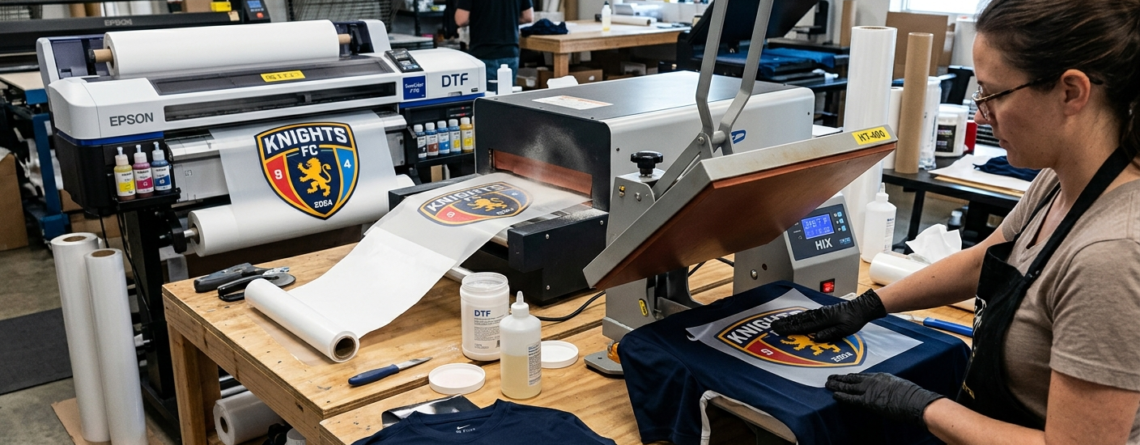
DTF Printing for Sportswear: Easy & Powerful Guide to Custom Jerseys 2026
DTF printing for sportswear is becoming one of the most popular methods for customizing jerseys. Whether it’s a local cricket team, school football squad, or a gym uniform, people now want high-quality prints that last long and look professional.
DTF stands for Direct-to-Film. In this process, designs are printed onto a special film and then transferred to fabric using heat. Unlike older methods, it works on almost any material — polyester, cotton, blends, and more.
Chat with our team for printers, consumables, film, powder and business setup guidance.
Many small businesses and even beginners are now choosing DTF printing for sportswear because it is flexible and cost-effective. You don’t need heavy setups like screen printing, and you can print even one piece without waste.
Benefits for Sportswear and Jerseys
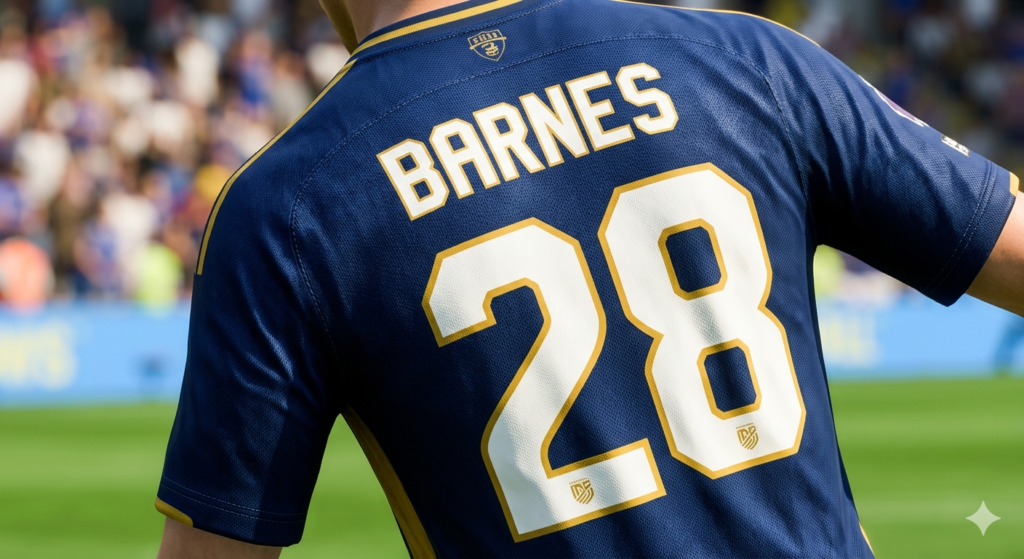
DTF printing for sportswear offers some clear advantages, especially when compared to traditional methods.
First, it works perfectly on polyester jerseys. Sportswear is mostly made from polyester, and many printing methods struggle with it. DTF handles it easily.
Second, the prints are stretchable. Jerseys go through a lot — running, sweating, stretching. DTF prints move with the fabric and don’t crack easily.
Third, color quality is excellent. Even dark jerseys can have bright, sharp prints without needing complex layers.
Another benefit is low setup cost. With tools like 🔵 ProlificGeeks DTF Printer L1800, beginners can start small and scale later.
Essential Equipment and Materials
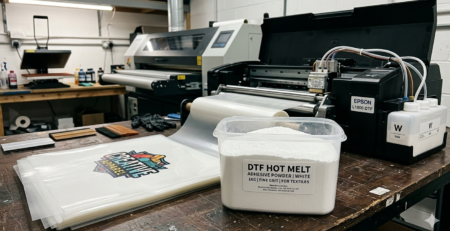
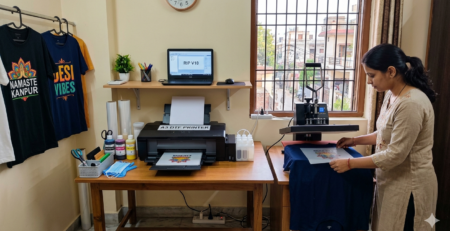
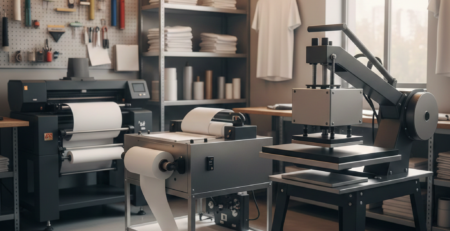
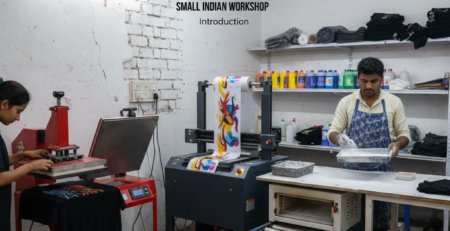
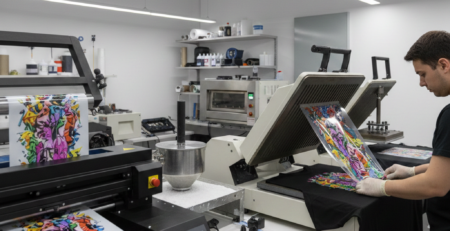
To start DTF printing for sportswear, you need a few basic tools. You don’t need a factory — even a small room setup works.
Here’s what you need:
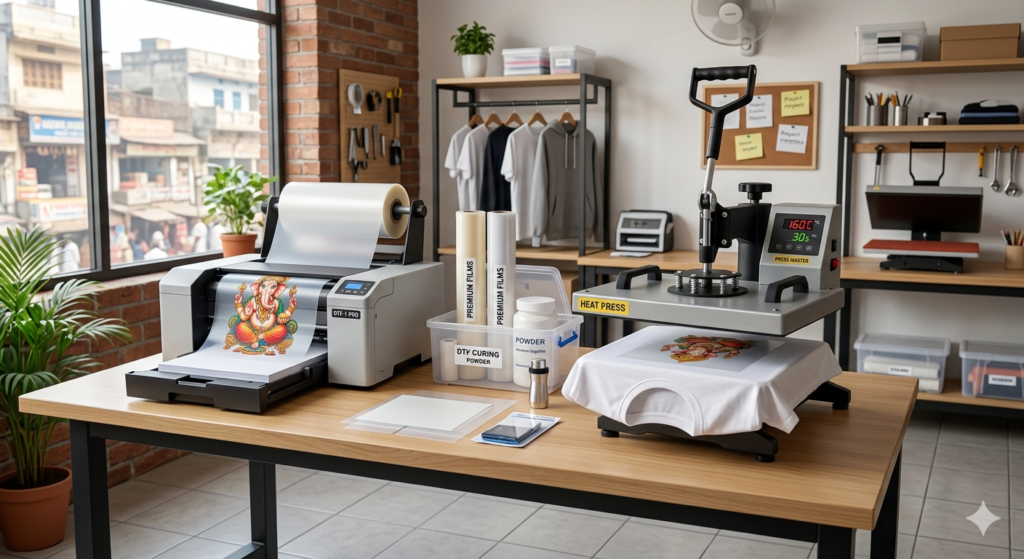
- DTF Printer
- DTF Ink
- PET Film
- Adhesive Powder
- Heat Press Machine
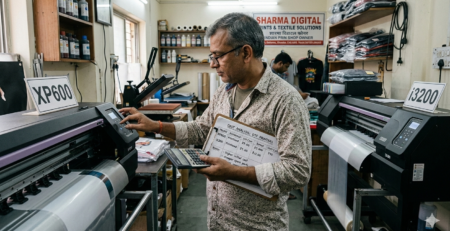
For printers, many people prefer models like 🔵 XP600 or 🔵 i3200 because they offer better speed and print quality.
You’ll also need RIP software to prepare your designs for printing.
Good materials make a big difference. Cheap film or powder can ruin your prints, so always choose trusted suppliers like DTFshop.in.
Step-by-Step Printing Process
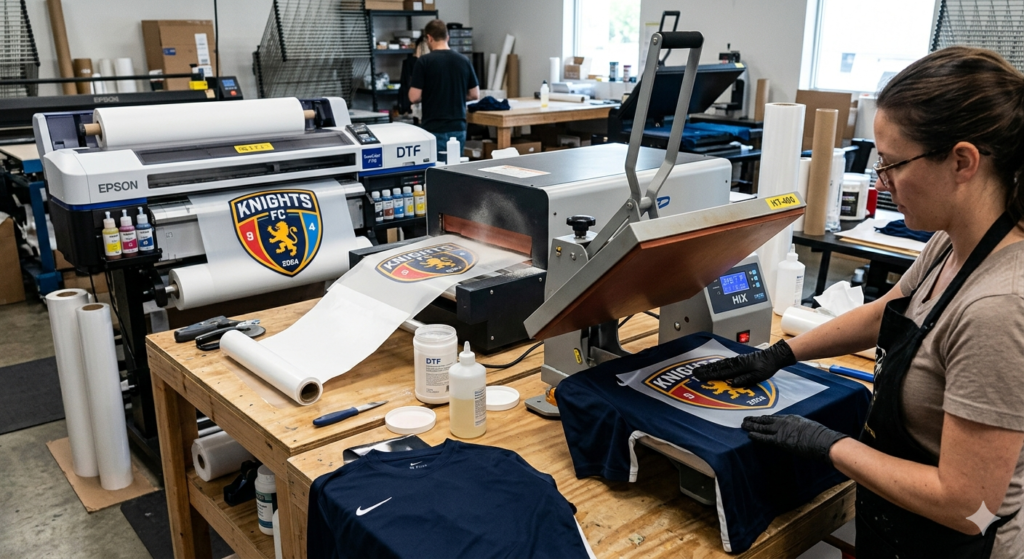
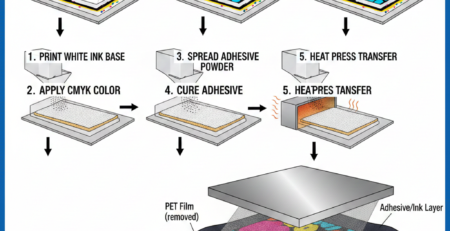
DTF printing for sportswear follows a simple process. Once you learn it, it becomes routine.
Step 1: Create Design
Design your jersey name, number, or logo using software like Photoshop or CorelDRAW.
Step 2: Print on Film
Print the design onto PET film using your DTF printer.
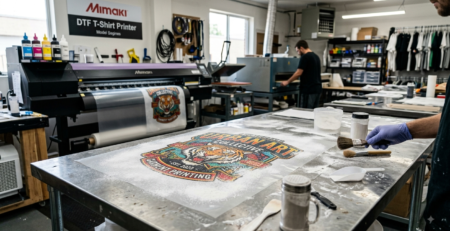
Step 3: Apply Powder
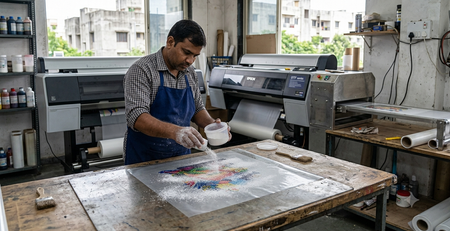
Sprinkle adhesive powder on the printed design.
Step 4: Cure the Powder
Heat the powder until it melts and sticks to the ink.
Step 5: Heat Transfer
Place the film on the jersey and press it using a heat press.
Step 6: Peel Film
After cooling, peel the film carefully.
That’s it. Your custom jersey is ready.
Design Tips for Customization
Good design makes a huge difference in DTF printing for sportswear.
Keep designs bold. Jerseys are seen from a distance, so thin lines don’t work well.
Use high contrast colors. For example, white text on dark blue jerseys looks sharp.
Always use high-resolution files. Low-quality images will look blurry after printing.
Also, test your design before bulk printing. Even professionals do sample prints.
Fabric Selection and Preparation
Fabric choice is important in DTF printing for sportswear.
Most jerseys are polyester, which works perfectly with DTF. But cotton and blends also work fine.
Before printing, make sure the fabric is clean and dry. Any dust or moisture can affect adhesion.
Avoid wrinkled fabric. Always press the jersey once before applying the design.
This small step improves print quality a lot.
Application Techniques
Applying the design correctly is key in DTF printing for sportswear.
Use the right temperature — usually around 150–160°C. Too much heat can damage fabric, and too little heat won’t stick the design properly.
Press time is also important. Around 10–15 seconds works well in most cases.
After pressing, let it cool before peeling. This is called cold peel, and it gives better results.
Some professionals do a second press after peeling. This increases durability.
Durability and Care Instructions
One of the biggest reasons people choose DTF printing for sportswear is durability.
If done properly, prints can last for many washes without fading.
Still, proper care is important:
- Wash inside out
- Use cold water
- Avoid strong detergents
- Do not iron directly on print
These small habits help jerseys last longer.
Common Challenges and Solutions
Like any process, DTF printing for sportswear has some challenges.
Problem: Print peeling off
Solution: Increase heat press time or temperature slightly.
Problem: Colors look dull
Solution: Check ink quality and printer settings.
Problem: Powder not sticking
Solution: Make sure ink is still wet when applying powder.
Beginners often face these issues, but with practice, they become easy to handle.
Business and Marketing Advice
DTF printing for sportswear is not just a skill — it’s a business opportunity.
Start small. Offer custom jerseys for local teams, schools, and gyms.
Create samples. Show real products instead of just designs.
Use social media. Short videos of printing process attract customers.
Pricing is important. Don’t go too cheap. Focus on quality and reliability.
Using machines like 🔵 ProlificGeeks DTF Printer L1800 or advanced heads like 🔵 i3200 can help you scale faster.
Also, build trust. Deliver on time and maintain consistent quality.
Conclusion
DTF printing for sportswear is a simple yet powerful method for jersey customization. It is beginner-friendly, flexible, and highly profitable when done right.
From small custom orders to large team kits, DTF gives you the freedom to print anything with ease.
If you focus on good materials, proper technique, and smart marketing, you can build a strong business in this field.
Product Suggestions (DTFshop.in)
🔵 ProlificGeeks DTF Printer L1800
🔵 XP600 Print Head
🔵 i3200 Print Head
🔵 DTF Transfer Film Roll
🔵 DTF Adhesive Powder
External References + Credits
- PrintIndustry.com
- Fespa.com
- InkJetInsights.com
- ResearchGate
Credit: Information references from Fespa, PrintIndustry, and other public sources.

LEAVE A COMMENT