
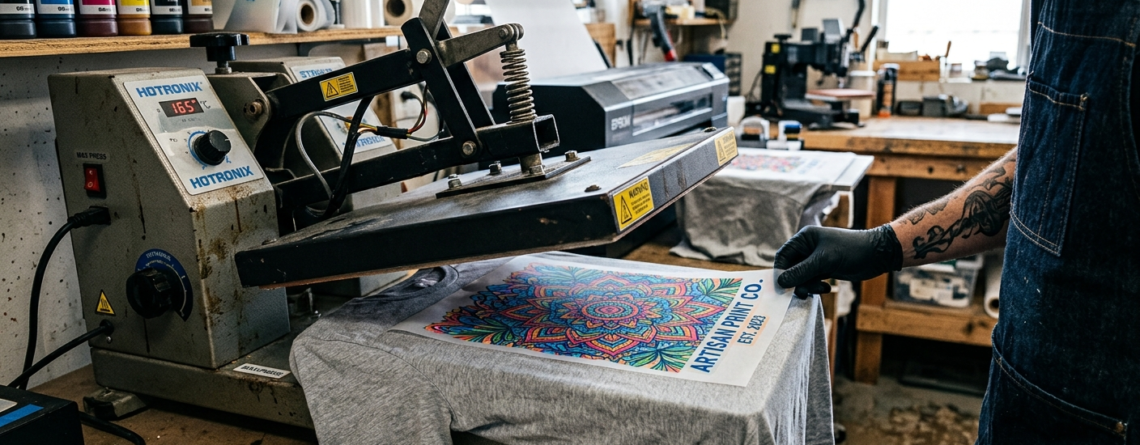
What Fabrics Work Best With DTF Printing Complete Material Guide 2026
DTF printing is growing fast in the custom apparel world. Many beginners jump into it without understanding one key thing — fabric choice.
Choosing the right DTF printing fabrics can make or break your final result. You may have a great design and a good printer, but if the fabric is wrong, the print can crack, fade, or peel.
Chat with our team for printers, consumables, film, powder and business setup guidance.
In this guide, you’ll learn exactly which fabrics work best, which to avoid, and how to get consistent results every time.
What is DTF Printing?
DTF (Direct-to-Film) printing is a process where designs are printed on a film and then transferred onto fabric using heat and pressure.
Unlike DTG or screen printing, it does not require pre-treatment for most fabrics.
Benefits over other methods
- Works on multiple materials
- No need for cutting or weeding
- Strong color output
- Durable prints
That’s why choosing the right DTF printing fabrics becomes even more important — because this method supports variety.
Overview of fabric compatibility
One of the biggest advantages of DTF is flexibility.
You can print on:
- Cotton
- Polyester
- Blends
- Denim
- Nylon
But each fabric behaves differently. Understanding DTF printing fabrics helps you adjust settings and avoid waste.
Core Principles of Fabric Selection for DTF
Before choosing a fabric, you should understand how it reacts to heat and ink.
Key factors
1. Absorption
Some fabrics absorb ink better. Cotton is great for this.
2. Heat tolerance
DTF requires heat pressing (around 150–165°C). Low heat tolerance fabrics can get damaged.
3. Texture
Smooth fabrics give sharper prints. Rough textures reduce clarity.
Common printing settings by fabric type
- Cotton: Medium heat, medium pressure
- Polyester: Lower heat to prevent melting
- Blends: Balanced settings
- Nylon: Special adhesive powder needed
Top Recommended Fabrics
Let’s break down the best DTF printing fabrics you should actually use.
100% Cotton
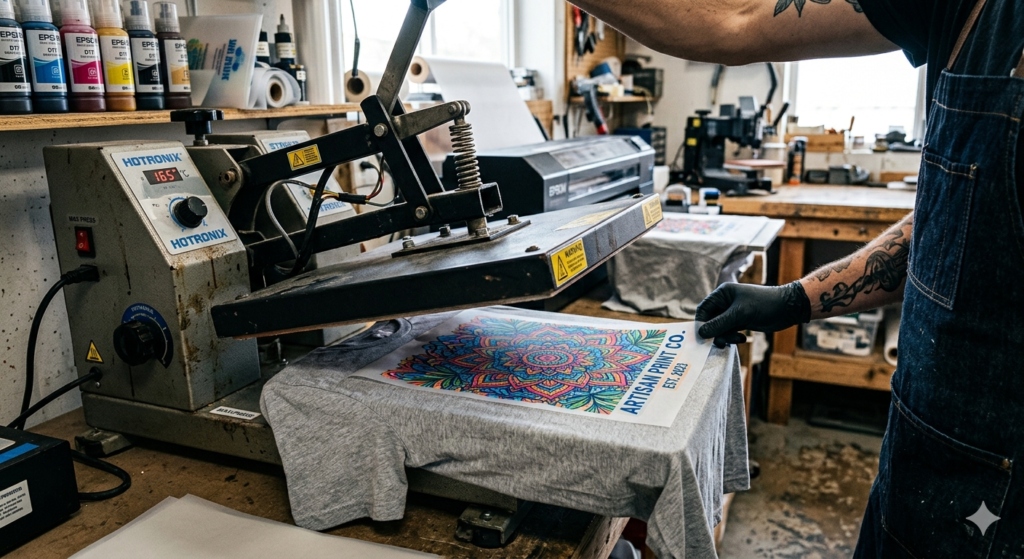
This is the most beginner-friendly option.
Why it works:
- Absorbs ink well
- Soft finish
- High durability
Real tip:
Cotton t-shirts are perfect for testing new designs.
If you’re using something like 🔵 ProlificGeeks DTF Printer L1800, cotton gives very predictable results.
Polyester
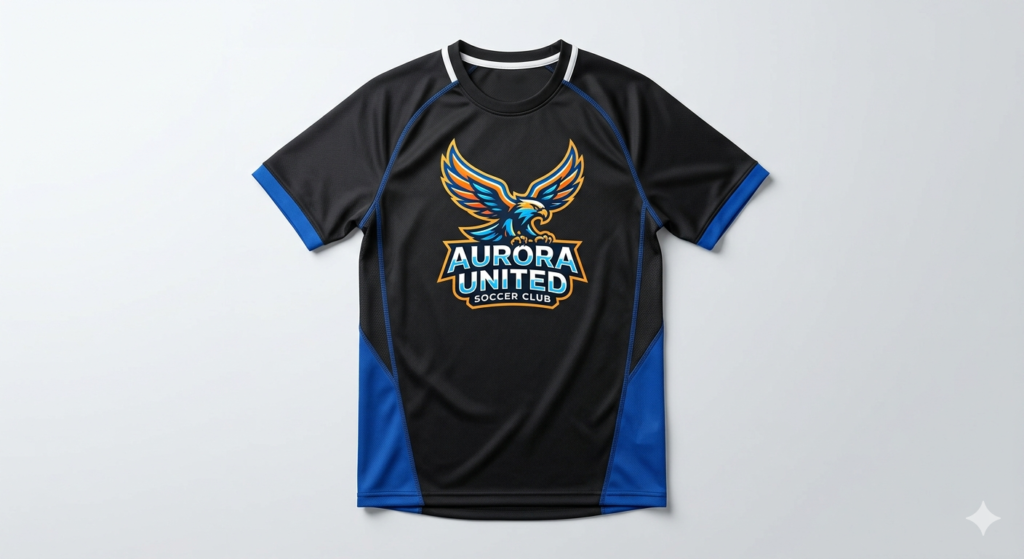
Polyester is widely used in sportswear.
Pros:
- Smooth surface
- Bright colors
Cons:
- Heat sensitive
- Can show dye migration
Use lower temperature settings when working with polyester-based DTF printing fabrics.
Printers like 🔵 XP600 handle polyester prints very well when calibrated properly.
Poly-Cotton Blends (50/50, 60/40)
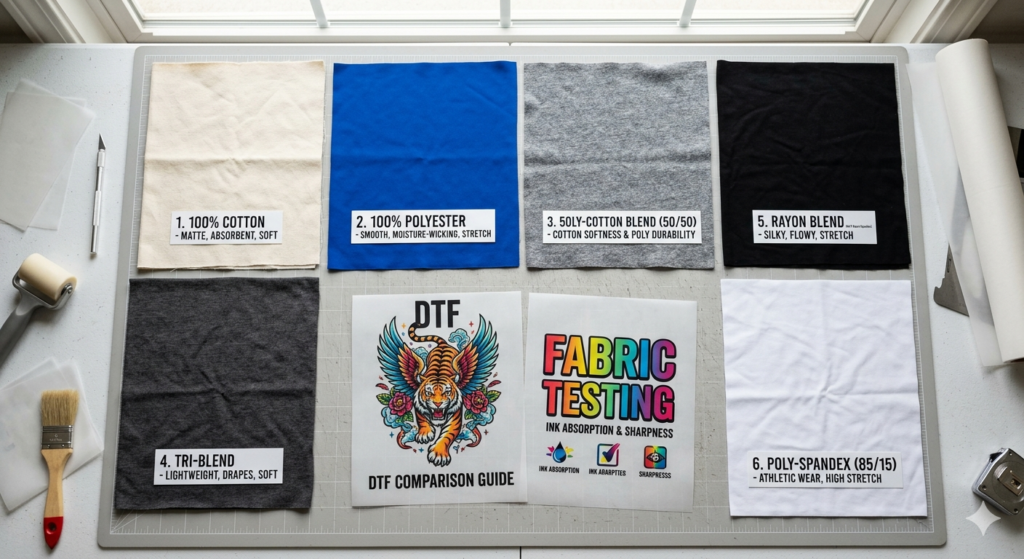
These are the most practical fabrics in real business.
Why they’re popular:
- Balanced durability
- Comfortable feel
- Cost-effective
They are among the most widely used DTF printing fabrics in bulk production.
Nylon & Performance Fabrics
These are used for:
- Jackets
- Sports gear
- Bags
Challenge:
Nylon is tricky because it resists ink bonding.
Solution:
Use special adhesive powder and correct pressure.
Machines powered by 🔵 i3200 heads perform well for these fabrics due to precise ink placement.
Denim & Canvas
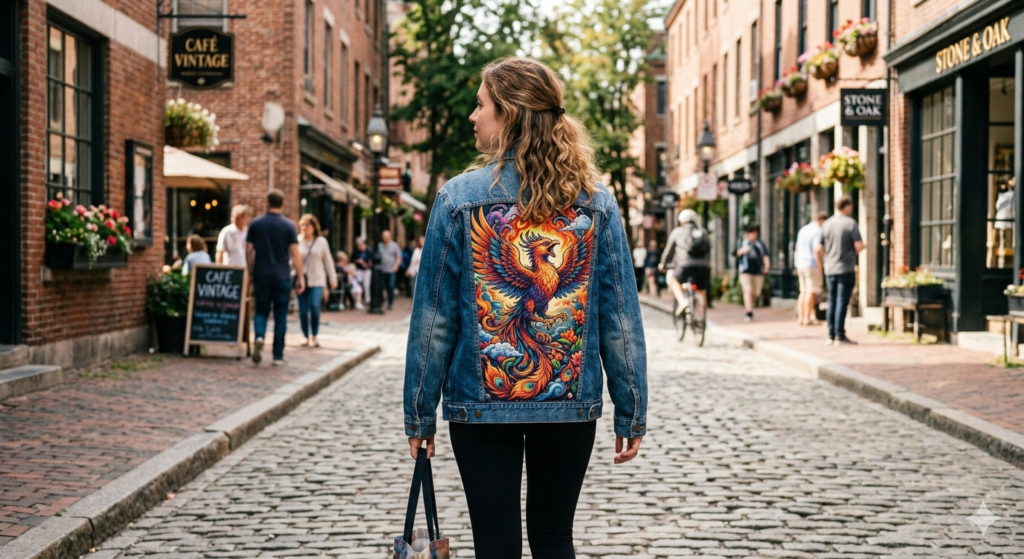
These are thicker materials.
Best for:
- Tote bags
- Jackets
- Workwear
Tip:
Increase pressure slightly for better adhesion.
Among all DTF printing fabrics, denim gives a premium look but needs proper pressing.
Specialty & Challenging Fabrics
Not all fabrics behave nicely. Let’s look at the tricky ones.
Spandex/Lycra Blends
Stretch fabrics are difficult.
Problems:
- Cracking when stretched
- Print distortion
Tip:
Use flexible DTF inks and avoid heavy designs.
Triblends (Cotton/Poly/Rayon)
These are soft and stylish but unpredictable.
- Ink spread can vary
- Requires testing
Still, many businesses use them as part of their DTF printing fabrics lineup.
Fabrics to avoid
Some materials are simply not ideal:
- Silk (too delicate)
- Leather (requires different process)
- Very rough fabrics
Avoid wasting film and ink on these.
Printing Tips & Best Practices
Even the best DTF printing fabrics need proper handling.
Pre-treatment needs
Most fabrics don’t need pre-treatment, but:
- Wash dusty fabrics
- Remove moisture
Temperature & pressure guidelines
- Standard: 150–165°C
- Pressure: Medium to high
- Time: 10–15 seconds
Always test before bulk production.
Washing & durability tests
Do a simple test:
- Print sample
- Wash after 24 hours
- Check cracking or fading
This step saves money in the long run.
Comparison Table: Fabrics vs. DTF Performance
| Fabric Type | Print Quality | Durability | Ease of Use | Notes |
|---|---|---|---|---|
| Cotton | High | High | Easy | Best for beginners |
| Polyester | High | Medium | Medium | Watch heat settings |
| Poly-Cotton | High | High | Easy | Best balance |
| Nylon | Medium | High | Hard | Needs special care |
| Denim/Canvas | High | High | Medium | Premium look |
| Spandex | Medium | Low | Hard | Stretch issues |
FAQs
Q1: Can DTF printing work on all fabrics?
No. While many DTF printing fabrics are compatible, some like silk and leather are not ideal.
Q2: Which fabric is best for beginners?
100% cotton is the easiest to start with.
Q3: Does DTF crack on stretch fabrics?
Yes, if not handled properly. Use flexible ink and test first.
Q4: Is polyester good for DTF?
Yes, but control heat carefully.
Summary
Choosing the right DTF printing fabrics is the foundation of successful printing.
- Cotton is best for beginners
- Polyester is great for sportswear
- Blends are perfect for business
- Nylon and stretch fabrics need experience
Always test before bulk printing. Small adjustments can make a big difference.
Product Suggestions
Here are some commonly used machines for handling different DTF printing fabrics:
- 🔵 ProlificGeeks DTF Printer L1800
- 🔵 XP600 Printhead DTF System
- 🔵 i3200 Advanced DTF Printer
- 🔵 DTF Powder Adhesive Machine
- 🔵 Heat Press Machine (Industrial Grade)
Use them based on your production level and fabric type.
External References
- PrintIndustry.com
- Fespa.com
- InkJetInsights.com
- ResearchGate
Credit: Information references from Fespa, PrintIndustry, and other public sources.

LEAVE A COMMENT