
White Ink Clogging: Why Most DTF Businesses Fail 2026
The ₹3–7 Lakh Mistake Nobody Warns You About
Most DTF businesses in India don’t fail because of competition.
Chat with our team for printers, consumables, film, powder and business setup guidance.
They fail because of Ink Clogging.
A shop owner invests ₹4–6 lakh into a setup. Printer runs well for the first 30–60 days. Orders start coming in local t-shirt brands, college events, small clothing labels.
Then suddenly:
- White layer starts breaking
- Prints become patchy
- Head cleaning increases
- Ink consumption rises
- Printer downtime increases
Within 6 months the owner realizes something painful:
The printer is running, but profit is not.
White ink clogging silently converts a profitable business into a maintenance headache.
If you are planning a DTF investment or already running one, this is the single technical issue that determines whether you make ₹50,000 per month or shut the shop in 10 months.
Let’s break it down like businessmen, not hobbyists.
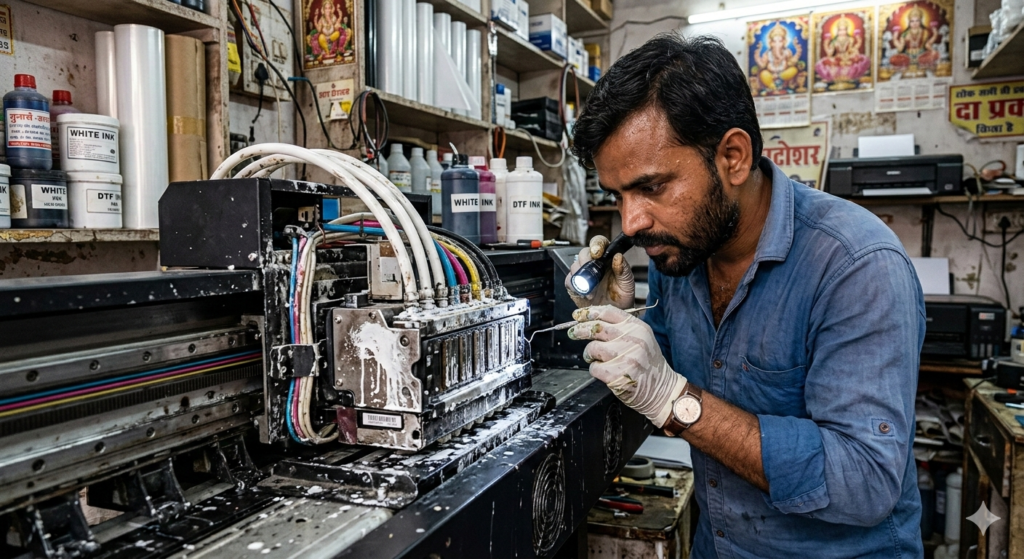
Why White Ink Causes Ink Clogging
White DTF ink is chemically unstable compared to CMYK inks.
Reason:
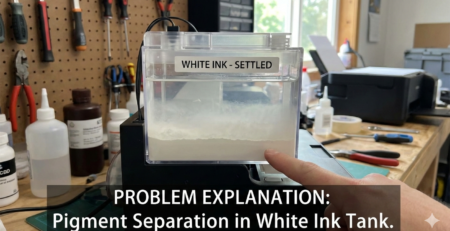
White ink contains heavy titanium dioxide particles. These particles settle quickly and block microscopic printer nozzles if circulation or maintenance is weak.
Every DTF printer owner faces Ink Clogging. The difference is discipline.
Shops that fail ignore it.
Shops that scale design their workflow around preventing it.
According to insights discussed at industry exhibitions like FESPA Global Print Expo, white ink management is the #1 maintenance variable affecting DTF profitability globally.
The Real Financial Damage of Ink Clogging
Most sellers talk about printer price.
Serious owners track downtime cost.
Let’s calculate.
Example:
Printer investment: ₹4,50,000
Daily production capacity: 80 prints
Average margin per print: ₹80
Daily potential profit = ₹6,400
If clogging causes just 3 days downtime per month:
Loss = ₹19,200 per month
Yearly loss = ₹2,30,400
That is half your printer investment gone without you noticing.
Ink clogging is not a technical problem.
It is a profit problem.
Profit Scenarios in Real Indian DTF Shops
Let’s look at realistic production numbers.
Scenario 1 — Low Production Shop
Small city print shop.
Monthly production: 800 prints
Revenue
800 × ₹150 = ₹1,20,000
Costs
Ink + film + powder = ₹48,000
Electricity + labor = ₹18,000
Maintenance & wastage = ₹7,000
Net profit:
₹47,000 approx.
If Ink Clogging causes extra cleaning cycles + wasted prints, profit drops to ₹30,000 or lower.
Break-even time:
10–14 months
Scenario 2 — Medium Production Shop
Busy city shop or online seller.
Monthly production: 2,500 prints
Revenue
2,500 × ₹150 = ₹3,75,000
Costs
Materials = ₹1,45,000
Labor = ₹40,000
Rent + electricity = ₹25,000
Maintenance = ₹15,000
Profit:
₹1,50,000 approx.
But with recurring Ink Clogging downtime:
Loss due to delays and wastage = ₹30,000–₹40,000
Real profit becomes:
₹1,10,000
Break-even time:
4–6 months
Scenario 3 — High Production Shop
Garment printing unit or reseller.
Monthly production: 6,000 prints
Revenue
6,000 × ₹150 = ₹9,00,000
Costs
Materials = ₹3,40,000
Labor = ₹90,000
Rent + electricity = ₹40,000
Maintenance = ₹40,000
Profit:
₹3,90,000 approx.
At this scale, Ink Clogging becomes a workflow problem, not just a cleaning problem.
High-volume shops solve it with:
- better printers
- strict daily maintenance
- continuous printing cycles
Break-even:
2–3 months
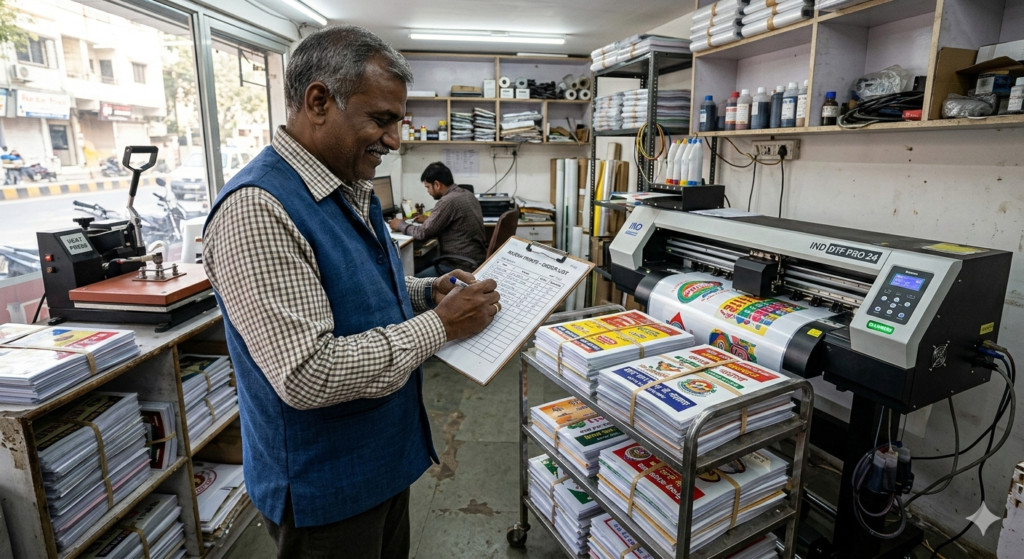
XP600 vs i3200: Which Recovers Investment Faster?
Most Indian shops start with XP600.
But high-volume shops upgrade to i3200.
| Feature | XP600 DTF Printer | i3200 DTF Printer |
|---|---|---|
| Setup Cost | ₹3–4.5 lakh | ₹5–7 lakh |
| Print Speed | Medium | High |
| Ink Stability | Moderate | Better circulation |
| Ink Clogging Risk | Higher if idle | Lower in production environments |
| Ideal Users | Startup shops | Scaling businesses |
| Investment Recovery | 8–12 months | 4–7 months |
Printers like the XP600 DTF Printer are perfect for entry-level businesses.
But if your plan is high production, the i3200 DTF Printer reduces clogging issues because printers run continuously.
Idle printers clog more.
Busy printers stay healthy.
Hidden Costs Nobody Talks About
Ink Clogging creates secondary costs most sellers hide.
1. Wasted Ink
Cleaning cycles can waste 50–120 ml per day.
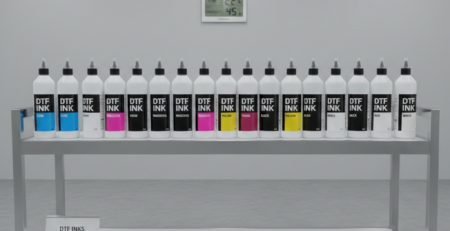
Using inks like DTF Ink 100ML, that becomes ₹500–₹1,500 monthly loss.
2. Wasted Film
Misprints during clogged heads destroy PET film sheets.
A roll like DTF PET Film Roll can lose 10–15% due to print defects.
3. Powder Waste
Incorrect white layers waste adhesive powder like DTF Powder.
Monthly loss: ₹2,000–₹5,000.
4. Print Head Damage
Worst case scenario.
Replacing a DTF print head can cost:
₹35,000 – ₹90,000.
That single mistake wipes out months of profit.
Mini Case Example: Surat Shop Owner
A shop owner in Surat invested ₹4.8 lakh in a DTF setup.
First two months were profitable.
Month three — printer idle for 10 days due to family travel.
Result:
- severe white ink clogging
- 2 weeks downtime
- ₹25,000 repair cost
Lesson he shared:
“DTF printer is like a vehicle. If you park it too long, problems start.”
After switching to daily printing routines, he recovered investment in 8 months.
Common Mistakes That Destroy ROI
These mistakes guarantee Ink Clogging problems.
1. Running printer only when orders come
DTF printers must run daily, even for test prints.
2. Cheap ink
Low-grade ink separates faster and clogs heads quickly.
3. Poor environment
Dust + humidity accelerate clogging.
Ideal environment:
22–28°C temperature.
4. No daily maintenance routine
Every profitable shop has:
- nozzle check every morning
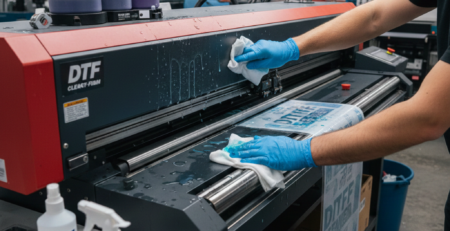
- white ink agitation
- scheduled cleaning cycles
5. Leaving printer idle for days
This is the fastest way to destroy print heads.
Who Should NOT Buy a DTF Printer
This will save some people lakhs.
Do NOT invest if:
- You cannot run printer daily
- You don’t want to learn maintenance
- You expect “plug and play”
- You don’t have ₹40k–₹70k monthly working capital
DTF printing rewards discipline, not laziness.
Step-by-Step Investment Recovery Plan
If you want your printer to pay itself off quickly:
Step 1 — Secure Local Clients First
Target:
- local clothing brands
- coaching institutes
- event organizers
Goal: 500 prints per month minimum.
Step 2 — Control Material Costs
Use consistent supplies:
- quality ink
- stable film
- tested powder
Cheap supplies increase Ink Clogging and print failures.
Step 3 — Run Printer Daily
Even if orders are low.
Print test sheets.
This prevents white ink settlement.
Step 4 — Standardize Pricing
Typical Indian pricing:
DTF transfer:
₹120–₹180 per A3.
Step 5 — Expand Distribution
Once stable:
Sell transfers to
- t-shirt shops
- online sellers
- small clothing brands
Decision Framework: Which Setup Should You Choose?
Choose XP600 if:
- budget under ₹4.5 lakh
- production under 2,000 prints monthly
- starting new business
Choose i3200 if:
- production goal above 4,000 prints monthly
- multiple clients
- scaling aggressively
Both printers are available through ProlificGeeks via
dtfshop.in.
But the real success factor is not the machine.
It’s maintenance discipline.
Final Reality Check
DTF printing can generate ₹50,000 to ₹3,00,000 monthly profit in India.
But only if you respect one rule:
Control Ink Clogging.
Ignore it and your printer becomes an expensive decoration.
Manage it and your printer becomes a profit machine.
Decision Summary
Before investing ask yourself:
- Can I run the printer daily?
- Can I maintain strict cleaning routines?
- Do I have enough working capital for materials?
If the answer is yes, DTF printing is a strong business opportunity.
If not, delay the investment.
Need Help Calculating Your DTF Investment?
Message on WhatsApp and get realistic setup guidance.
📱 WhatsApp: +918123524574
🌐 Buy DTF printers and supplies online at https://dtfshop.in
Products like XP600 DTF printers, i3200 printers, DTF ink, film rolls, and powders are available through ProlificGeeks.
Ask for numbers before buying — not after problems start.
Credit: Industry insights referenced from FESPA Global Print Expo, PrintIndustry reports, and public textile printing data.

LEAVE A COMMENT