
UVDTF Printing for T-Shirts? Choose the Right Transfer Process
If you are searching for UVDTF printing for T-shirts, pause before ordering equipment. The names sound similar, but standard UV DTF and garment DTF are different processes. Choosing the wrong one can leave you with a printer, ink and film that do not suit the products you want to sell.
For washable T-shirts, look at garment DTF or a suitable DTG workflow. For compatible hard objects such as bottles, acrylic signs and gift items, consider UV DTF. A machine being called a “transfer printer” does not make its output suitable for every material.
Chat with our team for printers, consumables, film, powder and business setup guidance.
What is UVDTF printing?
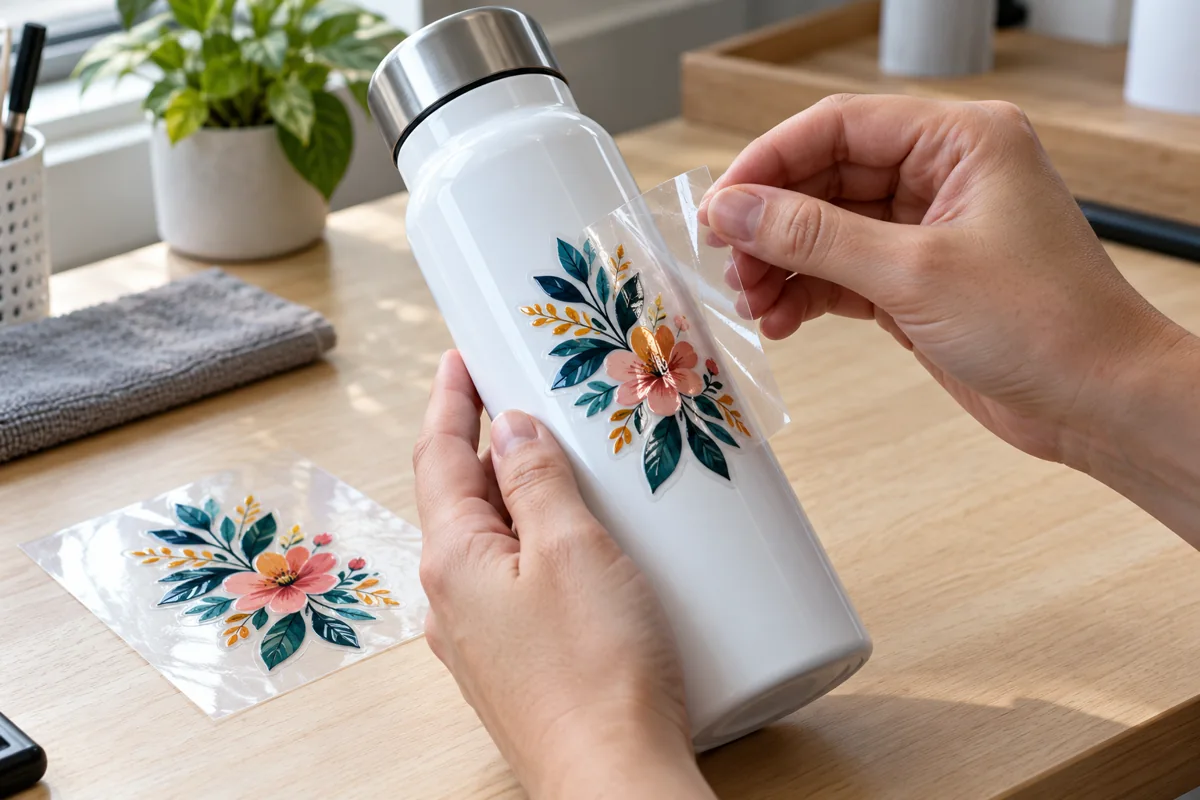
UV DTF uses UV-curable ink and an adhesive transfer-film system. The design is printed and cured, combined with its matching carrier film, then applied to a suitable object. It can decorate items that are awkward to load directly onto a flatbed printer.
A smooth bottle or an acrylic gift item is a very different surface from a stretchable cotton T-shirt. Ink flexibility, adhesion, laundering and skin-contact suitability must all match the intended application. Do not use ordinary UV DTF hard-surface transfers as a substitute for tested textile transfers.

How garment DTF works on T-shirts
Garment DTF prints a design using compatible textile ink onto DTF PET film. A suitable DTF hot-melt adhesive powder is applied to the wet print and cured according to the consumable instructions. The finished transfer is then pressed onto a compatible garment.
The adhesive, fabric and curing conditions work together. A print that looks good immediately after pressing still needs a sample wash and adhesion check. Use the film supplier’s peel instructions and confirm heat tolerance on the actual garment, especially on polyester and blends.
For a small-format starting point, the A4 DTF L8050 printer kit shows the kind of garment DTF setup sold by DTFShop. Check what is included and what additional curing, pressing and ventilation equipment your installation requires.

Choose the process by the finished product
- Cotton T-shirts and hoodies: compare garment DTF with suitable DTG printing. Confirm pretreatment and curing requirements for the chosen system.
- Polyester jerseys: garment DTF may be suitable after testing for dye migration and press marks. Sublimation is another option for appropriate light-coloured polyester materials.
- Bottles, acrylic and coated hard goods: UV DTF may suit a tested surface. Surface preparation, coating and curvature can affect adhesion.
- Food-contact areas, children’s items or products with demanding wash requirements: obtain application-specific suitability information. Do not assume that scratch resistance means dishwasher safety, food-contact approval or unrestricted skin-contact suitability.
Equipment and consumables for each workflow
A garment DTF workflow needs a compatible textile printer and ink, PET transfer film, adhesive powder, curing equipment and an appropriate heat press. A 15×15-inch heat press is one example; choose the platen size and performance for your actual transfer dimensions and workload.
A UV DTF workflow uses a suitable UV printer, matching UV DTF ink and its specified A/B transfer films. For example, review the Audley A3 UV DTF printer alongside the 12-inch UV DTF A+B film and UV DTF CMYKWV ink. Product compatibility must be confirmed with the machine specification; a similar bottle label is not enough.
Keep the two ink systems separate. Textile DTF ink, UV-curable ink and sublimation ink are different formulations. Do not refill a printer with another ink type just because the colour names match.
A practical sample test before you invest
- Bring your own blank: use the fabric, bottle coating or acrylic material you will actually sell.
- Use representative artwork: include fine text, gradients and the colours your customers request.
- Watch the whole process: include preparation, printing, curing or lamination, application and handling time.
- Check the finished result: inspect edges, colour, feel and adhesion. Carry out the appropriate wash or care test after the specified conditioning period.
- Record the settings: keep the ink, film, batch, surface and application instructions with the sample. Use the approved sample as the reference for later orders.
Common questions from new print shops
Does UV DTF avoid the need for a heat press?
Standard hard-surface UV DTF transfers are applied using their specified transfer-film process. That does not mean they replace heat-pressed garment DTF on T-shirts. Some specialist products have different application requirements; check the exact manufacturer instructions.
Can a glossy UV transfer be advertised as a 50-wash T-shirt print?
Do not make that claim without evidence for the exact ink, transfer system and garment. Hard-surface UV transfers and textile transfers must be assessed separately. The useful buying distinction is the finished application, not a blanket durability claim.
Which option is more profitable?
Calculate the cost per accepted item using your own sample run, material use, labour, rejects and selling price. There is no universal profit multiplier or guaranteed recovery period. A shop making shirts and a shop decorating bottles may need different workflows even when both use transfer films.
Choose the right starting point
If your main product is a T-shirt, begin with a tested textile workflow. If you want to expand into suitable rigid gift items, request a UV DTF sample on those objects. DTFShop can help match the machine and consumables to the work you plan to produce.
Technical reading: manufacturer explanation of a UV DTF transfer system; manufacturer explanation of a textile DTFilm workflow. These explain the process distinction and do not establish compatibility with another brand’s equipment.




Leave a Reply