
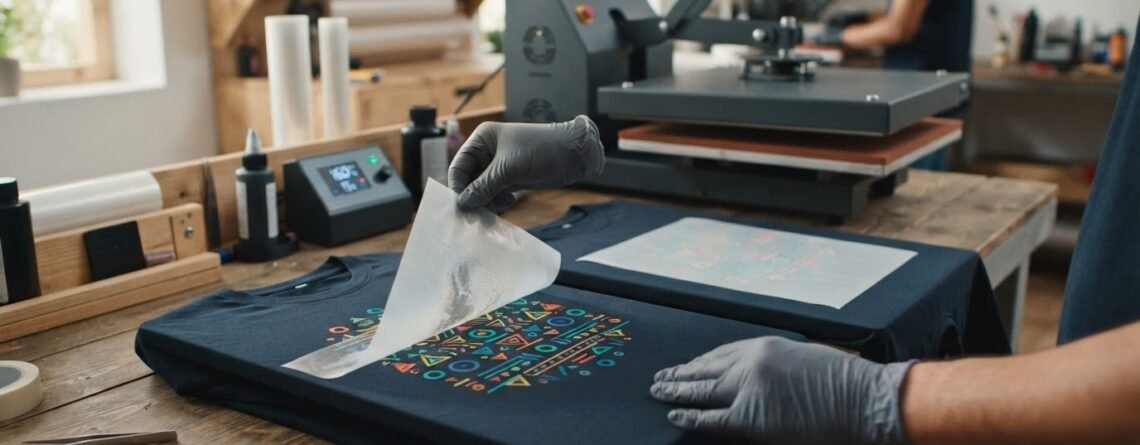
DTF Hot Peel vs Cold Peel Film: How Indian T-Shirt Printers Can Avoid Transfer Failures
Why the peel method matters
When a DTF transfer lifts with the carrier film, it is tempting to raise the heat-press temperature. But a poor release can also come from using the wrong peel timing, incomplete adhesive melt, uneven platen pressure, damp fabric, an unsuitable film or an incompatible ink–powder–film combination. This guide helps Indian T-shirt printers isolate the cause without wasting an entire batch.
Important: “hot peel”, “warm peel” and “cold peel” describe the carrier release procedure supplied for a particular film. They do not guarantee identical press settings across brands. Start with the current film, adhesive-powder and garment instructions, and confirm settings by a small trial.
Chat with our team for printers, consumables, film, powder and business setup guidance.
Hot peel, warm peel and cold peel explained
Hot peel
The carrier is removed promptly after the press opens, at the stage specified by the film maker. This can shorten handling time, but a film not designed for hot release may pull fine edges or small text.
Warm peel
Allow the transfer to cool for the film maker’s stated interval or to its stated condition before removing the carrier. “Warm” is not a universal number of seconds.
Cold peel
Wait until the carrier has cooled to the recommended condition, then peel as instructed. Trying to rush a cold-peel film often creates the appearance of poor adhesion even when the adhesive was correctly fused.
Check the film before printing
Identify the printable/coated side from the packaging or supplier instructions; a matte or glossy appearance alone is not a reliable universal test. Record the brand, batch, width, storage conditions and specified peel type. Do not mix unlabelled rolls in the same production run. Check whether the film is intended for the actual printer, ink, powder and curing process.
A practical test before a customer batch
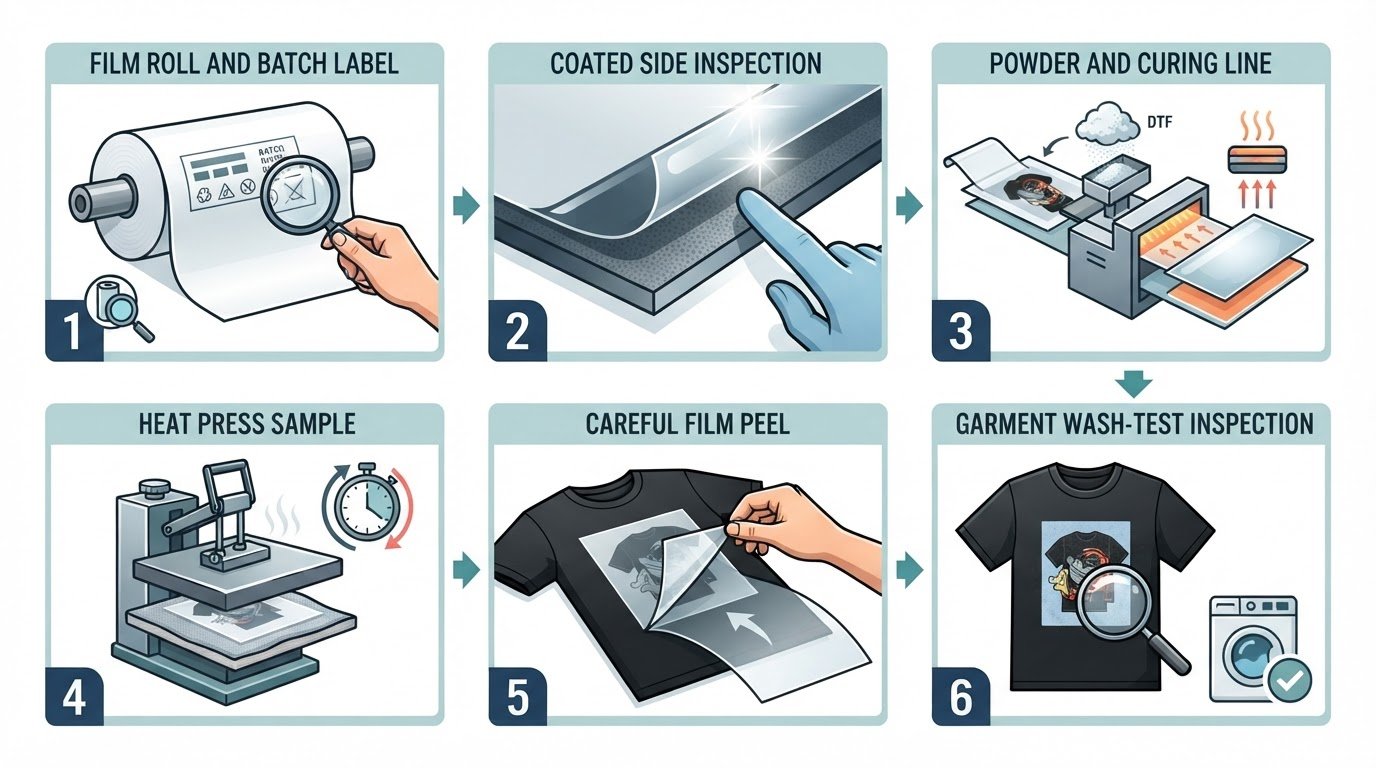
- Prepare a control garment. Use the same fabric composition, colour and finish as the order. Pre-press only if required to remove moisture or creases.
- Print a small test layout. Include fine text, a solid area, a thin outline and a colour gradient. Record the print mode and powder batch.
- Check powder coverage and curing. Look for missing adhesive, clumps or inconsistent fusion. Do not compensate for a curing fault by blindly increasing the final press temperature.
- Follow the supplier’s press settings. Record temperature, dwell, pressure and whether a cover sheet is specified. Verify platen uniformity with appropriate equipment when results vary by position.
- Peel at the specified stage. Use the correct angle and motion from the film instructions. Never assume a different film uses the same release technique.
- Inspect the finished sample. Look for lifted corners, pinholes, poor fine-detail release, glossy marks and visible adhesive halos. Follow the recommended finishing press, if any.
- Wash-test a sample. Let it condition for the supplier’s recommended time, then follow a documented wash procedure suitable for the garment and compare before/after photos.
Symptom-to-cause troubleshooting
| Symptom | Possible causes | Safe next check |
|---|---|---|
| Small letters remain on carrier | Peel too early; film-release mismatch; incomplete adhesive transfer | Confirm specified peel stage; test one controlled sample |
| One side releases, the other lifts | Uneven pressure, platen alignment, local fabric seam or moisture | Check garment position and pressure uniformity |
| Edges lift after washing | Adhesive or cure mismatch; insufficient bonding; unsuitable textile finish | Review powder cure, press instructions and fabric compatibility |
| Gloss or press marks | Excess heat, pressure or unsuitable cover sheet for fabric | Check fabric care requirements and supplier’s recommended finish |
| Results vary by roll | Different film specification or batch/storage conditions | Segregate rolls and record batch identifiers |
Worked example: 30-piece jersey order
Suppose a shop has a 30-piece polyester jersey order and two film rolls labelled only “DTF”. Rather than printing all 30 transfers and discovering that one roll requires a different peel, the operator runs one controlled transfer per roll on spare matching fabric. They record film batch, press conditions, peel timing, release quality and a wash test. The sample results determine which roll is qualified for the order. This is an illustrative procedure, not a claim that one film type is universally better.
Storage and handling in Indian conditions
Protect transfer film, printed transfers and powder from excess moisture, direct sunlight, dust and heat according to their supplier instructions. In humid conditions, condensation or damp garments can complicate transfer consistency. Keep rolls sealed when not in use, label opened batches and avoid storing film near a hot curing tunnel. Do not invent a universal storage humidity or shelf life: use the product datasheet.
What to ask before buying DTF film
- Is this a hot-, warm- or cold-peel film, and what exact peel procedure is specified?
- Which print side is coated, and how is it identified?
- Which inks, powder types and curing methods were tested?
- What fabric types and wash-care conditions are supported?
- Can the supplier provide a current technical sheet and sample roll?
- What is the batch identification and storage recommendation?
For equipment and consumables, start with the verified DTF Shop home page. For a related quality-control topic, read DTF Colours Look Wrong? A Proofing Checklist Before Changing Ink. For a separate application, see DTF Transfers Arrived Damp or Creased? Check Before You Press.
Frequently asked questions
Can I hot-peel a cold-peel film?
Do not assume so. Follow the release stage specified for that film; premature peeling may lift printed details.
Is hot peel always faster for production?
It may reduce waiting time, but only if the film is qualified for the garment and process. Reprints can erase any handling-time benefit.
Does higher temperature fix poor release?
Not necessarily. It can damage fabric or artwork. First check peel type, cure, pressure and substrate.
Should I use the same settings for cotton and polyester?
Not without testing. Fabric construction, finish and heat sensitivity differ. Follow both transfer and garment guidance.
How many tests are needed?
There is no universal number. Qualify each materially different film, powder, fabric or process combination with a representative sample before customer production.
Conclusion
The best DTF film is the one that releases reliably in your actual production workflow. Keep one approved process sheet per film and fabric combination, train operators to recognise release defects, and use small test prints rather than guessing at temperature changes.
Need DTF film or consumables? Explore DTFShop.in and request the supplier’s film technical sheet and a compatible sample before bulk purchase.
Industry context and sources
Indian industry reporting in 2026 describes growing interest in shorter-run, customised digital printing, but those reports concern the broader label and print markets; they do not measure demand for a particular DTF peel film. Sources: Packaging South Asia, 12 May 2026; Labels & Labeling, 4 March 2026. Technical process settings must come from the actual film, powder, ink and heat-press manufacturers rather than these market articles.




LEAVE A COMMENT