
DTF Hot Melt Adhesive Powder: Powerful Guide for Indian DTF Printing 2026
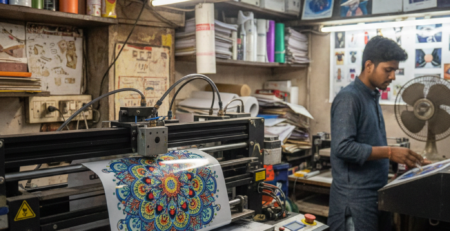
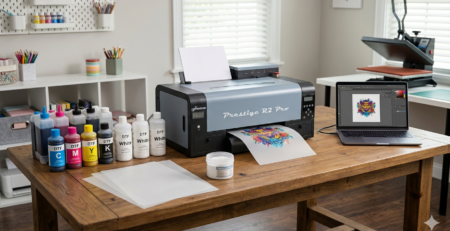
Direct-to-Film printing looks simple from the outside. Print the design, add powder, cure it, press it onto the garment, and peel the film.
But anyone who has actually worked with DTF knows that the small steps matter.
Chat with our team for printers, consumables, film, powder and business setup guidance.
One of the most important materials in this process is DTF hot melt adhesive powder. It sits between the printed design and the fabric and helps the transfer bond properly when heat is applied.
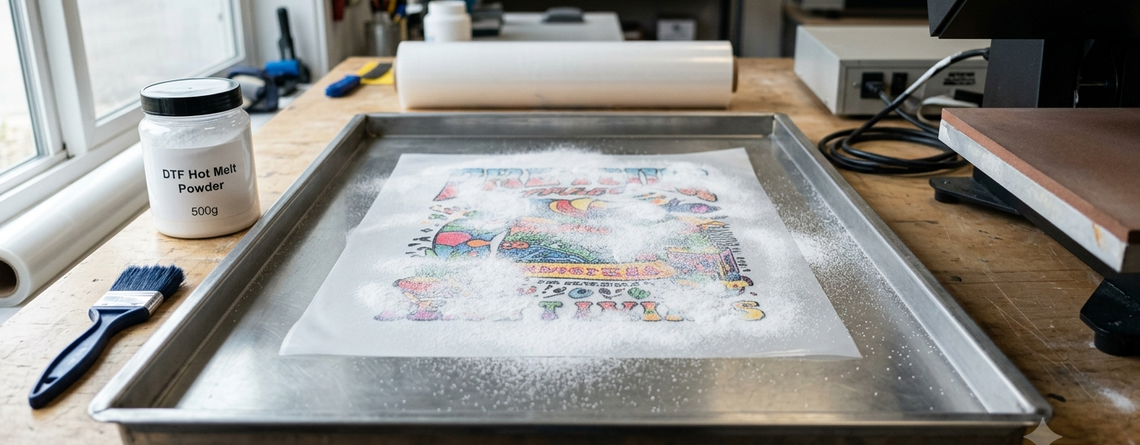
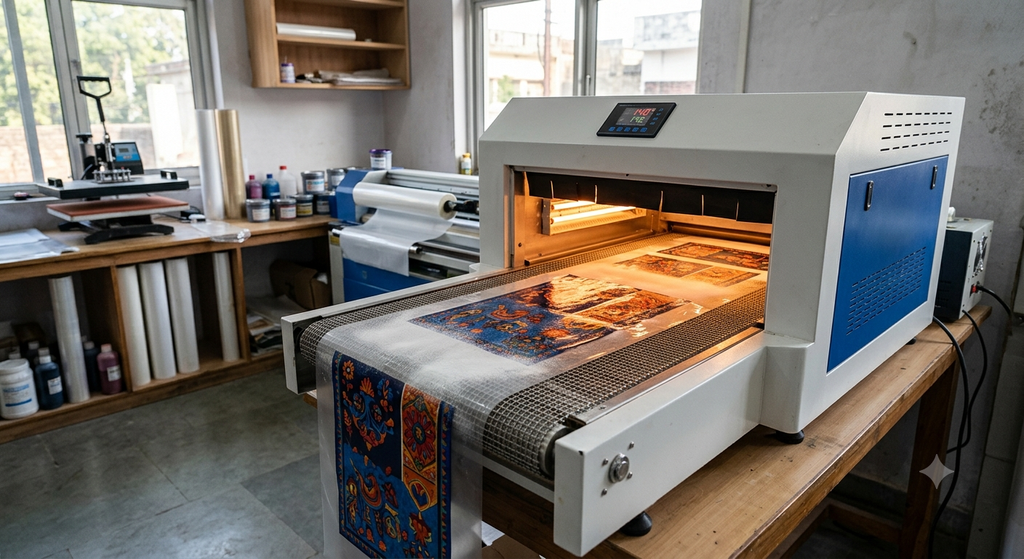
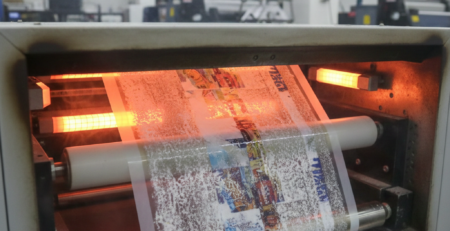
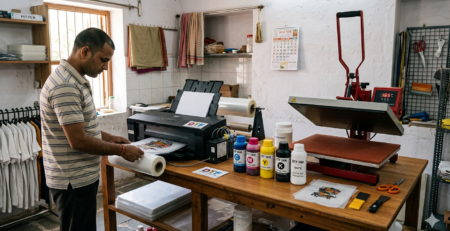
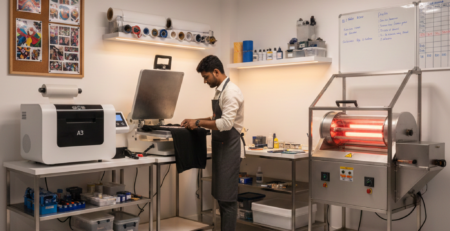
The powder is normally applied to the wet printed ink on PET transfer film. Excess powder is removed, and the remaining adhesive is cured with controlled heat. FESPA describes the same basic workflow: print onto film, apply adhesive powder, melt the powder, and then transfer the design to the garment.
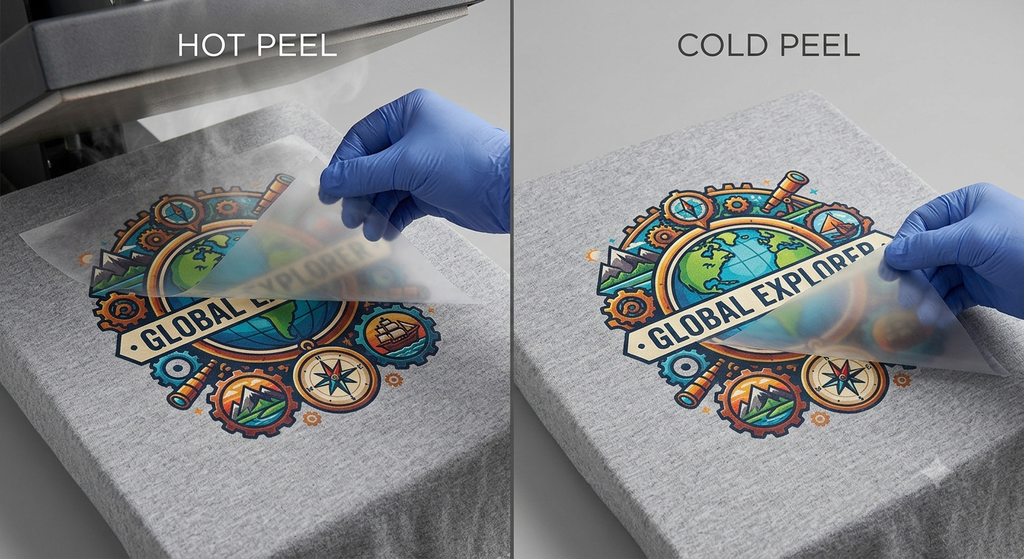
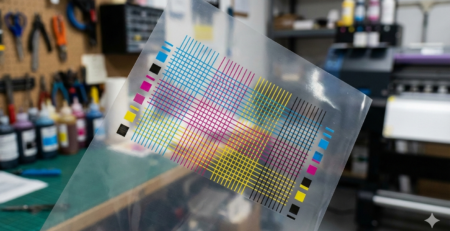
The type of film also matters. DTF films can be designed for different release methods, including hot peel and cold peel. The correct peeling method should always follow the film manufacturer’s instructions.
For a small T-shirt business, getting this combination right can make a noticeable difference in failed transfers, wash performance, hand feel, and production speed.
Why Hot Melt Powder is Essential for DTF Transfers
Without adhesive powder, the printed design would not bond to the fabric in the normal DTF process.
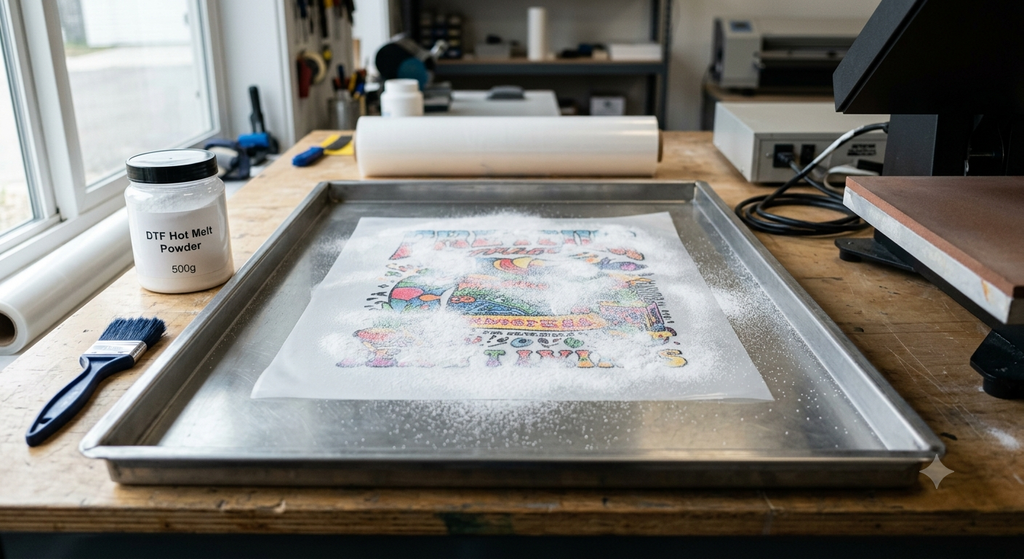
The powder melts during curing and creates the adhesive layer needed for the transfer. Research on DTF processes also describes adhesive powder being applied to the freshly printed film before thermal treatment and transfer to textile substrates.
A simple example makes this easier to understand.
Imagine printing a colourful logo on PET film. The ink creates the image, but it is not enough to permanently attach that image to a cotton T-shirt. The adhesive powder provides the bonding layer.
That is why DTF hot melt adhesive powder should not be treated as just another low-cost consumable.
The wrong powder, uneven application, or poor curing can lead to:
- Weak adhesion
- Powdery or rough areas
- Poor wash resistance
- Cracking or lifting
- Uneven transfer
- Excess adhesive around the design
The same principle applies to cold-peel and hot-peel workflows. The powder still needs to be properly cured; the main difference is when the transfer film is peeled after pressing.
Key Features to Look for in Quality DTF Adhesive Powder
Not every powder performs the same way. Before buying DTF hot melt adhesive powder, look at a few practical points.
1. Particle size
Powder particle size affects how smoothly it covers the wet ink.
Very fine powder can behave differently from a coarser grade. Choose a grade that matches your printer, film and curing process.
2. Adhesion
Good powder should create a reliable bond between the printed layer and fabric.
Do not judge this only by how the transfer looks immediately after pressing. Wash testing gives a much better idea of real performance.
3. Soft hand feel
For T-shirts, customers usually prefer a print that does not feel unnecessarily heavy or stiff.
A suitable powder can help produce a flexible transfer when used with the correct film, ink and curing settings.
4. Melting and curing behaviour
The powder needs to melt properly without damaging or over-curing the printed design.
There is no single temperature setting that works for every powder. Follow the powder and film supplier’s recommended process and test before starting bulk production.
5. Fabric compatibility
A powder that works well on cotton may not behave exactly the same way on every synthetic or blended fabric.
FESPA notes that DTF can be used across several textile types, including cotton, polyester and blends, but process conditions still matter.
6. Consistency
If you produce 100 transfers, the powder should behave consistently from the first sheet to the last.
That is especially important for businesses handling repeat orders.
Top Hot Melt Adhesive Powder Brands Available in India
There are several suppliers and marketplace sellers available to Indian DTF users. The best option depends on budget, quantity, powder specification, application and availability.
Living Lion
Living Lion is one of the names that appears in Indian DTF powder comparisons. Its products are generally considered by buyers looking for a practical consumable option.
Before ordering, check the exact particle size, grade, pack size and recommended curing conditions.
BhartiPrint (Bharti Creation)
BhartiPrint, also known as Bharti Creation, is another Indian supplier worth comparing.
Its TPU hot melt powder listings are positioned toward regular DTF transfer work. For a small print shop, comparing price per kilogram with actual transfer performance is more useful than choosing based only on the lowest price.
Desmat Sublimation (Koncept)
Desmat Sublimation, associated with Koncept, is another supplier appearing in the Indian DTF consumables market.
When comparing its powder with other options, check the technical specification and fabric compatibility rather than relying only on brand reputation.
3alps Digital Printers
3alps Digital Printers supplies DTF-related equipment and consumables and operates from Bhiwandi, Maharashtra.
This can be convenient for businesses that want to source several parts of their DTF setup from one supplier.
Shagun Enterprise
Shagun Enterprise also lists hot melt adhesive powder along with DTF films, printers and related equipment.
Published listings have shown powder around the ₹799–₹800/kg level, although prices and stock can change, so buyers should confirm the current listing before ordering.
InksfyDTF (Etsy India)
InksfyDTF is a marketplace-style option that may be useful when comparing smaller quantities.
Marketplace buying requires a little more checking. Look at the seller information, quantity, specifications, reviews and return policy before placing an order.
Kamicraftsales (Etsy India)
Kamicraftsales is another marketplace seller that can be considered when comparing DTF consumables.
For marketplace purchases, the product photograph should not be the deciding factor. Always check the actual material specification and quantity.
Price Range of DTF Hot Melt Powder in India (per kg)
The price of DTF hot melt adhesive powder varies according to grade, particle size, packaging, brand and purchase quantity.
A practical market range can look roughly like this:
| Quality level | Approximate price per kg |
|---|---|
| Economy | ₹450–₹700 |
| Standard | ₹700–₹1,100 |
| Premium | ₹1,100–₹1,800 |
| Imported/specialty | ₹1,800–₹3,000+ |
These are broad buying ranges, not fixed prices.
For example, DTFShop currently lists a 1 kg A-grade soft adhesive powder with an 80–200 micron specification at ₹800. Its published guide also notes that larger packs can reduce the effective cost per kilogram.
The cheapest powder is not always the cheapest option.
Suppose a ₹500 powder gives inconsistent transfers and causes 10% of your jobs to be reprinted. A more expensive powder that produces reliable transfers may actually cost less in the long run.
Comparison of Indian Brands: Performance & Quality
A simple comparison can help, but remember that actual results depend heavily on your printer, ink, film, curing method, heat press, fabric and working environment.
| Brand/Seller | General consideration |
|---|---|
| Living Lion | Good option to compare for regular production |
| BhartiPrint | Practical Indian-market option |
| Desmat/Koncept | Worth checking for quality-focused workflows |
| 3alps | Useful for businesses sourcing multiple DTF supplies |
| Shagun Enterprise | Competitive price-oriented option |
| InksfyDTF | Convenient for marketplace/smaller quantity buying |
| Kamicraftsales | Another marketplace comparison option |
The important thing is to test before switching an entire production line.
Buy a small quantity first. Print the same design on the same fabric. Cure it using the recommended settings. Then wash-test it.
That tells you much more than a product description.
Where to Buy Hot Melt Adhesive Powder in India (Online & Offline)
Indian DTF businesses can purchase powder through specialist DTF suppliers, local printing-equipment dealers and online marketplaces.
For online buying, check:
- Powder type
- Particle size
- Weight
- Fabric compatibility
- Recommended curing conditions
- Seller reviews
- Return or replacement policy
- Shipping cost
- GST invoice availability
You can also compare supporting DTF equipment from DTFShop.in.
For example, DTFShop currently lists DTF PET films in different sizes and finishes, including options with hot and cold peel selections.
Tips for Storing and Using DTF Hot Melt Powder
Good storage is easy, but often ignored.
Keep the powder:
- In a properly sealed container
- Away from moisture
- Away from direct sunlight
- Away from unnecessary heat
- In a clean working area
- Away from contamination from old powder
Humidity is particularly important in DTF work. If powder absorbs moisture, its behaviour during application and curing can change.
When applying powder, make sure the wet ink is covered evenly. Shake or remove excess powder carefully. You do not want a thick layer where it is not needed.
For the curing stage, follow the powder and film manufacturer’s specifications. FESPA recommends applying adhesive evenly, removing excess powder and heating the powder until it melts before transferring the design.
And remember the peel method.
With a cold-peel film, allow the transfer to cool before removing the film. With a hot-peel film, remove it according to the supplier’s recommended timing. Do not assume that every film can be peeled the same way.
Frequently Asked Questions (FAQs)
What is DTF hot melt adhesive powder?
DTF hot melt adhesive powder is a heat-activated adhesive used in Direct-to-Film printing. It is applied to the wet printed image on PET film and cured before the design is transferred to fabric.
Is TPU powder good for DTF?
TPU is commonly used for DTF adhesive powder because it can provide flexibility and adhesion. The right choice still depends on the film, ink, fabric and curing process.
What is the normal price of DTF powder in India?
Common market listings can range from roughly ₹450 to ₹1,800 or more per kilogram, depending on quality and supplier. Premium or specialty products can cost more.
Is hot peel better than cold peel?
Neither is automatically better.
Hot-peel films can help speed up production because the film can be removed sooner. Cold-peel films require cooling before peeling but can be a good choice for workflows designed around that process.
The important point is to use the film according to its specifications.
Can the same powder be used with every DTF film?
Not necessarily. Ink, film, powder and curing settings work as a system. A combination that works well on one film may require adjustment on another.
How can I test DTF powder before buying in bulk?
Buy a small pack first. Print a repeatable design, cure it correctly, transfer it to the fabric and perform wash and stretch tests.
Does expensive powder always mean better quality?
No.
Price is only one factor. Consistency, adhesion, soft feel, wash performance and compatibility with your workflow are more important.
Conclusion: Best Brand Recommendation for Indian DTF Businesses
There is no single DTF hot melt adhesive powder that is perfect for every Indian DTF business.
A home-based printer producing 10 T-shirts a day has different needs from a commercial unit producing hundreds of transfers.
For beginners, the sensible approach is simple: start with a reliable standard-grade powder, test it on your regular fabrics and monitor the results.
For higher-volume businesses, consistency becomes more important. A slightly higher powder cost may be justified if it reduces failed transfers and reprints.
The same practical rule applies to hot-peel and cold-peel films. Choose the film based on your production method, then follow its peeling instructions rather than mixing settings from different products.
In the end, the best setup is not necessarily the most expensive one. It is the setup that gives you consistent prints, reliable adhesion, acceptable hand feel and fewer production problems.
Product Suggestions
For a complete DTF workflow, these products from DTFShop can be considered according to your printer size and production requirements:
- <span style=”color:blue”>🔵 ProlificGeeks DTF Printer L1800</span> — a practical starting point for smaller DTF businesses.
- <span style=”color:blue”>🔵 DTF Single Head XP600 Printer</span> — a higher-output option for businesses moving beyond entry-level production.
- <span style=”color:blue”>🔵 i3200 DTF Printer</span> — suited to businesses looking for faster, higher-volume production; DTFShop’s own comparison describes i3200 as the professional/high-production option.
- <span style=”color:blue”>🔵 Prolific Premium DTF Ink Kit CMYKKWW + Cleaner</span> — compatible with several Epson-head DTF systems, including XP600, i3200 and L1800.
- <span style=”color:blue”>🔵 DTF PET Film</span> — available in different sizes and finishes, including film options designed around different peel workflows.
These should be treated as workflow suggestions, not automatic recommendations. Printer, ink, film and powder compatibility should be checked before purchase.
External References + Credits
- FESPA — useful technical background on DTF printing, adhesive powder application, curing and hot/cold peel film workflows.
- ResearchGate — published technical research describing adhesive-powder application, thermal curing and DTF transfer processes.
- DTFShop.in — Indian-market information on DTF powder pricing, printers, films and consumables.
Credit: Information references from Fespa, PrintIndustry, and other public sources.

LEAVE A COMMENT