
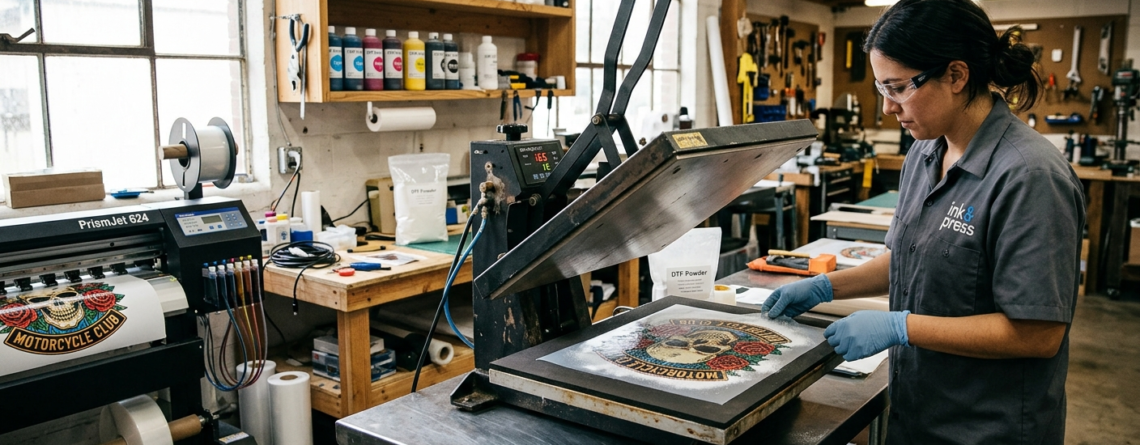
DTF Powder Curing Guide: 6 Best Ways to Cure DTF Powder Correctly
If you are working with DTF printing, curing is one step you simply cannot ignore. Many beginners focus only on printing quality, but the real strength of your design depends on how well you cure the powder.
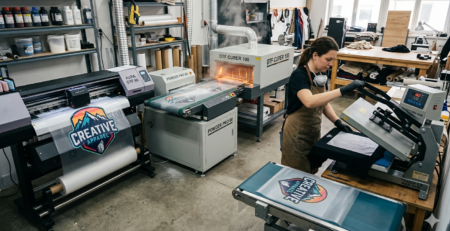
This DTF powder curing guide will help you understand the correct process in simple terms. Whether you are using a heat press, oven, or shaker machine, proper curing ensures your prints stay strong even after multiple washes.
Chat with our team for printers, consumables, film, powder and business setup guidance.
Think of curing like baking. If you underbake, the result is weak. If you overbake, it gets damaged. The same logic applies here.
Why Proper Curing Matters
Curing is what melts the adhesive powder and bonds the ink to the fabric. Without proper curing:
- Prints may crack
- Designs can peel off
- Colors may fade quickly
A well-followed DTF powder curing guide ensures:
- Strong adhesion
- Smooth finish
- Wash resistance
- Professional look
From my experience, most print failures happen because of poor curing, not poor printing.
Essential Equipment Needed
To follow this DTF powder curing guide, you need basic tools:
- Heat Press Machine
- Curing Oven (optional)
- Shaker Dryer Machine (advanced setup)
- Thermometer (to check temperature accuracy)
Some commonly used machines include:
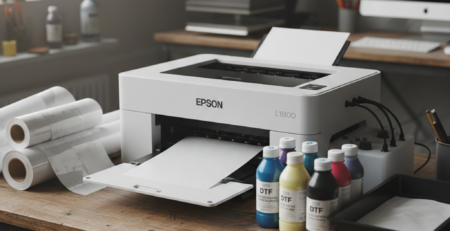
🔵 ProlificGeeks DTF Printer L1800
🔵 XP600
🔵 i3200
These printers work well when combined with proper curing techniques.
Preparation Steps Before Curing
Before you start curing, follow these simple steps:
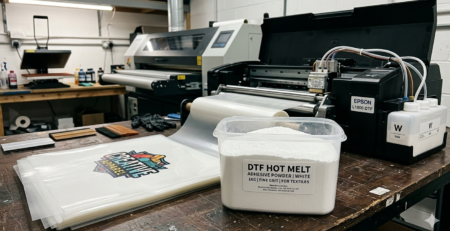
- Print your design on PET film
- Apply DTF powder evenly
- Shake off excess powder
- Let the film rest for a few seconds
Make sure:
- No powder clumps are present
- The design is fully covered
- The workspace is clean
Skipping preparation can ruin the entire process, even if you follow the best DTF powder curing guide later.
Method 1: Heat Press Curing
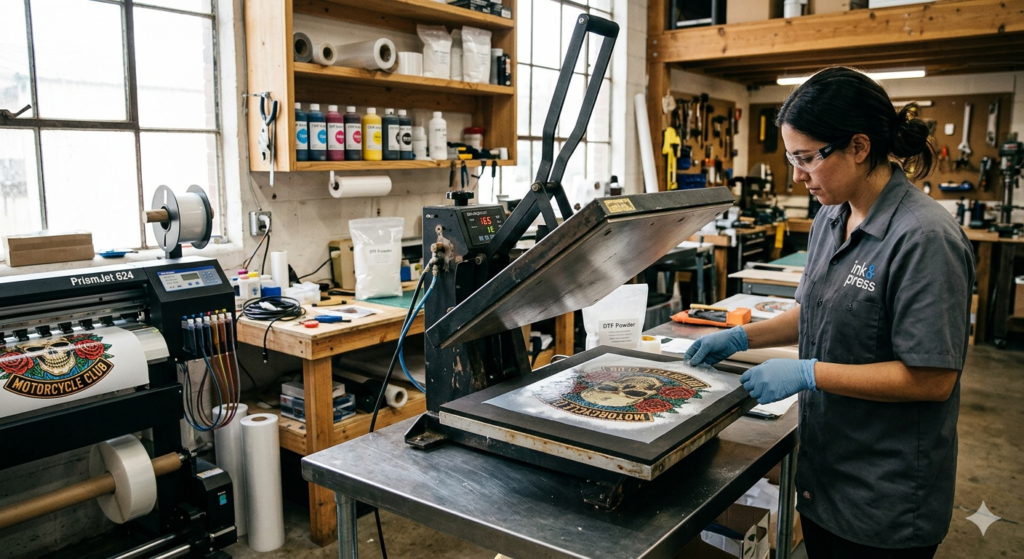
This is the most common method.
Steps:
- Set temperature: 160–170°C
- Time: 2–5 minutes
- Keep the film hovering (do not press)
Important Tip:
Do not close the heat press completely. Keep a gap so heat circulates evenly.
When to use:
- Small business setups
- Beginners
- Low production work
Using machines like 🔵 ProlificGeeks DTF Printer L1800 with heat press curing gives reliable results.
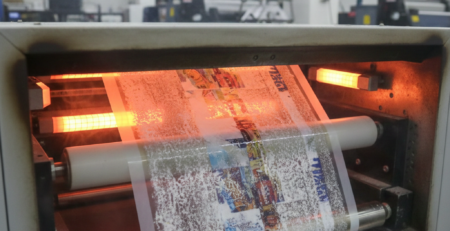
Method 2: Oven Curing
Oven curing gives more uniform results compared to heat press.
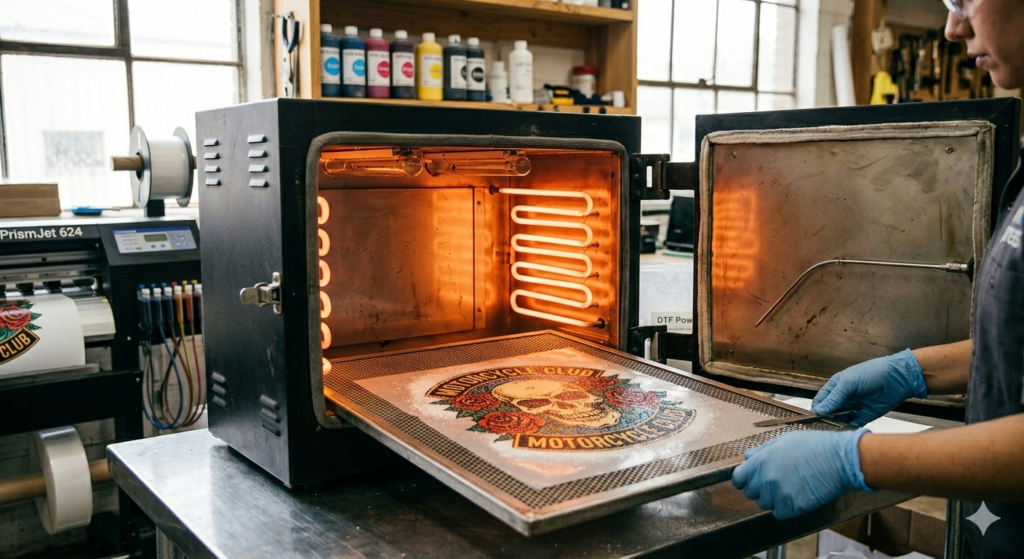
Steps:
- Preheat oven: 150–160°C
- Place film inside for 2–3 minutes
- Watch closely until powder melts
Signs of proper curing:
- Powder turns glossy
- No dry powder remains
When to use:
- Medium production
- Better consistency needed
Many professionals using 🔵 XP600 prefer oven curing for stable output.
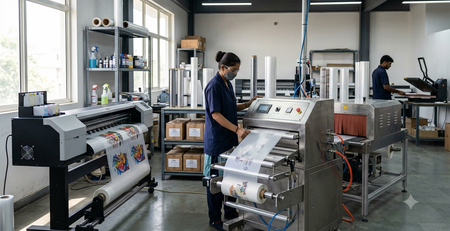
Method 3: Shaker Oven Curing
This is a fully automatic method used in advanced setups.
How it works:
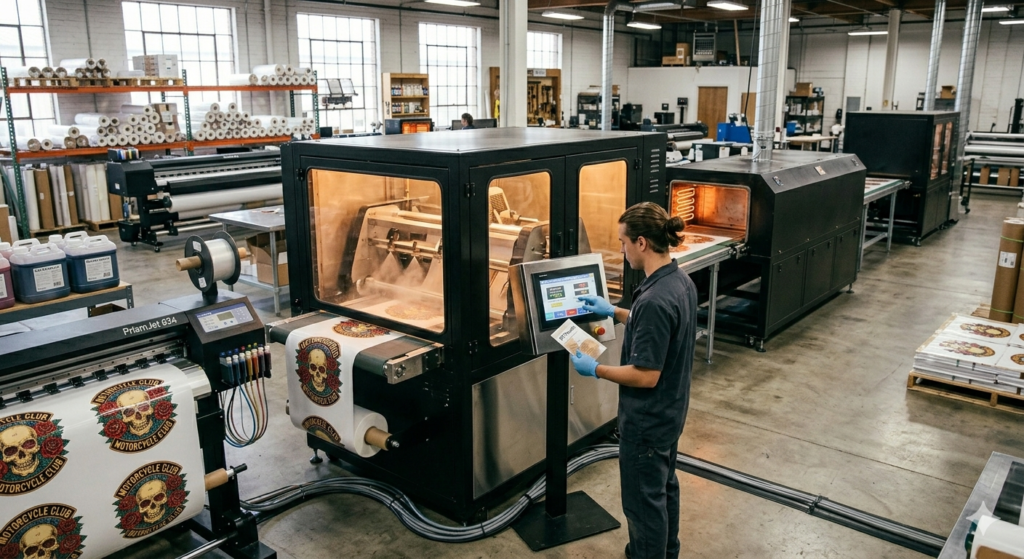
- Powder is applied automatically
- Film passes through heating chamber
- Curing happens evenly
Benefits:
- Fast production
- Consistent results
- Less manual work
Machines paired with 🔵 i3200 print heads perform extremely well in this setup.
This is the most efficient method mentioned in this DTF powder curing guide.
How to Check for Full Cure
This step is often ignored, but it’s very important.
Simple checks:
- Touch test: Surface should be dry, not sticky
- Look test: Slight glossy finish
- Stretch test (after transfer): No cracks
If powder looks dull or dusty, it is under-cured.
If it looks too melted or burnt, it is over-cured.
Following this DTF powder curing guide helps you identify the perfect balance.
Common Mistakes to Avoid
Here are some real mistakes I’ve seen beginners make:
1. Wrong Temperature
Too low = weak bonding
Too high = burnt design
2. Uneven Powder Application
Leads to patchy prints
3. Over Curing
Makes prints brittle
4. Under Curing
Causes peeling after wash
5. Ignoring Equipment Calibration
Even a 10°C difference can affect results
Avoiding these mistakes will make your DTF powder curing guide more effective.
Pro Tips for Durability
Want long-lasting prints? Follow these practical tips:
- Always preheat your machine
- Use high-quality powder
- Maintain consistent temperature
- Do test prints daily
- Store powder in dry conditions
Also, combine good curing with reliable printers like:
🔵 ProlificGeeks DTF Printer L1800
🔵 XP600
🔵 i3200
Durability is not about one step. It’s about the whole process.
Storage and Handling Post-Cure
After curing, handling is equally important.
Do this:
- Store films in dry area
- Avoid stacking hot films
- Keep away from dust
- Use within 24–48 hours for best results
Improper storage can undo all your efforts, even if you followed the DTF powder curing guide perfectly.
Conclusion
Curing is the backbone of DTF printing. You can have the best design and printer, but without proper curing, everything fails.
This DTF powder curing guide gives you simple, practical steps to follow. Start with basic methods like heat press, then move to oven or shaker setups as you grow.
Remember:
- Control temperature
- Watch timing
- Check results
Once you master curing, your print quality will improve automatically.
Product Suggestions
🔵 ProlificGeeks DTF Printer L1800
🔵 XP600
🔵 i3200
🔵 DTF Curing Oven Machine
🔵 Automatic Powder Shaker Machine
External References + Credits
For deeper understanding, you can explore:
- PrintIndustry.com
- Fespa.com
- InkJetInsights.com
- ResearchGate
Credit: Information references from Fespa, PrintIndustry, and other public sources.

LEAVE A COMMENT