
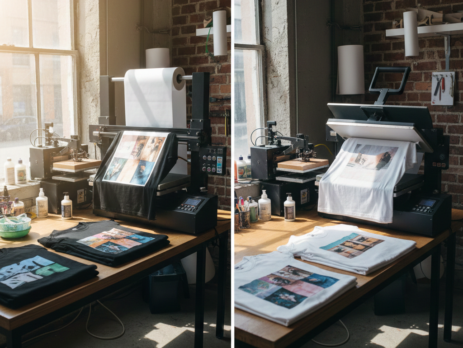
Sublimation Printer Complete Guide: 7 Powerful Differences Between DTF and Sublimation
Table of Contents
Introduction
Choosing the right printer can decide how profitable your printing business becomes. Many beginners and even experienced print shop owners get stuck between a DTF printer and a sublimation printer. Both are popular. Both work well. But they serve different needs.
A sublimation printer is great for polyester fabrics and photo-quality prints. DTF printing, on the other hand, works on almost any fabric. Cotton, blends, dark garments—no problem.
In this guide, I’ll break everything down in simple terms. No hype. No sales talk. Just real differences, costs, quality, and daily use experience so you can make the right choice.
What is DTF Printing?
DTF means Direct to Film. In this process, the design is printed on a special PET film using DTF inks. Powder adhesive is applied. The film is heat-pressed onto fabric.
DTF printing is popular because it works on:
- Cotton
- Polyester
- Blends
- Light and dark fabrics
Many small shops choose DTF because it’s flexible. You don’t need fabric-specific inks like with a printer.
What is Sublimation Printing?
Sublimation printing uses heat to turn ink into gas. The ink bonds directly with polyester fabric or coated surfaces.
A sublimation printer does not sit on top of the fabric. The ink becomes part of the fabric itself. That’s why sublimation prints feel smooth and never crack.
However, sublimation only works on:
- White or light-colored polyester
- Polyester-coated mugs, plates, phone covers
If your work is focused on sportswear or photo gifts, a sublimation printer is often the best tool.
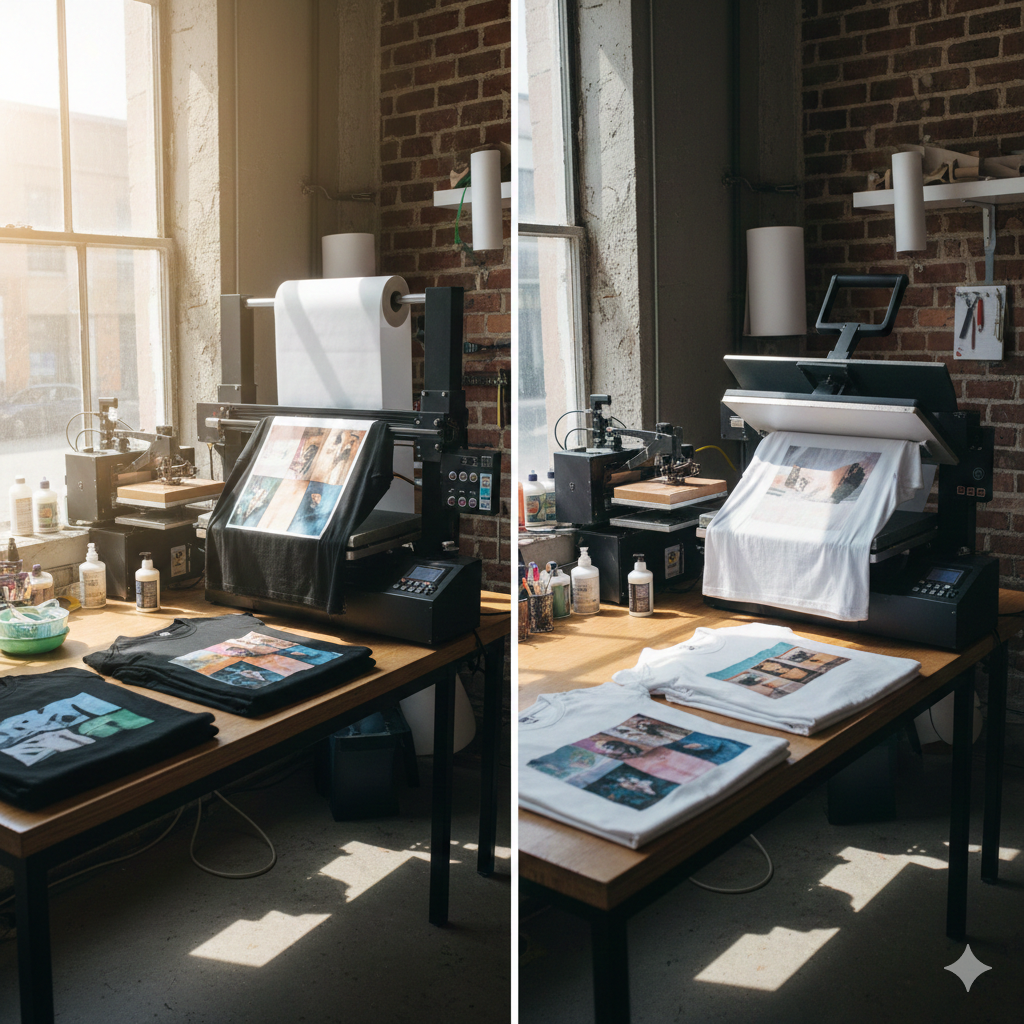
Key Differences
| Feature | DTF Printer | Sublimation Printer |
|---|---|---|
| Fabric Type | All fabrics | Polyester only |
| Dark Garments | Yes | No |
| Print Feel | Slightly raised | Zero feel |
| Ink Cost | Higher | Lower |
| Maintenance | Medium | Low |
| Learning Curve | Moderate | Easy |
Pros and Cons of DTF
Pros
- Works on any fabric
- Good for dark garments
- Bright, bold colors
- No fabric limitation
Cons
- Extra steps (powder + curing)
- Film cost adds up
- Slightly thicker print feel
DTF is often chosen by print shops offering variety. But for simple polyester jobs, a sublimation printer is cleaner and faster.
Pros and Cons of Sublimation
Pros
- No cracking or peeling
- Very low ink wastage
- Photo-quality output
- Easy maintenance
Cons
- Limited to polyester
- No dark fabric printing
- Needs coated surfaces for hard items
If your business is focused on sports jerseys or mugs, a printer makes daily work smooth.
Cost Comparison
Initial investment matters.
- Printer cost is low
- No powder or film
- Ink consumption is minimal
DTF setup costs more:
- Printer
- Film
- Powder
- Curing system
For beginners with limited budget, starting with a sublimation printer often makes sense.
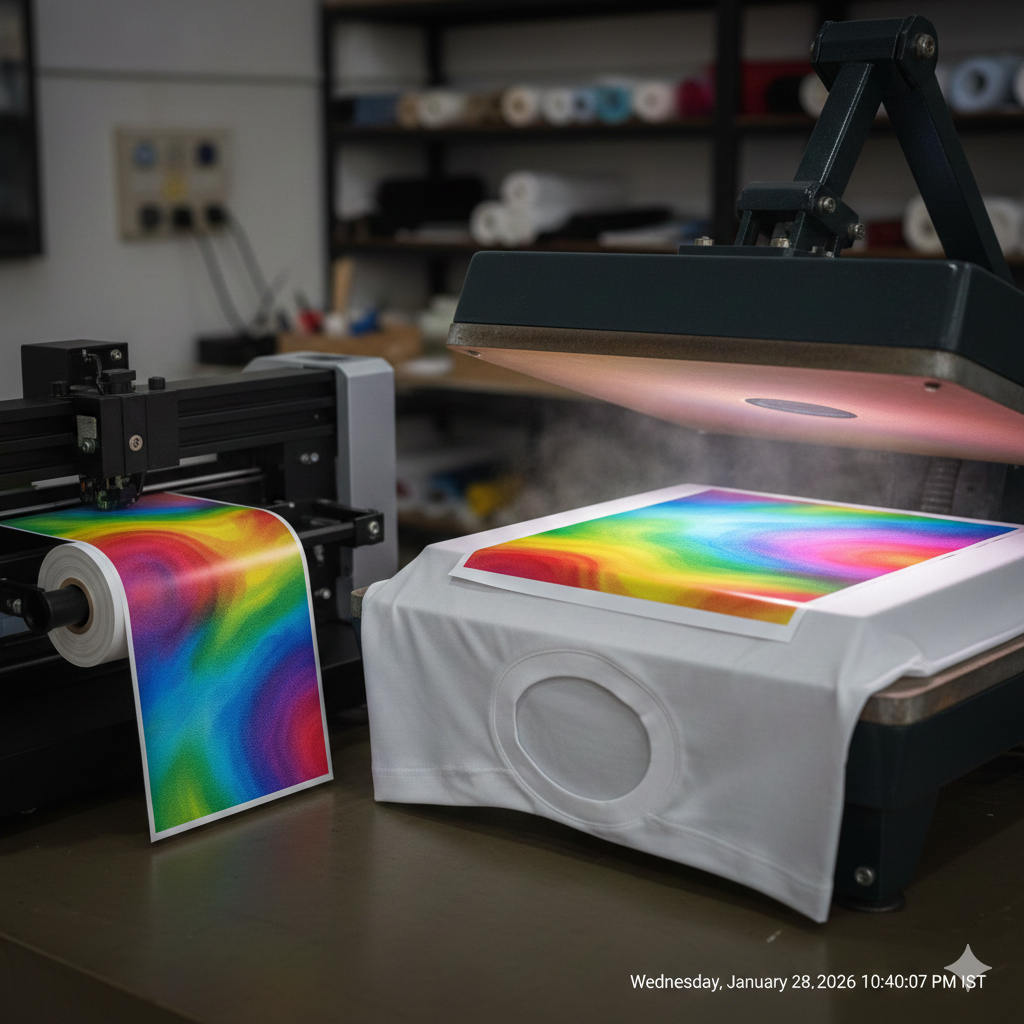
Print Quality Comparison
This is where sublimation shines.
- Smooth texture
- Sharp photos
- Long-lasting prints
DTF gives:
- Strong colors
- Good opacity
- Slight texture
For photo prints and sportswear, the sublimation printer wins. For bold logos on cotton, DTF performs better.
Best Fabrics and Applications
DTF Applications
- Cotton T-shirts
- Hoodies
- Denim
- Caps
- Tote bags
Sublimation Printer Applications
- Polyester T-shirts
- Sports jerseys
- Mugs
- Mouse pads
- Photo frames
If 70% of your work is polyester, a sublimation printer is the smarter investment.
Equipment Needed
For DTF
- DTF printer
- PET film
- Powder shaker
- Heat press
For Sublimation
- Sublimation printer
- Sublimation paper
- Heat press
This printer setup is simpler and takes less space.
Setup and Ease of Use
DTF has more steps. Mistakes can happen during powder application.
A sublimation printer is almost plug-and-play. Many users start producing sellable prints within a day.
For home-based businesses, sublimation is less messy.
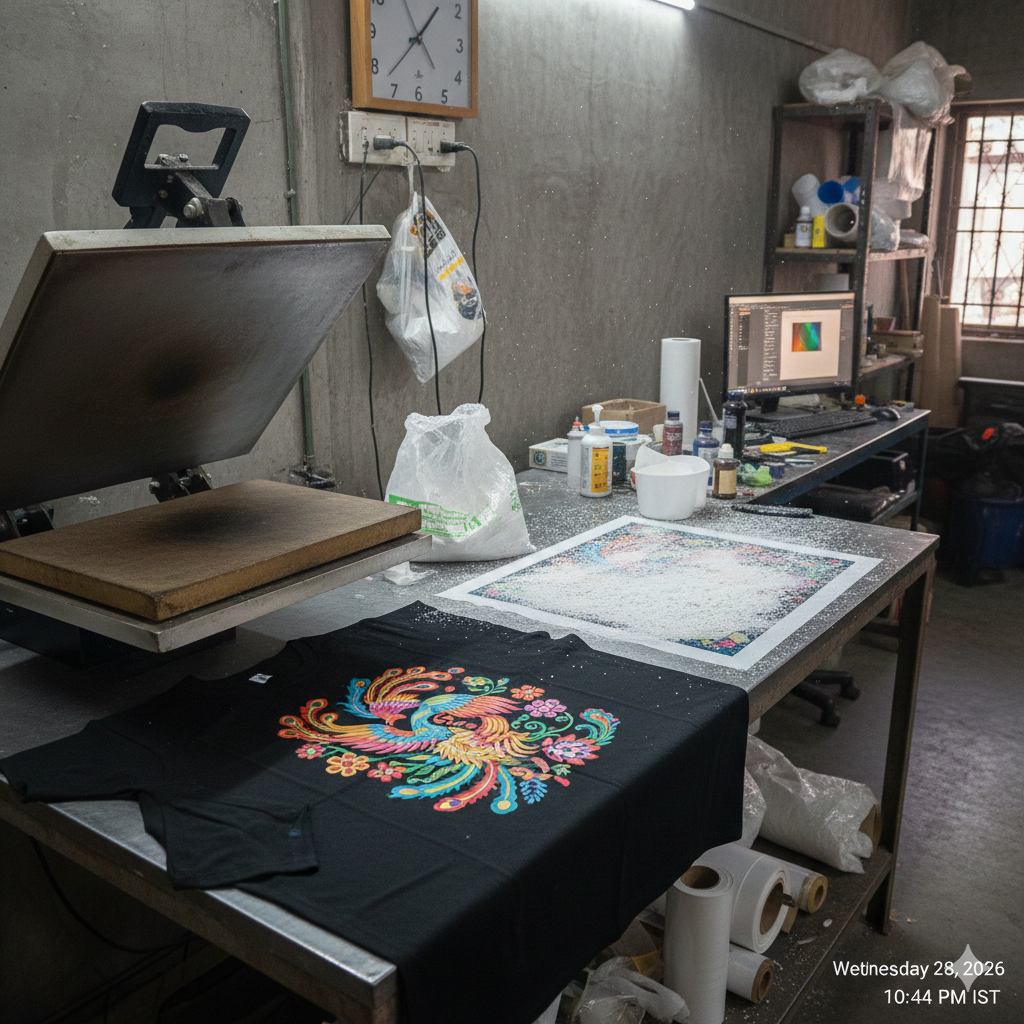
Which One to Choose?
Choose DTF if:
- You print on cotton
- You need dark fabric printing
- You want flexibility
Choose a sublimation printer if:
- You print on polyester
- You do photo gifts
- You want low maintenance
- You want smooth prints
Many successful shops eventually use both.
Conclusion
There is no single winner here. The best printer depends on what you print every day.
If you want simple operation, clean workflow, and long-lasting prints, a sublimation printer is a solid choice. If fabric variety is your priority, DTF gives more freedom.
Start with what matches your customers. Upgrade later.
FAQs
Q1. Can a sublimation printer print on cotton?
No. A sublimation printer only works on polyester or coated surfaces.
Q2. Which is cheaper long-term?
Sublimation is cheaper due to lower ink and consumable costs.
Q3. Which is better for beginners?
A sublimation printer is easier to learn and maintain.
Q4. Can I use both in one business?
Yes. Many print shops use both for different jobs.
Product Suggestions (from DTFshop.in)
- Epson Sure Color F130 Sublimation Printer
- Epson Sure Color F6370 Sublimation Printer
- DTF A3 Printer with White Ink Circulation
- Automatic DTF Powder Shaker Dryer
- Premium Sublimation Transfer Paper Roll
External References + Credits
Helpful reading:
Credit: Information references from Fespa, PrintIndustry, and other public sources.

Leave a Reply