
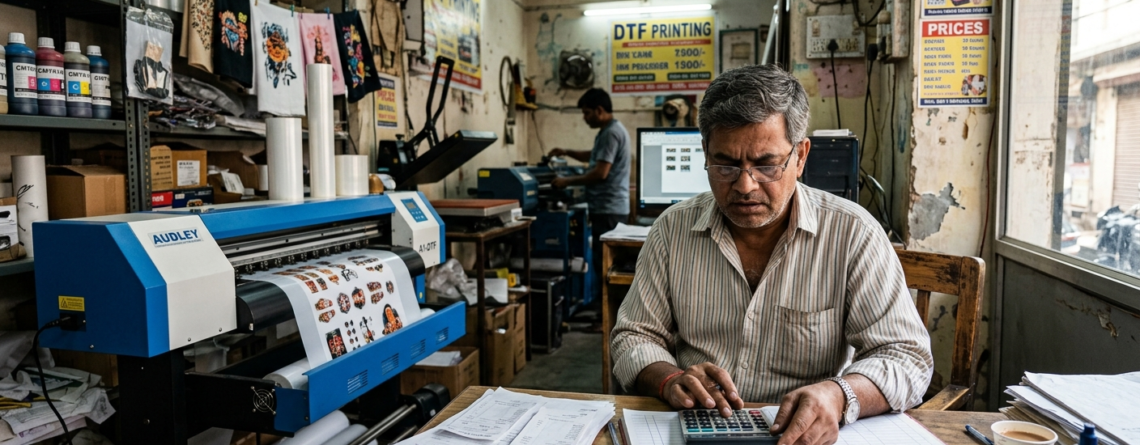
DTF Printer Investment Crush: Full Workflow & Profit Reality for Indian Print Shops 2026
Here’s the blunt truth:
Most people don’t fail because DTF doesn’t work.
They fail because they don’t understand how money moves inside the workflow.
You don’t recover a DTF Printer Investment by buying a machine.
You recover it by controlling cost at every step—from design to final press.
This guide breaks that down. No theory. Only numbers and decisions.
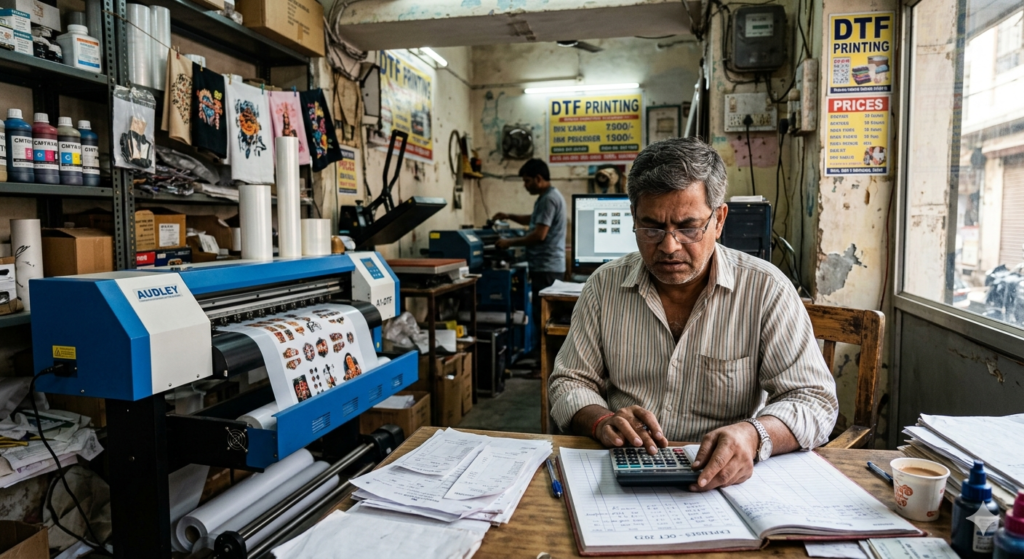
Step-by-Step: How DTF Printing Actually Works (And Where Money Is Made or Lost)
1. Design Stage (Zero Cost? Wrong.)
- Software (CorelDRAW/Photoshop): ₹2,000–₹3,000/month (if licensed)
- Designer cost: ₹10–₹30 per design (or ₹15k–₹25k salary)
Reality:
Bad design = reprints = wasted film + ink.
👉 Loss point starts here.
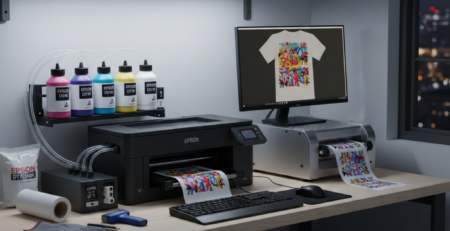
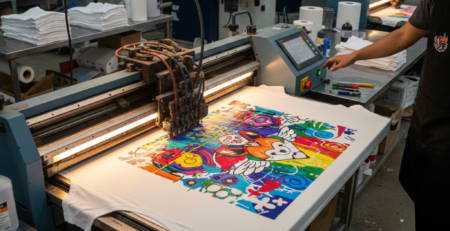
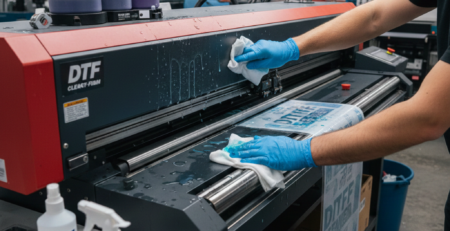
2. Printing Stage (Where Your Investment Bleeds or Scales)
Machines you’ll typically consider:
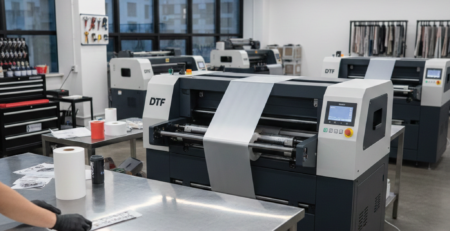
- XP600 DTF Printer (entry-mid level)
- i3200 DTF Printer (production level)
Typical consumable cost per A3 print:
- Ink: ₹8–₹12
- Film: ₹10–₹15
- Total: ₹20–₹27 per print
If calibration is off → double prints → cost becomes ₹40+ instantly.
3. Powder Application
- DTF Powder cost: ₹400–₹600/kg
- Per print: ₹5–₹7
Manual process = inconsistency
Automatic shaker = upfront cost but saves rework
4. Curing Stage
- Electricity + time cost: ₹2–₹4 per print
- Improper curing = peeling complaints = refund loss
5. Heat Press Stage
- Electricity + labor: ₹5–₹10 per print
Final product cost (average):
👉 ₹35–₹50 per print
Selling price in Indian market:
👉 ₹120–₹250 per print
Your margin depends on volume—not price.
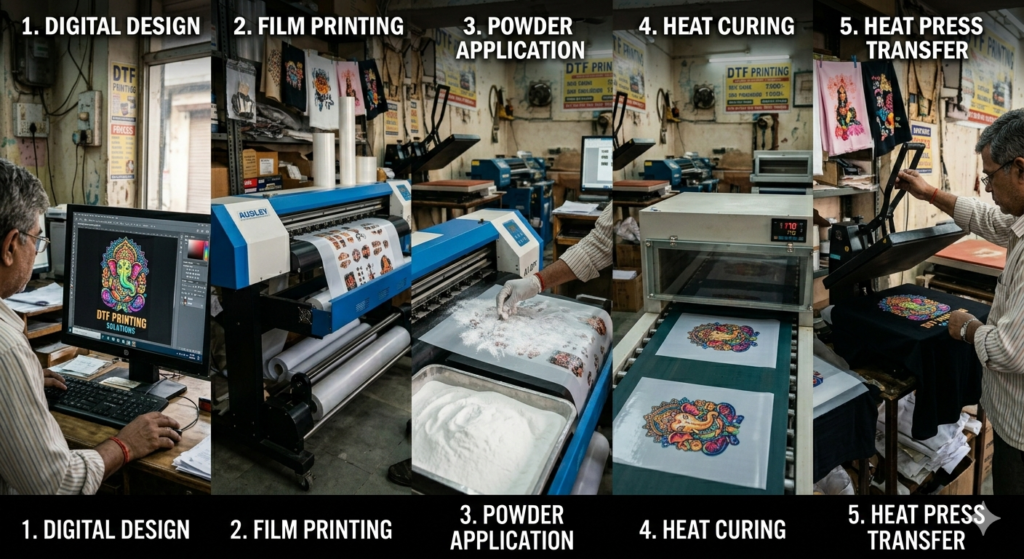
Real DTF Printer Investment in India (2026 Reality)
| Setup Type | Investment | Suitable For |
|---|---|---|
| Basic XP600 Setup | ₹3–₹4.5 lakh | Small shops, beginners |
| i3200 Setup | ₹5–₹7 lakh | Scaling businesses |
Includes:
- Printer
- Heat press
- Initial stock (DTF Ink 100ML, DTF PET Film Roll, DTF Powder)
Available through ProlificGeeks at dtfshop.in
Profit Scenarios (This Is What Actually Matters)
Scenario 1: Low Volume (Starter Mistake Zone)
- Prints/day: 30
- Revenue/print: ₹150
- Monthly revenue: ₹1.35 lakh
Costs:
- Consumables: ₹40,000
- Rent + electricity: ₹20,000
- Misc: ₹10,000
👉 Profit: ₹65,000/month
Break-even:
👉 5–7 months (best case)
Reality: Most people stay stuck here.
Scenario 2: Medium Volume (Stable Business)
- Prints/day: 80
- Monthly revenue: ₹3.6 lakh
Costs:
- Consumables: ₹1.2 lakh
- Overheads: ₹50,000
👉 Profit: ₹1.9 lakh/month
Break-even:
👉 3–4 months
Scenario 3: High Volume (Serious Operators Only)
- Prints/day: 150+
- Monthly revenue: ₹6–₹8 lakh
Costs:
- Consumables: ₹2.5–₹3 lakh
- Overheads: ₹80k–₹1 lakh
👉 Profit: ₹3–₹4 lakh/month
Break-even:
👉 2–3 months
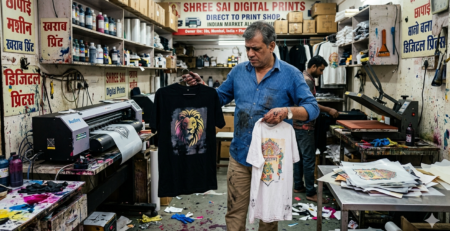
Mini Case: Surat Shop Owner (Real Pattern)
- Started with XP600
- First 3 months: low volume, barely breaking even
- Shifted to bulk B2B orders (uniform suppliers)
Now:
👉 ₹2.5–₹3 lakh monthly profit
👉 Upgraded to i3200 within 6 months
Lesson:
👉 Volume + consistency > machine alone
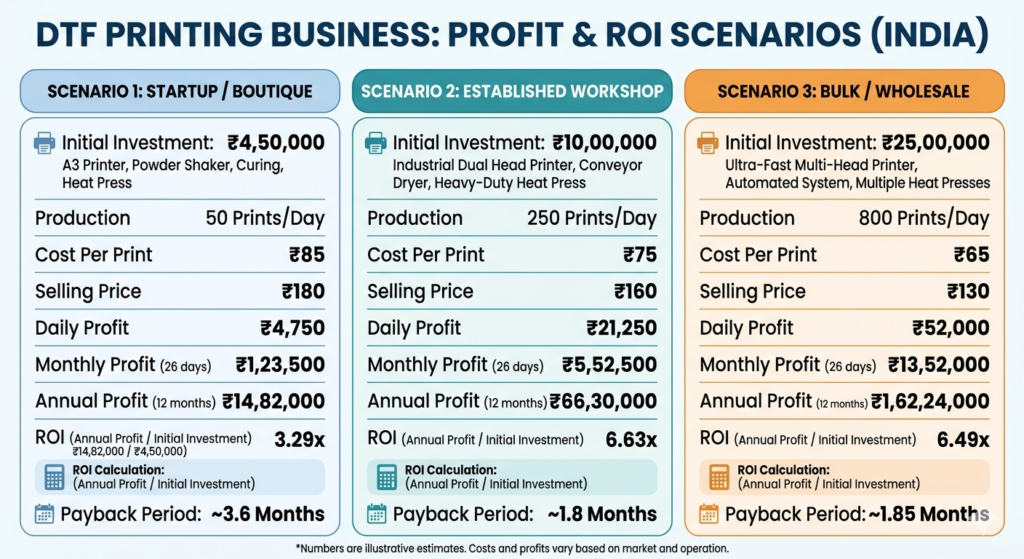
XP600 vs i3200: Which One Recovers Investment Faster?
| Factor | XP600 | i3200 |
| Cost | ₹3–4.5L | ₹5–7L |
| Speed | Medium | High |
| Maintenance | Moderate | Lower (if used right) |
| Ideal Volume | 30–80 prints/day | 100+ prints/day |
| ROI Speed | Slower | Faster (if volume exists) |
Decision Rule:
- No confirmed orders → XP600
- Bulk orders ready → i3200
Hidden Costs Nobody Talks About
This is where most ROI calculations fail.
1. Printhead Damage
- Cost: ₹15k–₹40k
- Happens due to poor maintenance
2. Idle Machine Loss
- No orders = no recovery
- EMI still running
3. Wastage
- Misprints
- Film rejection
- Color mismatch
👉 Can eat 10–20% of revenue
4. Power Issues (India Reality)
- Voltage fluctuation damages boards
5. Downtime
- 2–5 days repair = ₹20k–₹50k lost opportunity
Pros and Cons (No Sugarcoating)
Pros
- High margin product
- Customization demand is real
- Fast turnaround
- Works for B2B + B2C
Cons
- Requires daily discipline
- Not “plug and play”
- Market is getting competitive
- Bad operator = guaranteed loss
Who Should NOT Buy This
Don’t invest if:
- You don’t have minimum ₹50k working capital/month
- You don’t understand printing basics
- You expect passive income
- You don’t have sales channels
DTF is not a “buy machine → earn money” model.
Common Mistakes That Destroy ROI
- Buying i3200 without orders
- Ignoring maintenance
- Underpricing prints
- No B2B clients
- No daily production target
Step-by-Step Investment Recovery Plan
Step 1: Start With Real Numbers
- Target: 50 prints/day minimum
- Fix selling price before buying machine
Step 2: Lock B2B Clients First
- Local t-shirt shops
- Uniform suppliers
- Small brands
Step 3: Control Costs
- Track per print cost daily
- Reduce wastage below 10%
Step 4: Scale Gradually
- XP600 → i3200 upgrade
- Add staff only after demand
Step 5: Maintain Machine Like an Asset
- Daily cleaning
- Proper shutdown
- Use quality consumables (DTF Ink 100ML, DTF PET Film Roll, DTF Powder)
Decision Framework (Simple and Brutal)
Choose XP600 if:
- You’re testing market
- Budget under ₹4.5L
- Volume uncertain
Choose i3200 if:
- You already have orders
- You want faster ROI
- You can push 100+ prints/day
Final Decision Summary
DTF works. But only if:
- You hit volume early
- You control wastage
- You plan ROI before buying
A DTF Printer Investment is not risky.
A blind investment is.
What You Should Do Next
If you’re serious:
- Calculate your daily print capacity
- Estimate your local demand
- Decide your machine based on volume—not budget
You can explore reliable machines from ProlificGeeks at:
👉 https://dtfshop.in
👉 Or WhatsApp directly: +918123524574
Ask for numbers. Not brochures.
Credit: Industry insights referenced from Fespa, PrintIndustry, and public textile printing reports.

LEAVE A COMMENT