
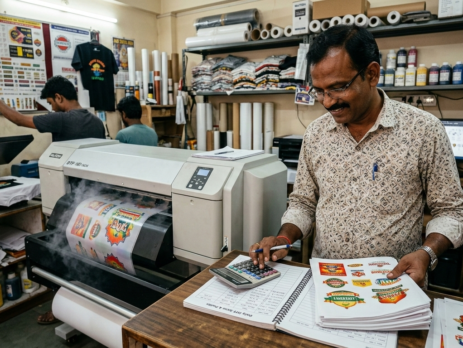
Top 7 Mistakes That Destroy DTF Printer ROI in First 6 Months
A ₹4–6 lakh DTF Printer investment can either recover in 4–8 months or become a dead machine collecting dust in the corner of your shop.
Both outcomes happen every week in India.
The difference is not technology.,
It is business discipline.
Most print shop owners assume the printer will automatically bring orders. But the truth from hundreds of installations across India is brutal:
The first 6 months decide whether your DTF setup becomes a profit machine or a liability.
Industry observations from global printing events and market reports show that over 40% of small digital printing investments struggle with ROI due to operational mistakes not machine quality.
Below are the 7 biggest mistakes that silently destroy DTF Printer ROI.
If you are planning to invest ₹3–7 lakh, read this carefully.
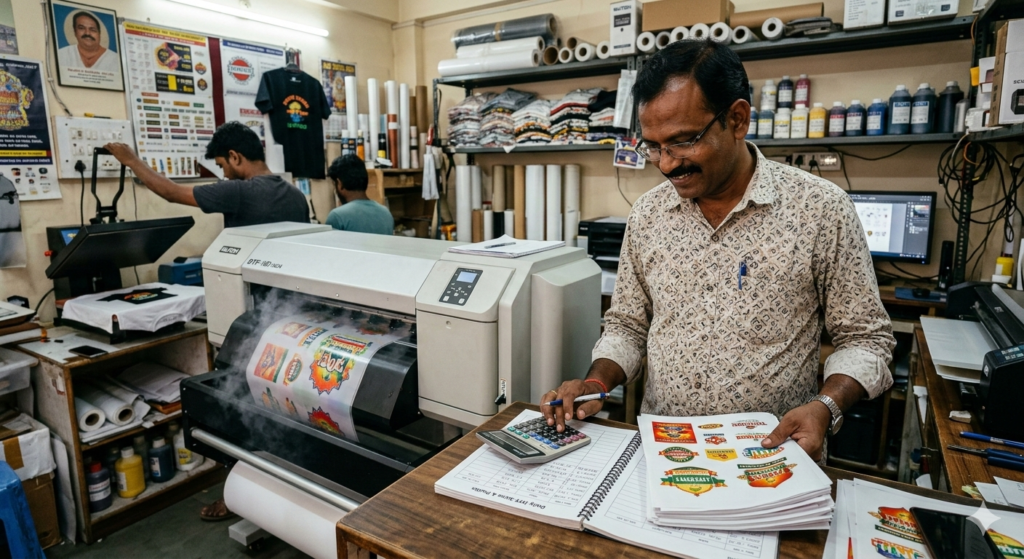
Mistake #1: Buying a Printer Without Calculating Monthly Production
Many buyers ask only one question:
“XP600 or i3200?”
The real question should be:
“How many square feet will I print every day?”
Because ROI depends entirely on production volume, not printer price.
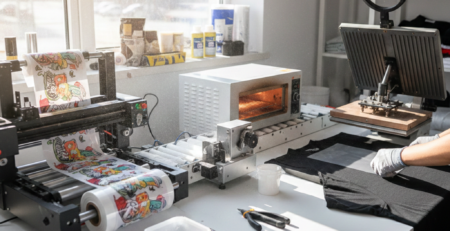
Typical Indian DTF setup investment:
| Setup Component | Cost Range |
|---|---|
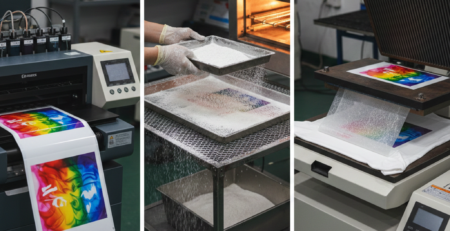
| XP600 DTF Printer | ₹2.5L – ₹3L |
| Powder Shaker + Dryer | ₹1.2L – ₹1.8L |
| Heat Press | ₹40k – ₹80k |
| Computer + RIP | ₹40k – ₹60k |
| Initial Ink, Film, Powder | ₹25k – ₹50k |
Total investment: ₹4L – ₹6L
But if your shop prints less than 30–40 sheets per day, ROI becomes painfully slow.
Mistake #2: Underestimating Running Costs
Many new buyers only calculate printer cost, not printing cost per sheet.
Typical DTF consumable costs:
| Item | Cost |
|---|---|
| DTF PET Film Roll | ₹25–₹35 per sheet |
| DTF Ink | ₹12–₹18 |
| DTF Powder | ₹5–₹8 |
| Electricity | ₹3–₹5 |
Total printing cost: ₹45–₹65 per sheet
Selling price in Indian market:
₹120 – ₹250 per sheet (depending on design density).
If you don’t track this margin properly, your pricing strategy collapses.
Mistake #3: Buying High-Speed Printer Without Orders
Many new businesses jump straight to an i3200 DTF Printer.
But that machine is built for volume shops, not startups.
Printer Investment Comparison
| Feature | XP600 DTF Printer | i3200 DTF Printer |
|---|---|---|
| Printer Cost | ₹2.5L–₹3L | ₹4L–₹5L |
| Production Speed | Medium | High |
| Ideal For | Small shops | Production units |
| Daily Output | 80–120 sheets | 200–350 sheets |
| ROI Speed | Faster for small shops | Faster only with bulk orders |
If your shop prints 50 sheets/day, the XP600 setup will recover faster.
Buying bigger machines without orders is the fastest way to delay ROI.
Mistake #4: Ignoring Daily Maintenance Discipline
DTF printers are not like eco-solvent printers.
They require strict daily care.
Common negligence problems:
- clogged print heads
- ink circulation failure
- white ink sediment
- nozzle damage
Replacing a printhead can cost:
₹25,000 – ₹60,000
That single mistake can wipe out one month of profits.
Professional shops run daily routines:
- morning nozzle test
- head cleaning
- white ink agitation
- humidity control
Maintenance discipline directly affects ROI.
Mistake #5: Entering an Already Saturated Market Without Strategy
DTF demand is high.
But competition is also rising fast.
Cities like:
- Surat
- Delhi
- Tiruppur
- Ludhiana
already have dozens of DTF service providers.
If you only rely on walk-in customers, production volume will stay low.
Successful shops focus on:
- local garment manufacturers
- small clothing brands
- online sellers
- school uniform printers
- corporate T-shirt vendors
DTF works best as B2B production, not retail.
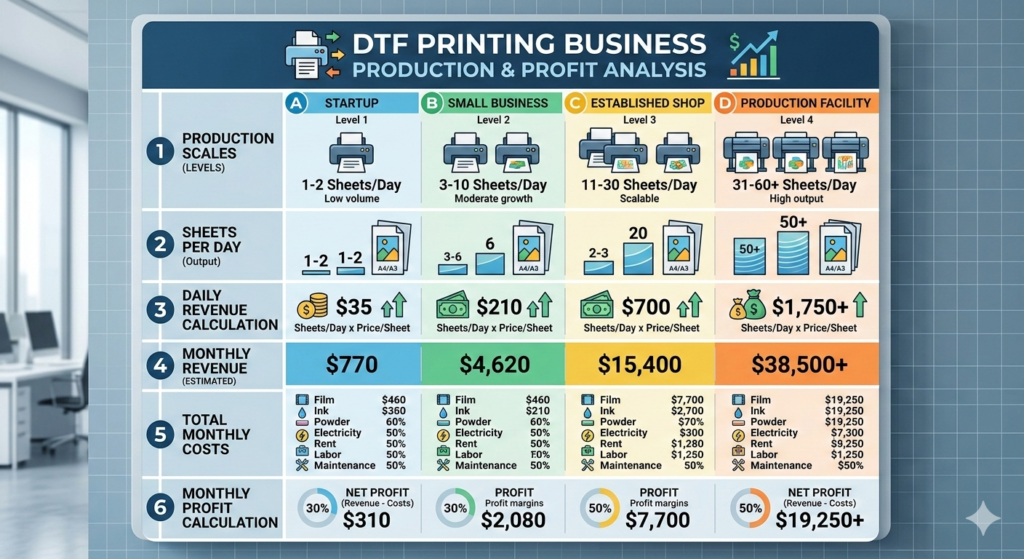
Profit Scenarios: Realistic DTF ROI Calculations
Let’s look at three production levels.
Scenario 1 — Low Production Shop
Daily printing: 40 sheets
Monthly production:
40 × 26 days = 1040 sheets
Revenue (₹160 average):
₹1,66,400
Printing cost (₹55 average):
₹57,200
Gross margin:
₹1,09,200
After rent, staff, electricity:
Net profit: ₹45k – ₹60k
ROI timeline:
8–12 months
Scenario 2 — Medium Production Shop
Daily printing: 120 sheets
Monthly production:
120 × 26 = 3120 sheets
Revenue:
₹4,99,200
Printing cost:
₹1,71,600
Gross margin:
₹3,27,600
Operating expenses:
₹80k – ₹1L
Net profit:
₹2.2L – ₹2.4L
ROI timeline:
3–5 months
Scenario 3 — High Production Unit
Daily printing: 300 sheets
Monthly production:
7800 sheets
Revenue:
₹12.4L
Printing cost:
₹4.2L
Gross margin:
₹8.2L
Expenses:
₹2L
Net profit:
₹6L+
ROI timeline:
1–2 months
But this requires bulk garment clients.
Mistake #6: Buying Cheap Consumables
Cheap materials destroy print quality.
Most new shops buy random suppliers for:
- film
- powder
- ink
Results:
- cracking prints
- dull colors
- customer complaints
- repeat orders lost
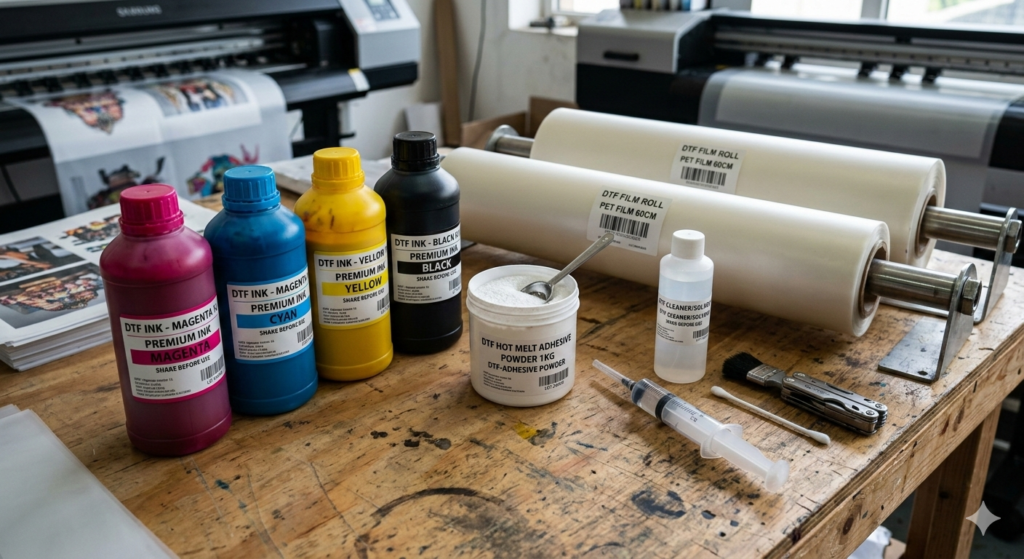
Professional shops use consistent consumables like:
- DTF Ink 100ML
- DTF PET Film Roll
- DTF Powder
because repeat clients depend on consistent results.
Mistake #7: No Sales Pipeline
Machines do not generate orders.
Your sales system does.
Top DTF shops in India generate work through:
- WhatsApp catalog selling
- Instagram outreach to clothing brands
- visiting garment units
- contract printing partnerships
- reseller printers
Without a pipeline, production remains low.
Low production = slow ROI.
Hidden Costs Nobody Talks About
These costs surprise most new owners.
| Hidden Cost | Monthly Impact |
|---|---|
| Print head replacement reserve | ₹5k |
| Waste prints | ₹3k–₹8k |
| Maintenance supplies | ₹2k |
| Reprints due to mistakes | ₹5k–₹10k |
| Packaging and delivery | ₹4k |
Real businesses include these costs in pricing.
Ignoring them creates fake profit calculations.
Mini Case Example: Surat Print Shop
A small print shop owner in Surat invested ₹4.2 lakh in an XP600 DTF setup.
First 2 months:
Daily production: 20 sheets
Profit: almost zero.
Instead of blaming the machine, he changed strategy:
- partnered with three local clothing brands
- offered bulk sheet discounts
- promoted same-day printing
Within 90 days:
Daily production jumped to 110 sheets.
Investment recovered in 5 months.
The machine did not change.
The sales strategy did.
Who Should NOT Buy a DTF Printer
This investment is not for everyone.
Avoid DTF investment if:
- you do not have garment printing clients
- you cannot manage daily maintenance
- you expect passive income
- you cannot invest ₹30k–₹50k monthly in consumables
- you have no sales effort
DTF works best for active printing businesses, not side hobbies.
Step-by-Step DTF Investment Recovery Plan
Follow this framework used by profitable shops.
Step 1 — Start with Realistic Machine
For most shops:
XP600 DTF Printer is the safest start.
Lower cost = faster ROI.
Step 2 — Lock 3 Bulk Clients First
Before installation:
Secure printing commitments from:
- clothing brands
- uniform suppliers
- online sellers
Target minimum 80 sheets/day demand.
Step 3 — Control Consumable Quality
Use reliable materials:
- DTF Ink 100ML
- DTF PET Film Roll
- DTF Powder
Consistency keeps repeat customers.
Step 4 — Track Production Metrics
Monitor weekly:
- sheets printed
- printing cost per sheet
- rejection rate
- downtime hours
Serious shops run printing like manufacturing operations.
Step 5 — Expand Capacity After Demand
Upgrade to i3200 DTF Printer only when daily demand crosses 150 sheets.
Scaling too early slows ROI.
Decision Framework: Which Printer Should You Choose?
Choose XP600 DTF Printer if:
- startup budget under ₹5 lakh
- production under 150 sheets/day
- new to DTF business
Choose i3200 DTF Printer if:
- bulk garment orders already exist
- production target above 200 sheets/day
- scaling printing unit
Where Most Shops Buy Their Equipment
Many Indian printing businesses now prefer to buy DTF online because it allows price comparison and support access.
Reliable machines like XP600 DTF Printer, i3200 DTF Printer, and consumables like DTF Ink 100ML, DTF PET Film Roll, and DTF Powder are available at: https://www.dtfshop.in/
The team behind ProlificGeeks also provides setup guidance and operational support.
For serious buyers calculating ROI numbers, direct consultation is usually faster.
WhatsApp support: +91 8123524574
Final Decision Summary
A DTF Printer is not a risky investment.
A poorly planned printing business is.
If you:
- secure production clients
- control consumable quality
- maintain the machine daily
- track printing costs
- scale production step-by-step
Then a ₹4–6 lakh DTF setup can realistically generate:
₹50k to ₹2L+ monthly profit.
But if you buy the machine first and think about business later, ROI may never come.
Serious buyers should calculate their daily sheet production target before purchasing.
If you want help calculating your exact DTF Printer investment recovery plan, message directly.
WhatsApp: +91 8123524574
Credit: Industry insights referenced from Fespa, PrintIndustry, and public textile printing reports.
,

Leave a Reply