
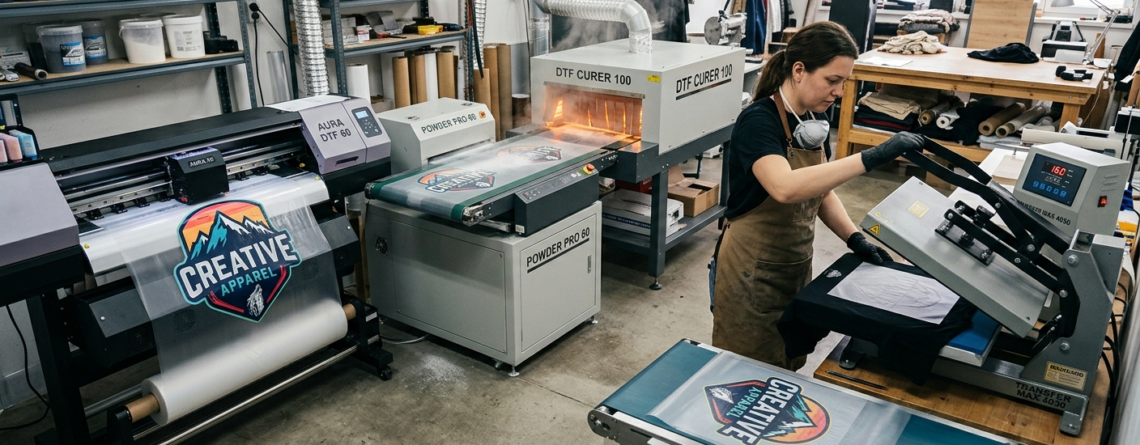
Beginner’s Guide to DTF PET Film: Types, Uses, and, Buying Tips 2026
1. Introduction
Beginner’s Guide to DTF PET Film If you are just starting in DTF printing, you’ve probably heard about PET film but may not fully understand it. This DTF PET Film Guide for Beginners will make things simple.
DTF PET film is the sheet where your design is printed before transferring it onto fabric. It plays a big role in print quality. If the film is poor, your final print will also suffer.
This guide is perfect for:
- New DTF users
- Small printing shops
- Hobbyists starting a t-shirt business
By the end of this DTF PET Film Guide for Beginners, you will know how to choose the right film and avoid common mistakes.
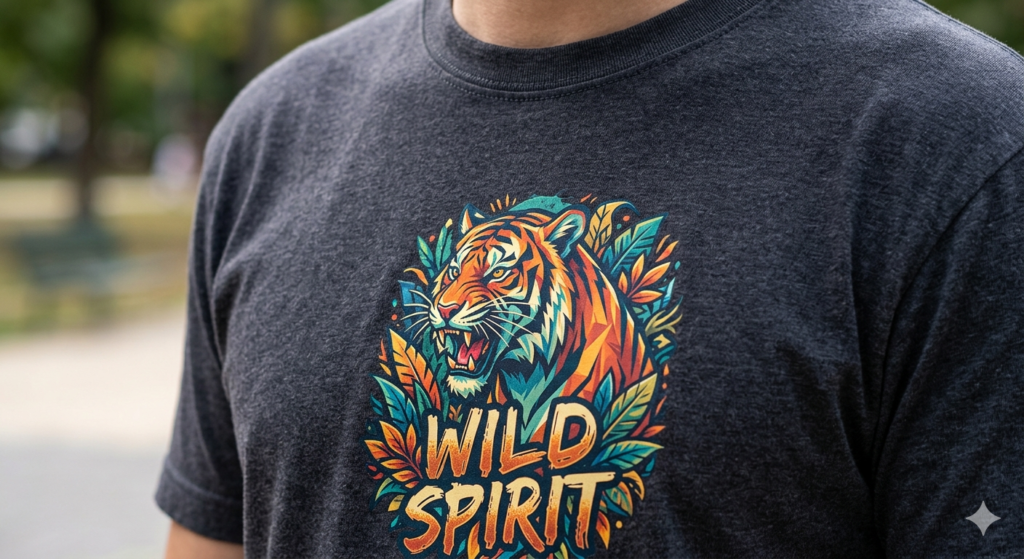
2. What is DTF PET Film? (Basics)
DTF PET film is a special transparent sheet used in Direct-to-Film printing. It acts as a carrier for your design.
Unlike normal PET sheets or transfer paper, DTF PET film has special coatings that:
- Hold ink properly
- Allow powder to stick evenly
- Release design smoothly onto fabric
Basic Materials:
- PET base layer (plastic film)
- Ink-receiving coating
- Release layer
In simple terms, this DTF PET Film Guide for Beginners explains that PET film is not just plastic—it’s engineered for printing.
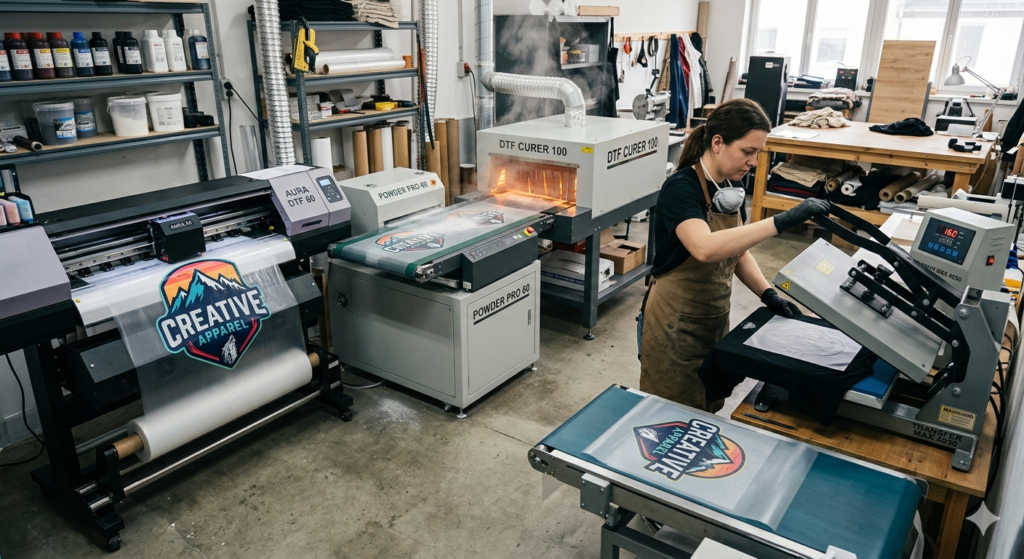
3. How DTF PET Film Works
The DTF process is simple:
- Print design on PET film
- Apply adhesive powder
- Cure the powder
- Heat press onto fabric
- Peel the film
The PET film acts as a transfer medium.
If the film quality is good:
- Colors look sharp
- Edges stay clean
- Print lasts longer
If not:
- Ink spreads
- Powder sticks unevenly
- Peeling becomes difficult
This is why choosing the right film is key in any DTF PET Film Guide for Beginners.
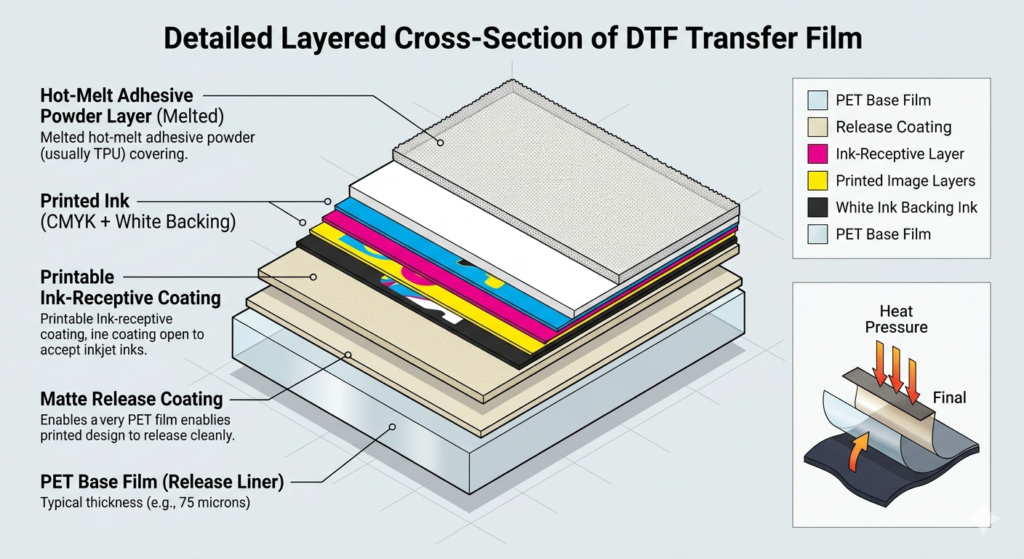
4. Structure and Layers of DTF PET Film
A good DTF PET film has multiple layers:
1. Anti-static layer
Prevents dust and static electricity. Helps avoid print defects.
2. PET base
This is the main plastic sheet. Gives strength and flexibility.
3. Ink-receptive coating
Absorbs ink properly. This layer controls color quality.
4. Release layer
Allows easy peeling after heat pressing.
Better films have better layers. That means:
- Fewer printer jams
- Cleaner prints
- Easier peeling
5. Types of DTF PET Films
Understanding types is very important in this DTF PET Film Guide for Beginners.
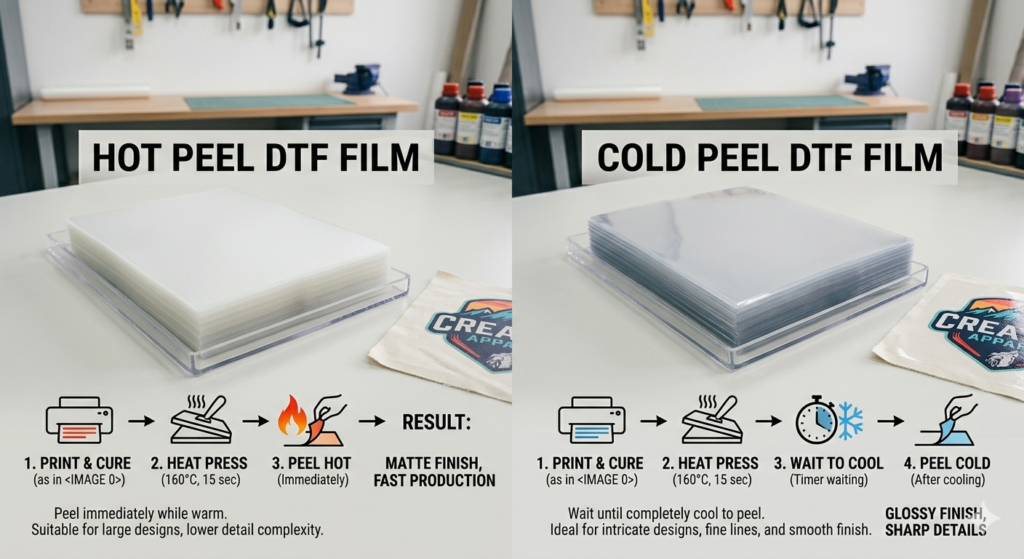
Based on Peel Type:
Hot Peel Film
- Peel immediately after pressing
- Faster workflow
- Slightly tricky for beginners
Cold Peel Film
- Peel after cooling
- Safer and easier
- Better for beginners
Based on Coating Surface:
Single-sided (Matte/Glossy)
- One printable side
- Easy to use
Double-sided Matte
- Reduces slipping
- Better for high-speed printers
Size & Thickness:
- Thickness: 75–100 microns
- Widths: 30 cm, 60 cm, etc.
Choose based on your printer size.
6. Key Characteristics to Look For
When buying film, check these:
Heat Resistance
Film should not warp during curing.
Ink Absorption
Good film gives:
- Bright colors
- Sharp details
Smooth Release
Design should transfer cleanly without residue.
A good DTF PET Film Guide for Beginners always emphasizes quality over cheap options.
7. Common Uses and Applications
DTF PET film is used for:
- T-shirts
- Hoodies
- Tote bags
- Sportswear
- Caps
Best Fabric Types:
- Cotton
- Polyester
- Blends
Limitations:
- Very rough fabrics may not work well
- Uneven textures affect adhesion
8. How to Choose the Right DTF PET Film
Here’s a simple way:
Match Peel Type:
- Beginners → Cold peel
- Fast production → Hot peel
Match Printer:
If you’re using:
- 🔵 ProlificGeeks DTF Printer L1800
- 🔵 XP600
- 🔵 i3200
Choose film width accordingly.
Check Compatibility:
Film must match:
- Ink type
- Powder quality
This step is often ignored but is very important in any DTF PET Film Guide for Beginners.
9. Buying Tips for Beginners
Price vs Quality
Cheap film may cost more later due to:
- Wastage
- Reprints
What to Look For:
- Anti-static coating
- Smooth edges
- Consistent thickness
Smart Tip:
Start with small rolls. Test before bulk buying.
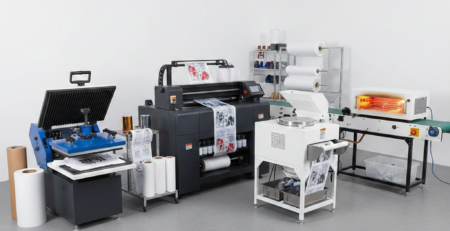
You can pair films with setups like:
10. Practical Tips for Using DTF PET Film
Storage Tips:
- Keep flat
- Avoid humidity
- Keep away from dust
Handling Tips:
- Hold edges only
- Do not touch coating
Troubleshooting:
White spots?
→ Dust or poor coating
Peeling problem?
→ Wrong peel type or temperature
Poor adhesion?
→ Powder or curing issue
Following this DTF PET Film Guide for Beginners will reduce most errors.
11. FAQs Section
Can I reuse PET film?
No. It is single-use.
Hot peel vs cold peel?
Cold peel is easier for beginners.
Why is my print dull?
Poor film or ink absorption.
Does film affect durability?
Yes, a lot.
12. Conclusion / Next Steps
This DTF PET Film Guide for Beginners shows that PET film is not just a sheet—it’s a key part of your printing success.
Remember:
- Choose the right type
- Focus on quality
- Test before scaling
Start with 1–2 film types. Compare results. Improve step by step.
You can also explore related topics like:
- DTF printer setup
- Powder selection
Product Suggestions (Used in Blog)
🔵 ProlificGeeks DTF Printer L1800
🔵 XP600
🔵 i3200
🔵 A3 DTF Starter Bundle
🔵 DTF Powder Premium Grade
External References + Credits
Helpful resources:
- PrintIndustry.com
- Fespa.com
- InkJetInsights.com
- ResearchGate
Credit: Information references from Fespa, PrintIndustry, and other public sources.

LEAVE A COMMENT