
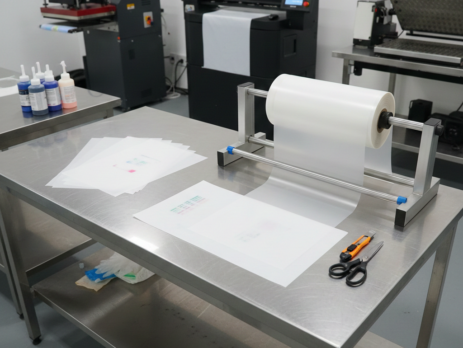
DTF PET Film Complete Guide: A4 DTF PET Film vs Roll Film Pros & Cons
Table of Contents
Introduction
DTF printing has changed how custom apparel and fabric printing works. From small home setups to large print shops, everyone is now using DTF Film for fast, clean, and durable prints.
But one common question still confuses many users.
Should you use A4 DTF PET Film or Roll DTF PET Film?
Both options have advantages. Both also have limits. The right choice depends on your printer size, daily workload, and printing habits.
In this guide, we will break everything down in simple words. No marketing talk. No technical overload. Just real comparisons, real examples, and practical advice.
What is A4 DTF PET Film?
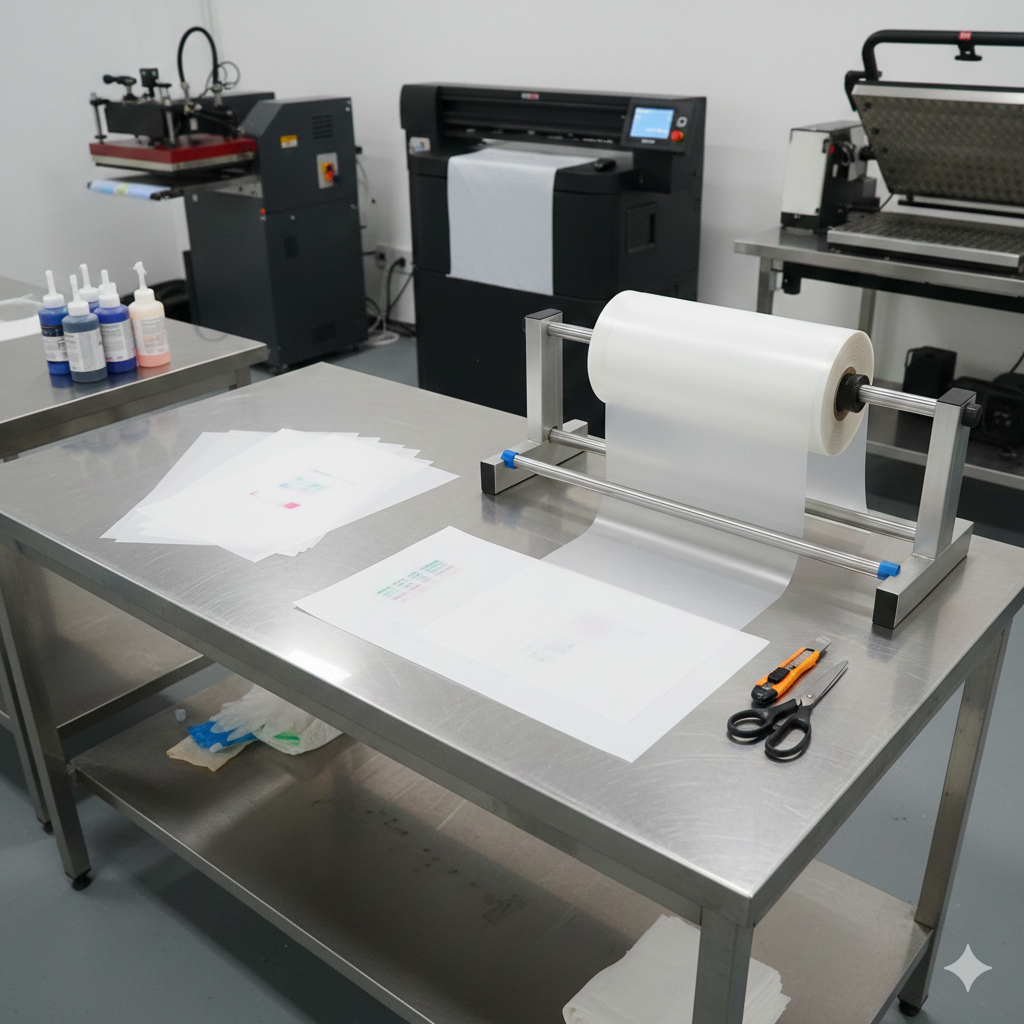
This Film is pre-cut transfer film sized at 210 × 297 mm. It is designed mainly for desktop DTF printers and converted inkjet printers.
This type of DTF Film is popular with beginners, small businesses, and home users.
You load one sheet at a time. Print your design. Apply powder. Cure. Transfer.
Many small print studios prefer products like
A4 DTF PET Film – Single Side Coated
because it is easy to handle and needs no special setup.
A4 sheets are also good for testing new designs and short-run orders.
What is Roll DTF PET Film?
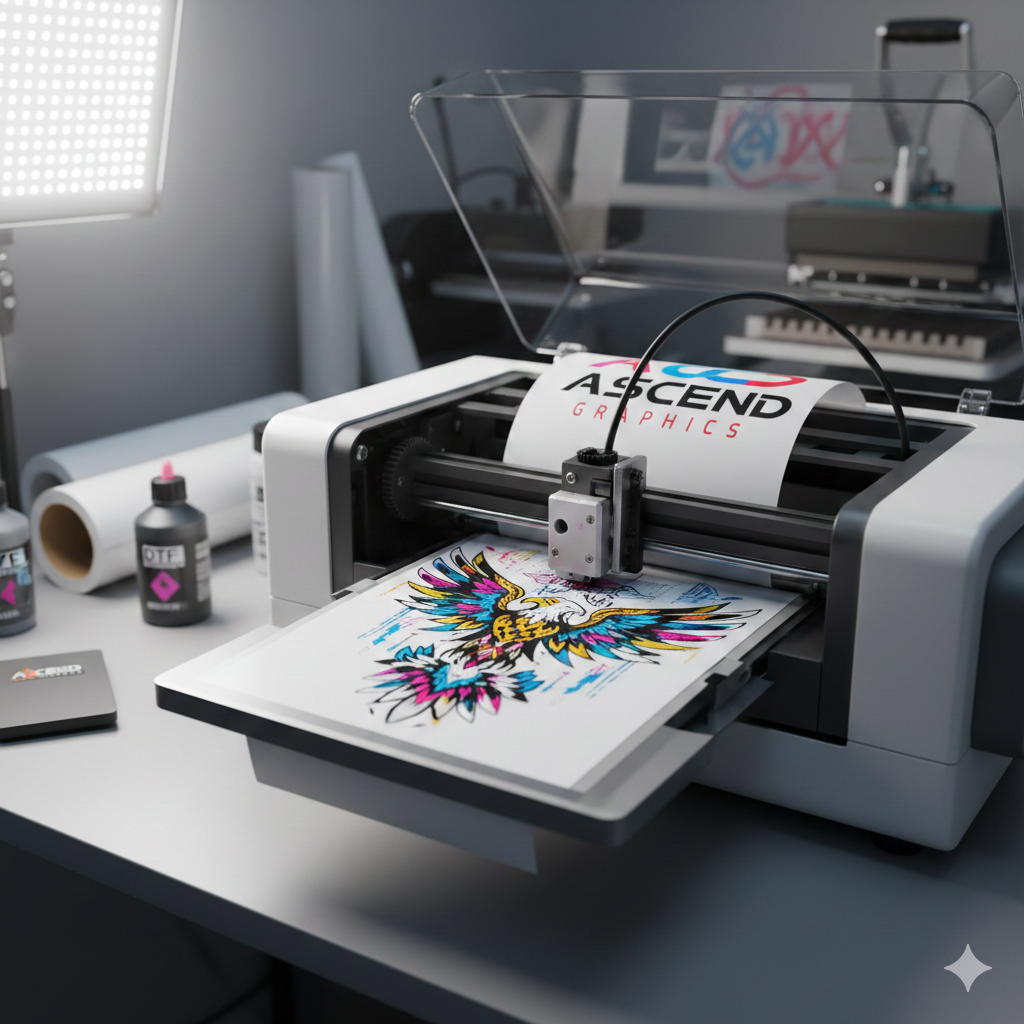
It comes in continuous rolls, usually in widths like 12″, 24″, or 60 cm.
This version of DTF Film is used with large-format DTF printers. It is built for speed and volume.
Roll film allows continuous printing. You can print dozens of designs in one run without stopping.
Professional print shops often use
Roll DTF PET Film – Hot Peel
because it saves time and improves production flow.
If you print daily or handle bulk orders, roll film becomes almost necessary.
Key Differences Between A4 and Roll Film
The biggest difference is scale.
A4 DTF PET Film works best for low volume.
Roll DTF PET Film is made for high volume.
Another difference is handling. Sheets are simple. Rolls need proper alignment and tension control.
Cost per print also changes. Roll film is usually cheaper per design when printing in bulk.
Pros of A4 DTF Film
Easy to use
No learning curve. Just load and print.
Low investment
No need for large printers or roll feeders.
Perfect for beginners
Ideal for learning DTF Film handling and powder control.
Less waste
Great for logo prints, chest prints, and name tags.
Compatible with desktop printers
Works well with modified Epson and small DTF setups.
Products like
Cold Peel A4 Film
are commonly used in small studios for daily orders.
Cons
Slow production
One sheet at a time limits speed.
Higher cost per print
Sheets cost more compared to roll printing.
Size limitation
Large designs may not fit.
Manual handling
More chances of fingerprints or bending if not careful.
Pros
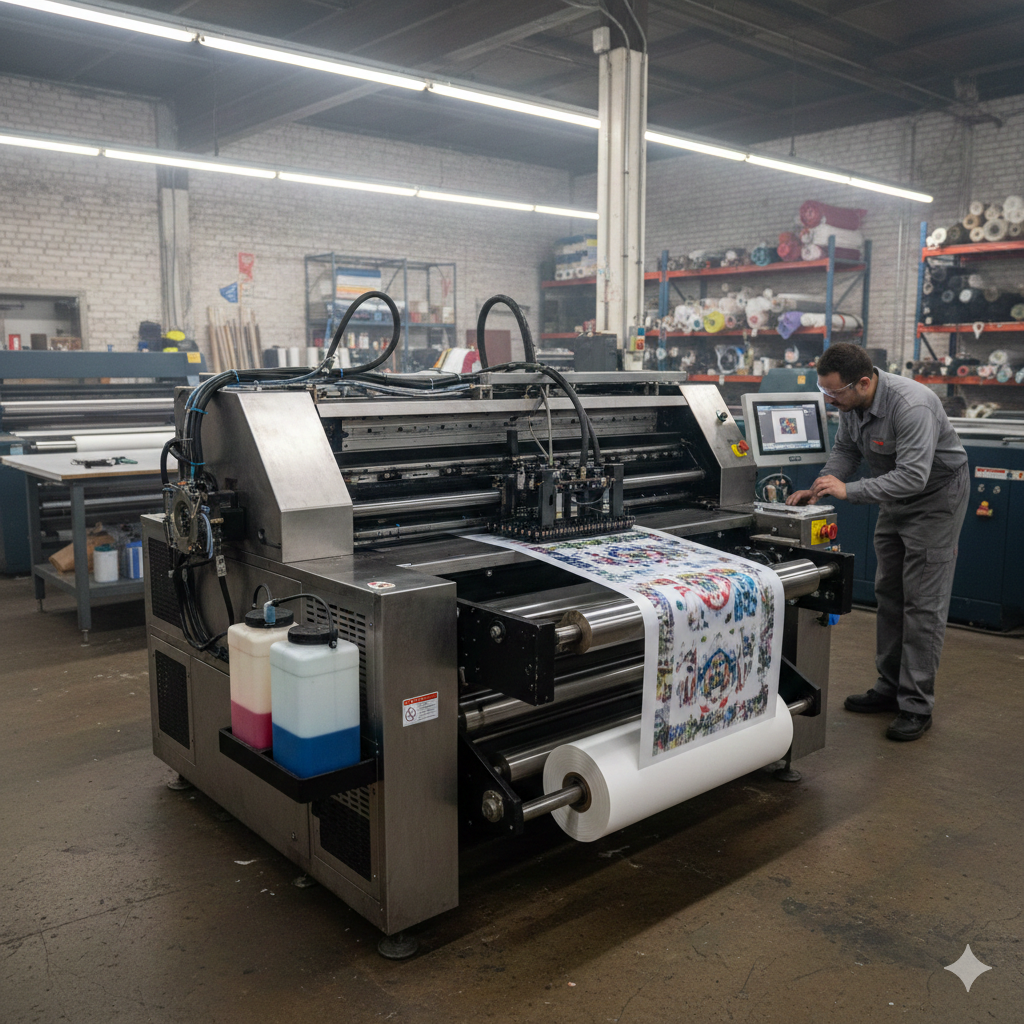
High productivity
Print continuously without stopping.
Lower cost per design
Ideal for bulk production.
Larger design freedom
Perfect for back prints and oversized graphics.
Professional workflow
Better suited for powder shakers and curing ovens.
Many print shops combine roll film with
Premium DTF Transfer Powder
for consistent adhesion and wash durability.
Cons of Roll DTF PET Film
Higher initial cost
Requires roll-fed DTF printers.
More setup time
Alignment and tension matter.
Not beginner-friendly
Needs some experience.
Storage space needed
Rolls require dust-free storage.
Comparison Table: Pros & Cons Side-by-Side
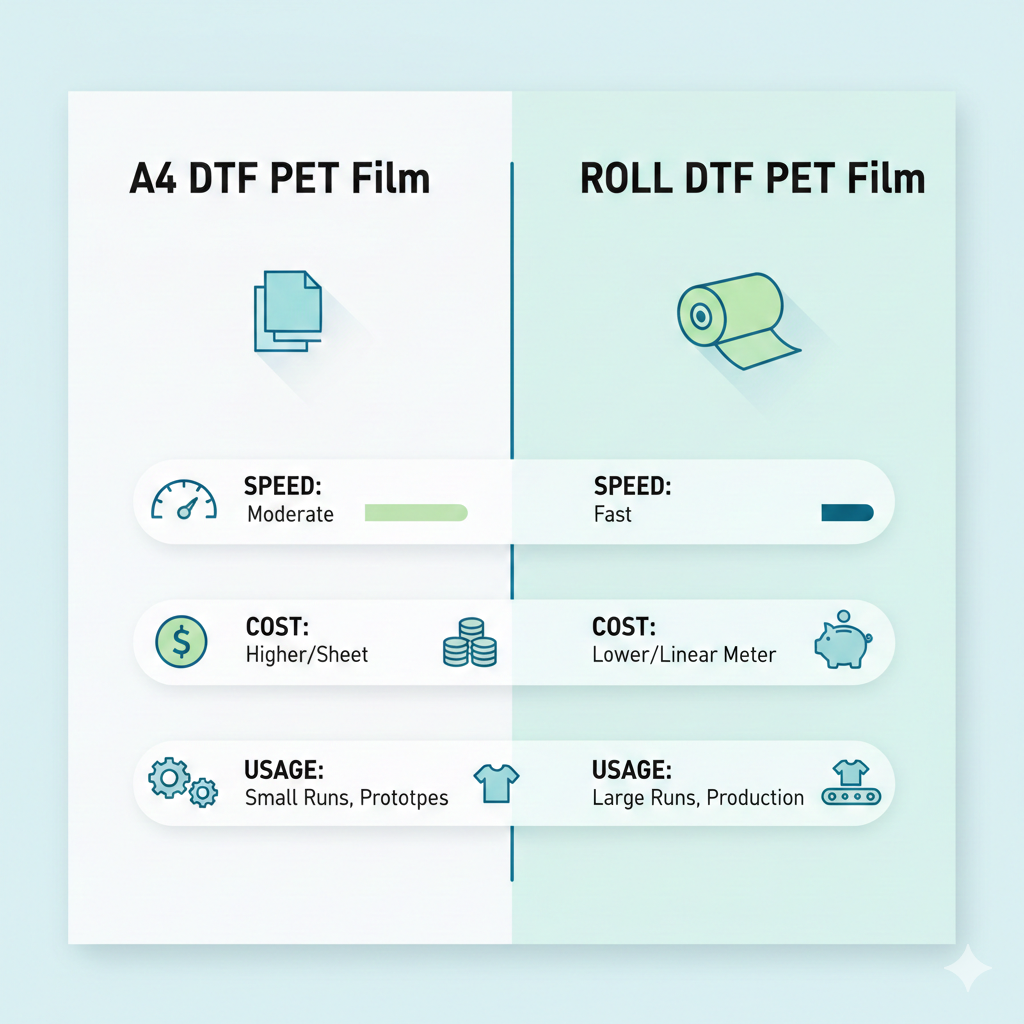
| Feature | A4 DTF PET Film | Roll DTF PET Film |
|---|---|---|
| Printer Type | Desktop | Large Format |
| Production Speed | Slow | Fast |
| Cost per Print | Higher | Lower |
| Ease of Use | Very Easy | Moderate |
| Design Size | Limited | Large |
| Best For | Beginners | Professionals |
Use Cases and Recommendations
If you run a home business printing 10–20 shirts a day, A4 DTF PET Film is enough.
If you print for events, brands, or resellers, roll DTF Film saves time and money.
Many growing businesses start with A4 sheets and later upgrade to roll systems.
A balanced setup may include:
- A4 film for testing
- Roll film for bulk jobs
- Quality inks like
DTF Textile Ink Set
This approach keeps costs controlled and quality consistent.
Conclusion
Both A4 and Roll DTF PET Film have clear roles.
There is no “better” option. Only the right option for your workflow.
A4 DTF PET Film offers simplicity and control.
Roll DTF PET Film delivers speed and scale.
Understand your needs. Check your printer size. Think about daily volume.
Choose wisely, and DTF printing will stay smooth, profitable, and stress-free.
Product Suggestions (Blue Color)
External References + Credits
- PrintIndustry.com – DTF workflow insights
- Fespa.com – Printing technology trends
- InkJetInsights.com – DTF ink behavior studies
Credit: Information references from Fespa, PrintIndustry, and other public sources.

Leave a Reply