
DTF Printing – Ultimate Guide for Gift Wrap & Bags
Start with the bag material
Garment DTF can be an option for decorating a compatible textile gift bag, such as an approved cotton canvas blank. Paper gift bags, glossy wrapping, coated films and non-woven materials need their own material and process checks. Their appearance alone does not establish that they can take a garment transfer.
This guide separates those jobs so you can choose a suitable route before buying supplies or applying heat. A printed paper-bag photograph is an idea for packaging appearance, not proof that garment DTF is approved for that paper or coating.
Chat with our team for printers, consumables, film, powder and business setup guidance.
Where a textile transfer can be useful
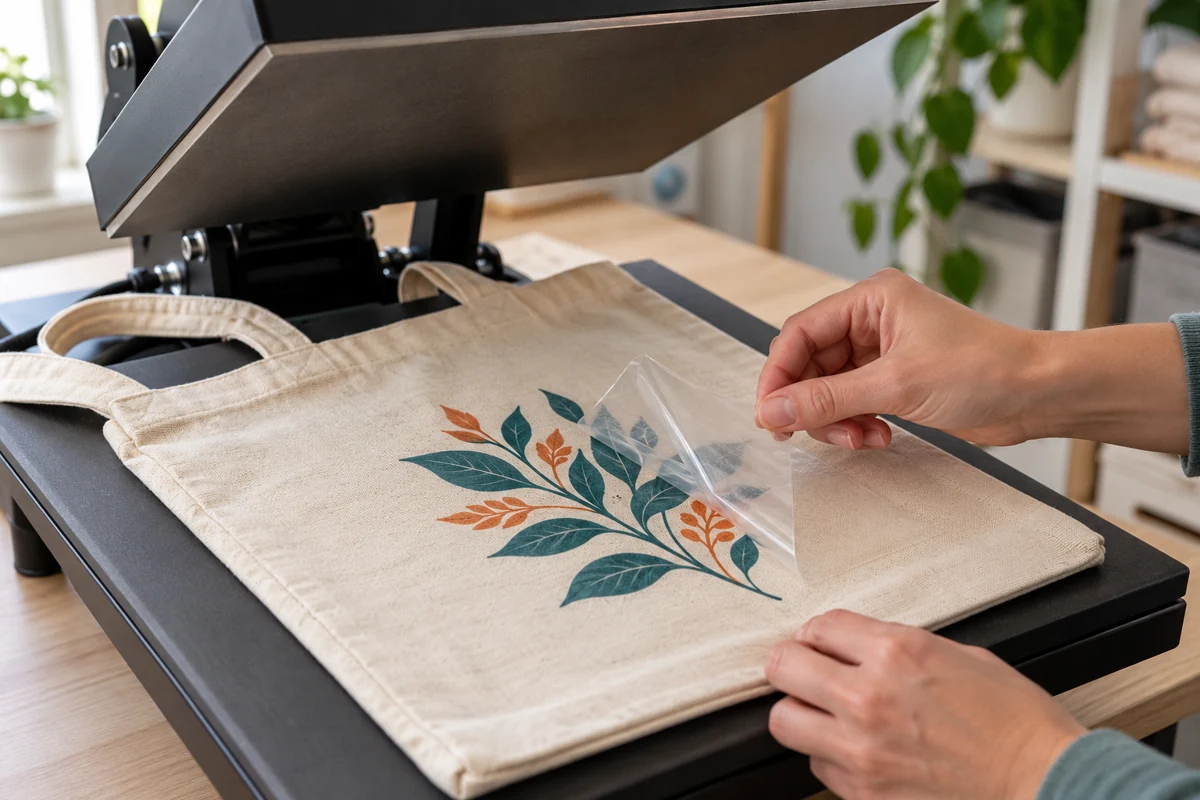
A suitable fabric gift bag can carry an event motif, original illustration or approved business logo. A transfer workflow can be useful for small personalised batches and colourful artwork. The finished feel and durability depend on the fabric, transfer, processing and care.
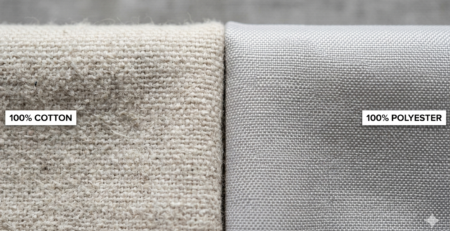
A canvas bag’s coarse weave, seams, handles and coatings can affect contact and image detail. Approve a real sample before promising a particular finish or wash life. The same artwork may need a different size or placement on a pouch and a large tote.

Textile bags and paper packaging need different routes
Confirm fibre, finish and transfer approval. Test the complete garment-DTF process.
Identify the actual material and coating. Get process and heat guidance before applying a transfer.
Choose an approved paper-printing, label or other surface-specific route. Do not infer garment-DTF approval from a lower press setting.
UV DTF is a separate process with its own surface requirements. It is not an automatic replacement for every paper or coated package.
For paper packaging, discuss the actual paper, coating, folds and intended handling with the packaging or print supplier. A method suitable for one coated stock does not establish compatibility with another. Adding extra white ink or choosing cold peel cannot correct an unsuitable substrate.

Supplies for an approved textile-bag workflow
If the bag and supplier approve garment DTF, use a matched printing and transfer system. Compare printer-compatible DTF CMYK ink, the appropriate white-ink system, DTF PET film sheets and DTF adhesive powder. Confirm compatibility rather than choosing products by a generic premium label.
You also need the specified curing and application equipment, suitable artwork software and the material’s handling controls. A 15 × 15 inch heat press is one garment-equipment size to compare with the actual flat print area. Seams, handles or a gusset can require a different loading arrangement approved for the bag.
A ready-made transfer from a suitable supplier is another way to test application without operating a full print-and-powder workflow. Check the transfer instructions and the actual bag in either case.
A practical textile-bag workflow
- Identify the blank: record its fibre, coating, construction and supplier guidance. Confirm that the chosen transfer process is permitted.
- Approve the artwork: check spelling, size, placement, fine detail and the intended colour result on the actual bag.
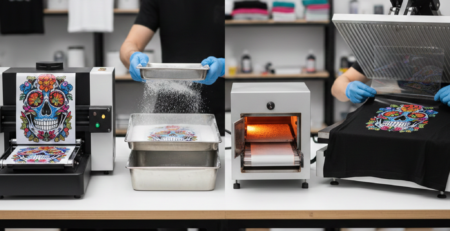
- Prepare the transfer: use the compatible printer, RIP settings, film, ink, adhesive and curing procedure. Follow the system’s layer sequence rather than a generic rule copied from another printer.
- Load the bag: follow the approved arrangement so seams, handles and internal layers do not interfere with the intended transfer area.
- Apply and peel: use the specified time, temperature, pressure, cover and peel stage for that bag and transfer combination.
- Inspect and validate: check the cooled sample and complete the relevant care or handling test before producing the batch.
Design for the actual bag
Leave room around seams, folds and handles. Test small lettering and fine gaps on a coarse weave rather than assuming the artwork’s screen preview will reproduce perfectly. A large solid graphic can also change the feel and flexibility of a small fabric pouch.
Use original artwork or a design you have permission to reproduce. For personalisation, save the approved spelling and placement with the order. A sample on the real bag is more useful than an unverified promise that adding a shadow or more white ink will make every design look premium.
Use the combination’s specified settings
There is no universal temperature-and-time table covering canvas, polypropylene, kraft paper and glossy wrap. Use the approved textile bag and transfer instructions together. If they do not establish a compatible process, confirm it with the supplier before applying heat.
Hot, warm and cold peel describe the particular film’s removal procedure. Cold peel is not inherently the best choice for all packaging. Do not substitute a press-hover curing method unless it is part of the approved system.
Durability, handling and care
Inspect adhesion, visible defects and flexibility on the sample. For a washable textile bag, follow the required waiting period and test the permitted care routine. For paper packaging, check its own handling and storage requirements using the approved decoration method.
Follow the supplied storage guidance for unused film, ink, powder and completed transfers. Do not promise a fixed percentage of colour stability, unlimited scratch resistance or extra life from ironing the reverse of a bag without supporting instructions.

Ideas to develop as samples
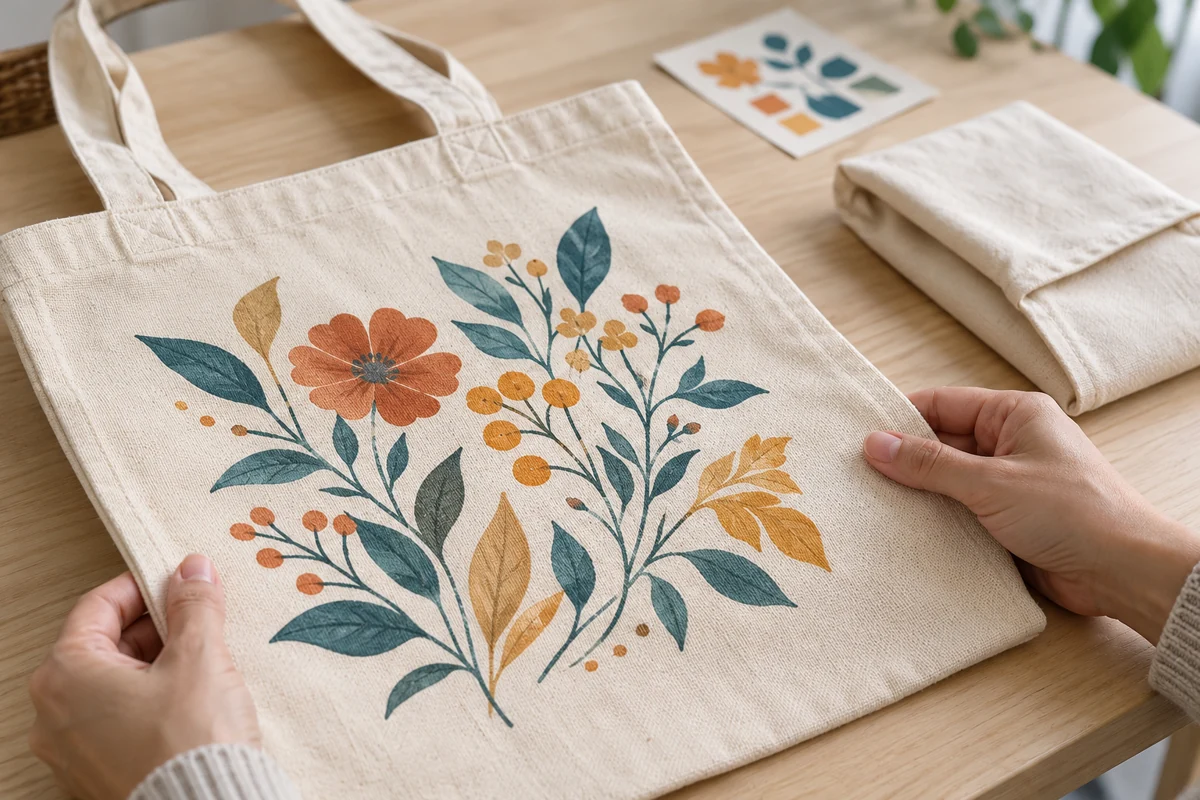
For approved textile blanks, consider a small original event motif, initials on reusable gift pouches or coordinated artwork on canvas totes. For paper packaging, develop the matching visual identity through a suitable paper-print or label workflow.
These are design ideas to test, not verified customer success stories. Keep the material and method clear when showing a mock-up so a customer does not mistake an attractive picture for an approved production sample.
Choose the material before the transfer
Gift packaging can look coordinated without using one printing method on every surface. A compatible fabric bag may suit garment DTF; paper, coatings and other materials need their own approved route. Start with the right blank, make a sample and record the complete process before a batch.
Common questions
Can I use the same settings on glossy wrap? Do not assume so. Confirm the actual paper or coating and a surface-specific approved process.
Will DTF always outlast a sticker on a bag? No blanket comparison is reliable. Compare suitable materials, use and actual handling or care tests.
Is a canvas tote automatically suitable? Its fibre, finish, construction and transfer system still need checking.
Technical reference
Epson’s DTG and DTFilm overview distinguishes garment applications and notes limits for hard surfaces. Use the requirements of the actual printer, transfer system and blank supplier for your job.





LEAVE A COMMENT