DTFShop benefitSave up to 43.1%
Includes eligible prepaid saving before GST/fees
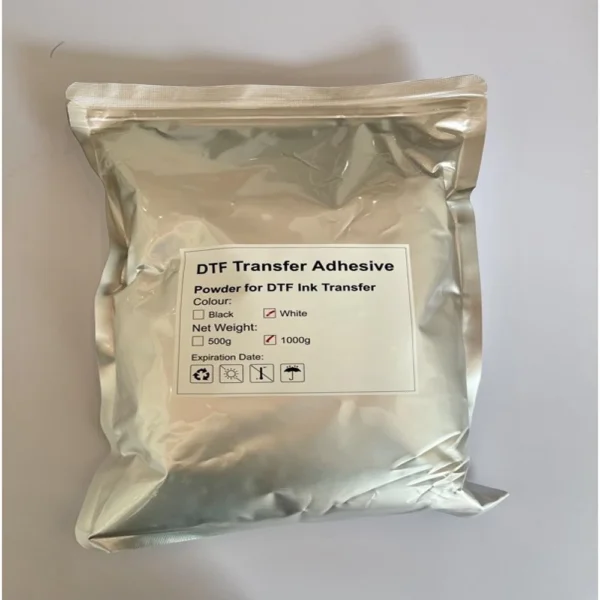
Hot melt powder for DTF printing India is a hot-melt adhesive powder for the garment-transfer stage of DTF printing. Powder adheres to the wet printed layer and forms the bonding layer after curing.
Hot melt powder for DTF printing India is a hot-melt adhesive powder for the garment-transfer stage of DTF printing. Powder adheres to the wet printed layer and forms the bonding layer after curing. It is the adhesive stage of the transfer rather than a pigment or a printhead consumable.
What you receive for the listed price
One 1 kg pack of hot-melt adhesive powder.
Film, ink and printing equipment are separate.
Applicable taxes and shipping, where relevant, are shown at checkout. Gallery guides and demonstration equipment explain use; they are not additional supplied items.
Smart Online SavingsYour order cost, explained
Compare automated website ordering—including COD, card/digital payments, rewards and coupons—with a manual/offline order.
Order on DTFShop.inRecommended
Product value₹800.00
Prepaid discount (7.5%)−₹60.00
Website shippingCalculated by weight at checkout
GST (18%)+₹133.20
Estimated platform fee (2.36% of total)+₹21.11
Estimated prepaid subtotal₹894.31
Weight-based shipping will be added at checkout
Online purchase rewardsEarn and use eligible rewards
Purchase + email couponsGet eligible coupon offers and free promotional coupons by email
✓ Order online anytime, from anywhere✓ Choose COD where available✓ Pay securely by credit card or available digital payment methods✓ Immediate digital payment proof and automatic order confirmation✓ GST invoice available without manual follow-up✓ Automatic tracking and WhatsApp order updates✓ Earn rewards on eligible completed online purchases✓ Receive eligible purchase coupons and free promotional coupons by email
Manual / Offline Order
Product value₹800.00
Manual / offline shippingCalculated by actual weight and location
GST (18%)+₹144.00
Prepaid website discount₹0
Website rewards / coupon₹0
Estimated manual order subtotal₹944.00
Actual weight/location-based courier charge is extra
• Payment coordinated manually through WhatsApp/bank transfer• Confirmation and invoice may require manual processing• Courier charged on the actual/manual booking basis• Shipment timing and updates are coordinated manually
Estimated saving by ordering prepaid on DTFShop.in₹49.69
before weight-based shipping and any additional eligible rewards or coupon saving
How this estimate works:
Website example uses the 7.5% prepaid discount only when the eligible value is ₹10,000 or below, plus GST 18% and an estimated non-EMI platform fee equal to 2.36% of the subtotal including that fee. Shipping, coupons and final taxes are confirmed at checkout.
Website and manual/offline shipping are excluded from these subtotals because courier charges are calculated from actual weight, dimensions and delivery location.
Final checkout or confirmed manual quotation is authoritative and can change with shipping, coupon, rewards, variation and payment method.
Frequently bought together
Complete your setup
Useful add-ons commonly paired with this product. Choose only what you need.
Hot melt powder for DTF printing India — Overview and practical use
Hot melt powder for DTF printing India is a hot-melt adhesive powder for the garment-transfer stage of DTF printing. Powder adheres to the wet printed layer and forms the bonding layer after curing. It is the adhesive stage of the transfer rather than a pigment or a printhead consumable.
What you receive for the listed price
One 1 kg pack of hot-melt adhesive powder.
Film, ink and printing equipment are separate.
Applicable taxes and shipping, where relevant, are shown at checkout. Gallery guides and demonstration equipment explain use; they are not additional supplied items.
Product view for strong fabric adhesion.
The adhesive stage of the transfer
Powder coats the wet printed area and forms the bonding layer after the specified curing process. Uniform coverage matters around small text and design edges. Excess loose powder outside the image can create unwanted adhesive marks on the garment.
Product view.
Daily use and practical checks
When working with Hot melt powder for DTF printing India, aim for an even coat across the printed area. Loose powder outside the artwork can produce unwanted adhesive specks after pressing.
Managing powder through a working day
For Hot melt powder for DTF printing India, keep the reserve supply closed and remove contamination from the working area. Use the powder and film instructions for curing and pressing rather than a single temperature copied between materials. Check a finished sample for both appearance and adhesion before extending a batch.
Product view.
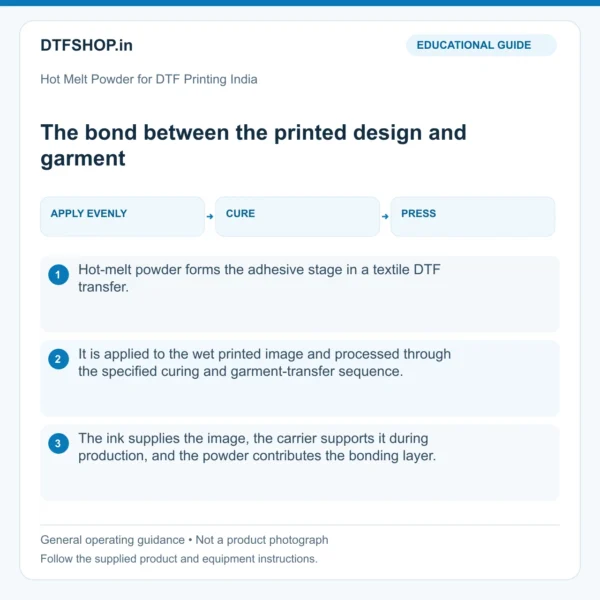
The bond between the printed design and garment
Hot-melt powder forms the adhesive stage in a textile DTF transfer. It is applied to the wet printed image and processed through the specified curing and garment-transfer sequence. The ink supplies the image, the carrier supports it during production, and the powder contributes the bonding layer.
Understanding those separate roles helps when evaluating a transfer defect. A strong-looking colour image on film is not a finished adhesion test. The useful result is a completed transfer in which the design edges, coverage and bond are suitable for the fabric and the intended application.
Illustrated guide: the bond between the printed design and . Educational illustration, not a product photograph.
Coverage across fine and solid artwork
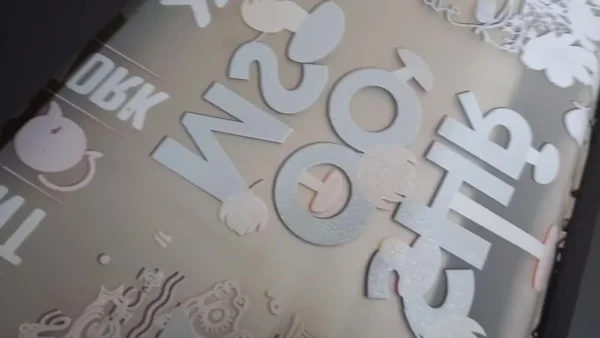
Aim for consistent powder coverage over the printed area while removing loose material from the surrounding unprinted film. Fine text, gaps in lettering and small isolated shapes make unwanted adhesive especially noticeable. Large solid areas reveal whether coverage is even across a broader part of the design.
Use both kinds of artwork in a sample rather than relying on one simple block. The stated particle range describes a material characteristic, but it does not replace a working transfer recipe. Ink loading, film behaviour, powder application and handling all influence how the adhesive layer is formed before curing.
Product view.Illustrated guide: coverage across fine and solid artwork. Educational illustration, not a product photograph.
Preparing the working quantity
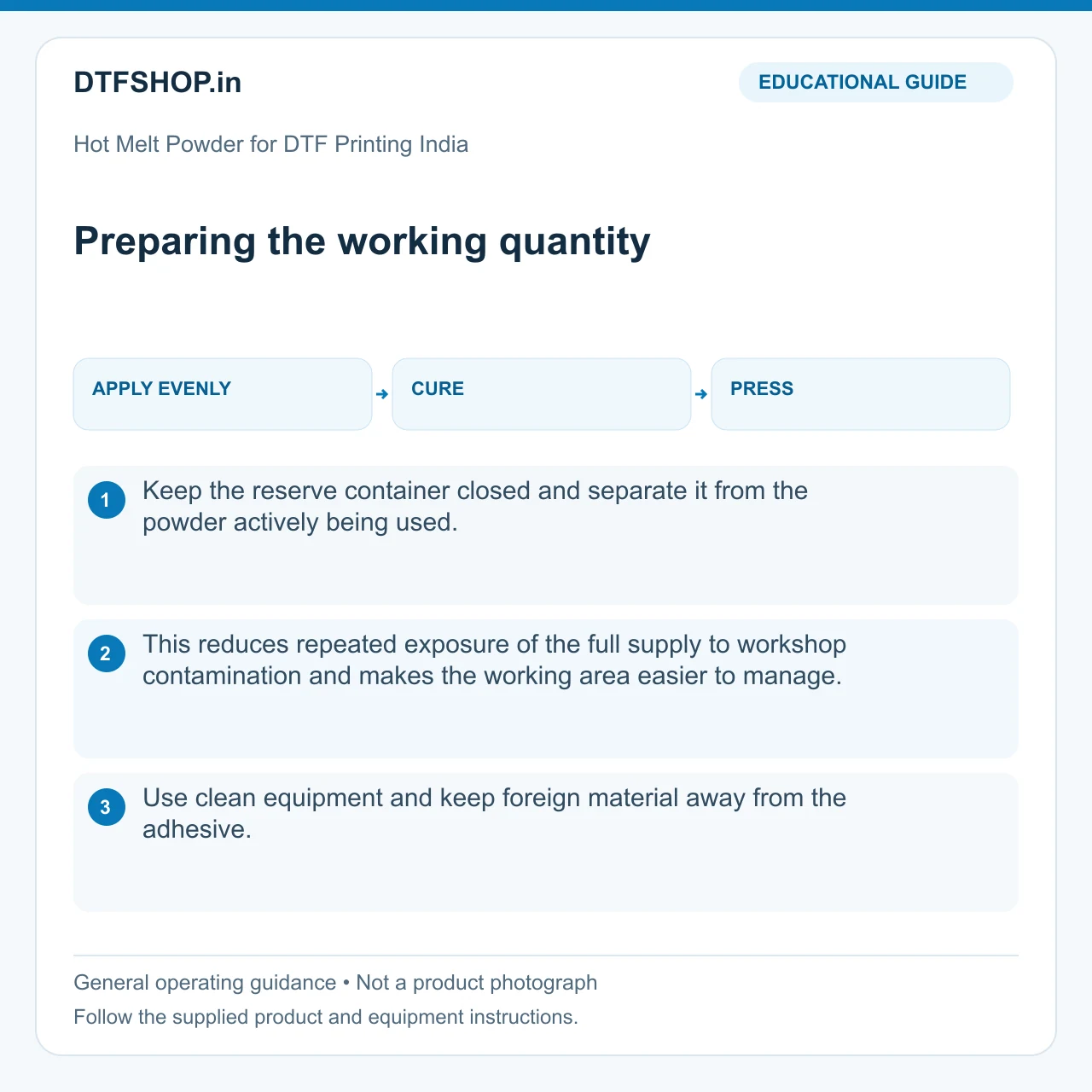
Keep the reserve container closed and separate it from the powder actively being used. This reduces repeated exposure of the full supply to workshop contamination and makes the working area easier to manage. Use clean equipment and keep foreign material away from the adhesive. Powder recovered from a process needs to be handled only as allowed by the material and equipment guidance; visibly contaminated material is not equivalent to a fresh supply.
Label the product and batch in the work area, especially where more than one powder type is used. Similar appearance should not be taken as proof of identical transfer behaviour.
Illustrated guide: preparing the working quantity. Educational illustration, not a product photograph.
Curing the adhesive layer consistently
Use the powder and film instructions with the actual oven or shaker-curing arrangement. Displayed temperature, dwell time and the way heat reaches the film belong to a complete process. A setting from another material or machine is not a universal specification. Keep the carrier flat and the production path stable so one part of the design is not processed differently from another.
Establish the recipe through representative finished transfers and record it. If the powder, film or incoming ink load changes, evaluate the effect rather than assuming that the previous setting automatically remains suitable for the new combination.
Pressing, release and finished handling
The garment-transfer stage adds controlled heat and pressure to bond the prepared design to the substrate. Use the film's release sequence and the material guidance for any finishing operation. Fabric composition, surface treatment and garment construction can affect the result. Seams or uneven support beneath the design can introduce local contact problems that look like an adhesive failure.
Evaluate the finished item after the specified handling stage. A sample intended for durability assessment should go through the relevant finished-product test, rather than being judged only by how easily the carrier peels or how the image looks immediately after pressing.
Managing quality in repeated production
Retain a completed reference transfer and record the powder identity, film, ink preset and press recipe. Inspect image edges, fine details and the surrounding garment for unwanted adhesive marks. If a problem appears, change one factor at a time and keep the previous sample for comparison.
Follow the powder's supplied safety and handling information and the equipment's ventilation and housekeeping instructions. Keep loose material controlled in the production area rather than allowing it to collect around unrelated printer components. An organised process supports consistent output and clearer diagnosis, while allowing the recipe to be adapted to the actual fabric, ink and film combination.
Recommended Add-ons from DTFShop
To complete the workflow, you may also check these related DTFShop products when they match your machine or printing process:
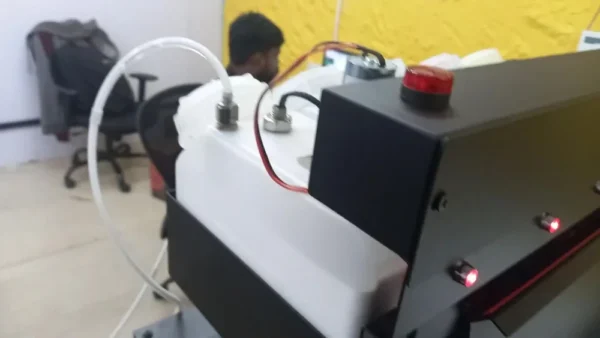
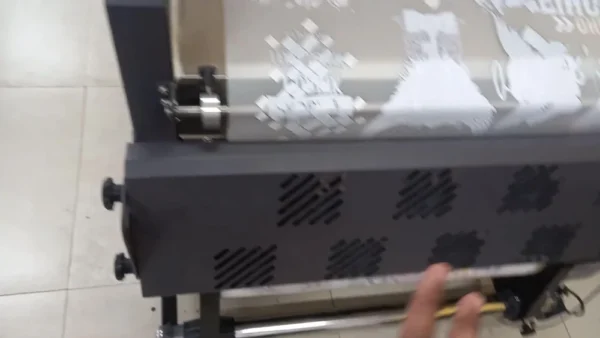
Reference videos explain a method or related model. They do not certify your supplied machine, consumable batch or print results. Follow the exact product manual and recommended settings.
Practical questions
Can I judge adhesion before pressing?
An image on powdered film is not a completed bond test. Evaluate a representative finished garment after the specified transfer and handling sequence. Powder coverage, curing, fabric and press contact all contribute to the result.
How should I manage the open working supply?
Keep reserve powder closed and use a clean working quantity. Avoid moisture, dust and mixing different grades. Loose adhesive outside the artwork should be removed through the supported process so it does not leave unwanted marks on the garment.
What is included with Hot melt powder for DTF printing India?
The package-contents section above lists the supplied item and quantity. Choose the stated option when alternatives are available; a gallery showing several examples does not turn one selected option into a combined set.
Additional information
Weight
1 kg
Dimensions
25 × 20 × 8 cm
6 reviews for Hot Melt Powder for DTF Printing India – Premium Adhesive Solution
4 out of 5
Arjun Mehta–
Very reliable over long production runs. Colors are accurate and consistency remains solid throughout the week.
4 out of 5
Anil Deshmukh–
Excellent build quality. Solved our production bottleneck instantly. Highly recommended for commercial print environments.









Arjun Mehta –
Very reliable over long production runs. Colors are accurate and consistency remains solid throughout the week.
Anil Deshmukh –
Excellent build quality. Solved our production bottleneck instantly. Highly recommended for commercial print environments.
Rajesh Gupta –
Outstanding performance! Drastically lowered our maintenance overhead and printhead clogging issues.
Kiran Rao –
Outstanding performance! Drastically lowered our maintenance overhead and printhead clogging issues.
Rajesh Kumar –
Good functional component but setup manual could have been more detailed. Works flawlessly once configured.
Divya Teja –
Great value for money. Setup is incredibly easy if you follow standard industrial printing parameters.