

Use an available credit card or digital payment method for automated payment proof, confirmation, invoice and order processing.
No 7.5% prepaid discount above ₹10,000. GST, payment fee and weight-based shipping apply as applicable.-9%




HJD Hybrid Dual Platen DTG Printer – High Speed Direct to Garment Machine India
Original price was: ₹1,100,000.00.₹1,000,000.00Current price is: ₹1,000,000.00.
Reviews
No reviews yet
Add review
Availability
Backorder available
Dispatch after confirmation
DTFShop benefit
Save up to 9.1%
Product-price saving only; no prepaid discount above ₹10,000
DTG Printer is an HJD dual-platen hybrid DTG printer. Two platen positions can support alternating garment preparation and printing in the machine's intended operating sequence.
DTG Printer is an HJD dual-platen hybrid DTG printer. Two platen positions can support alternating garment preparation and printing in the machine's intended operating sequence. The workflow still needs consistent fabric preparation and curing.
What you receive for the listed price
- The named machine or conversion configuration selected on this product page.
- Unlisted accessories, starter-consumable quantities, installation services and warranty terms are not included by implication; these package details still require a written itemisation.
Applicable taxes and shipping, where relevant, are shown at checkout. Gallery guides and demonstration equipment explain use; they are not additional supplied items.
Full online payment is required. COD is unavailable. This order is non-cancellable once paid.
GST invoice available / Shipping calculated at checkout / Product support
Payment Options
Order online with automated confirmation and flexible payment choices
Choose prepaid, COD where available, credit card, digital payment or eligible EMI assistance.
For high-value products, our team may verify your order, address and delivery possibility before dispatch.
COD availability depends on product, location and order confirmation.We can assist with EMI or credit-card payment link options where available.
Ask on WhatsApp
✓ Automated order confirmation and digital payment proof
✓ COD option where available and approved
✓ Credit-card, digital-payment and eligible EMI choices
✓ GST invoice, tracking and WhatsApp updates
✓ Eligible purchase rewards and promotional coupons by email
High-value order note:
EMI eligibility is available only up to ₹5,00,000 and depends on the customer’s bank/card eligibility. Contact us for payment assistance for values above this limit.
Frequently bought together
Ask expert
Complete your setup
Useful add-ons commonly paired with this product. Choose only what you need.
- Description
- Additional information
- Reviews (0)
Description
DTG Printer — Overview and practical use
DTG Printer is an HJD dual-platen hybrid DTG printer. Two platen positions can support alternating garment preparation and printing in the machine's intended operating sequence. The workflow still needs consistent fabric preparation and curing.
What you receive for the listed price
- The named machine or conversion configuration selected on this product page.
- Unlisted accessories, starter-consumable quantities, installation services and warranty terms are not included by implication; these package details still require a written itemisation.
Applicable taxes and shipping, where relevant, are shown at checkout. Gallery guides and demonstration equipment explain use; they are not additional supplied items.
HJD dual-station construction and garment handling
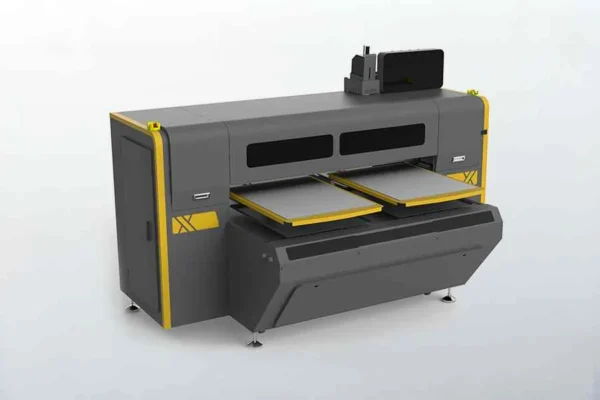
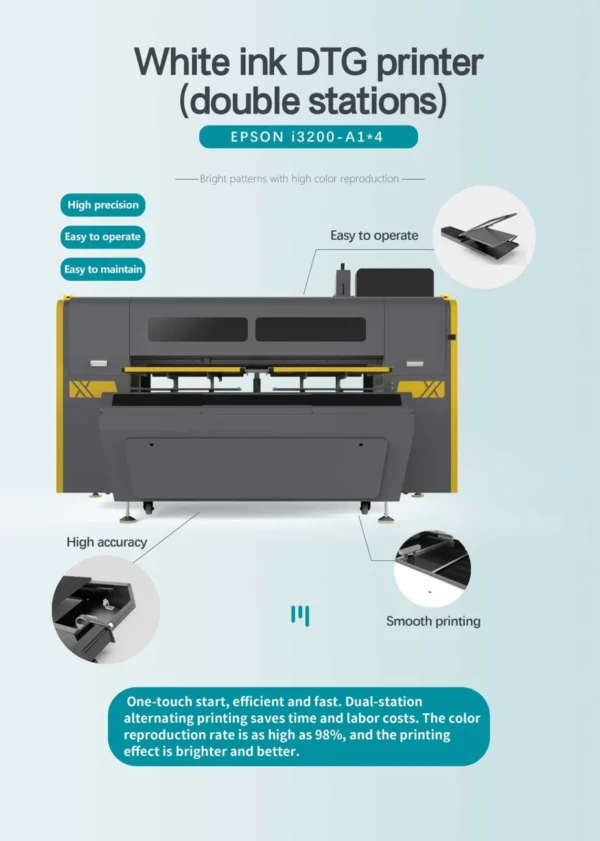
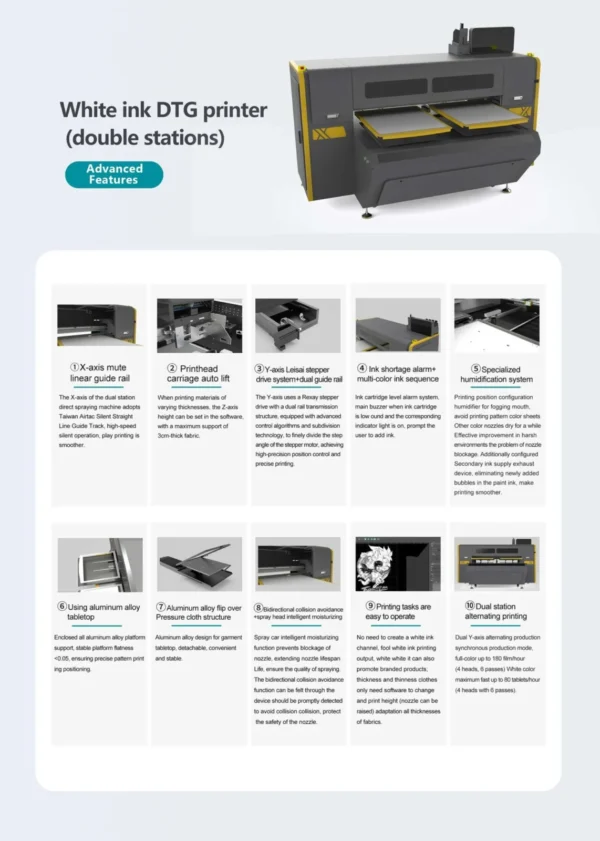
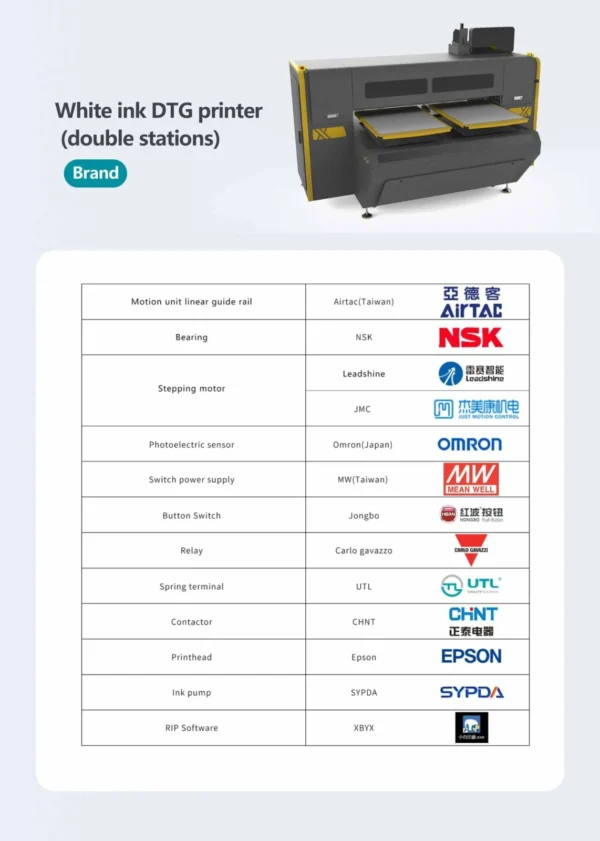
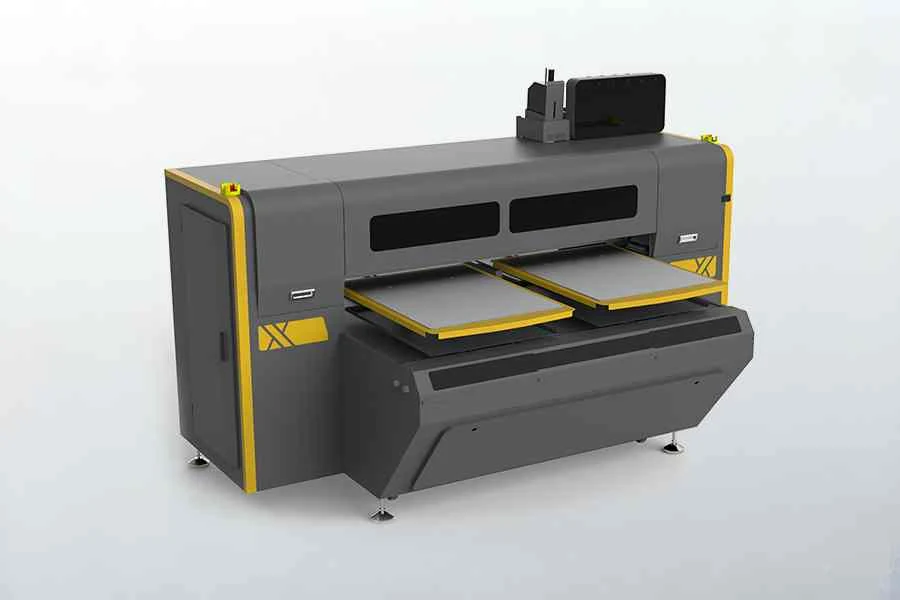
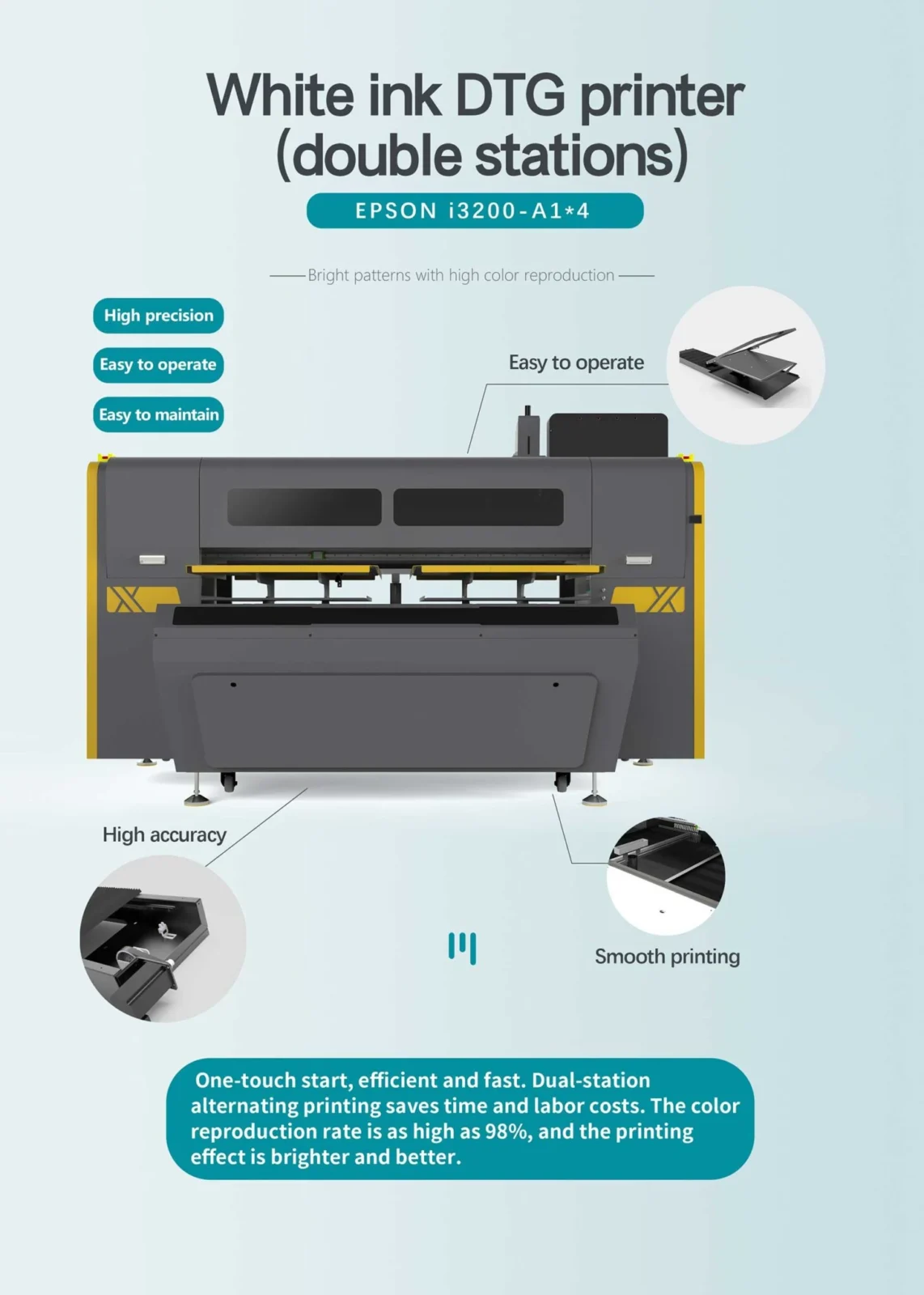
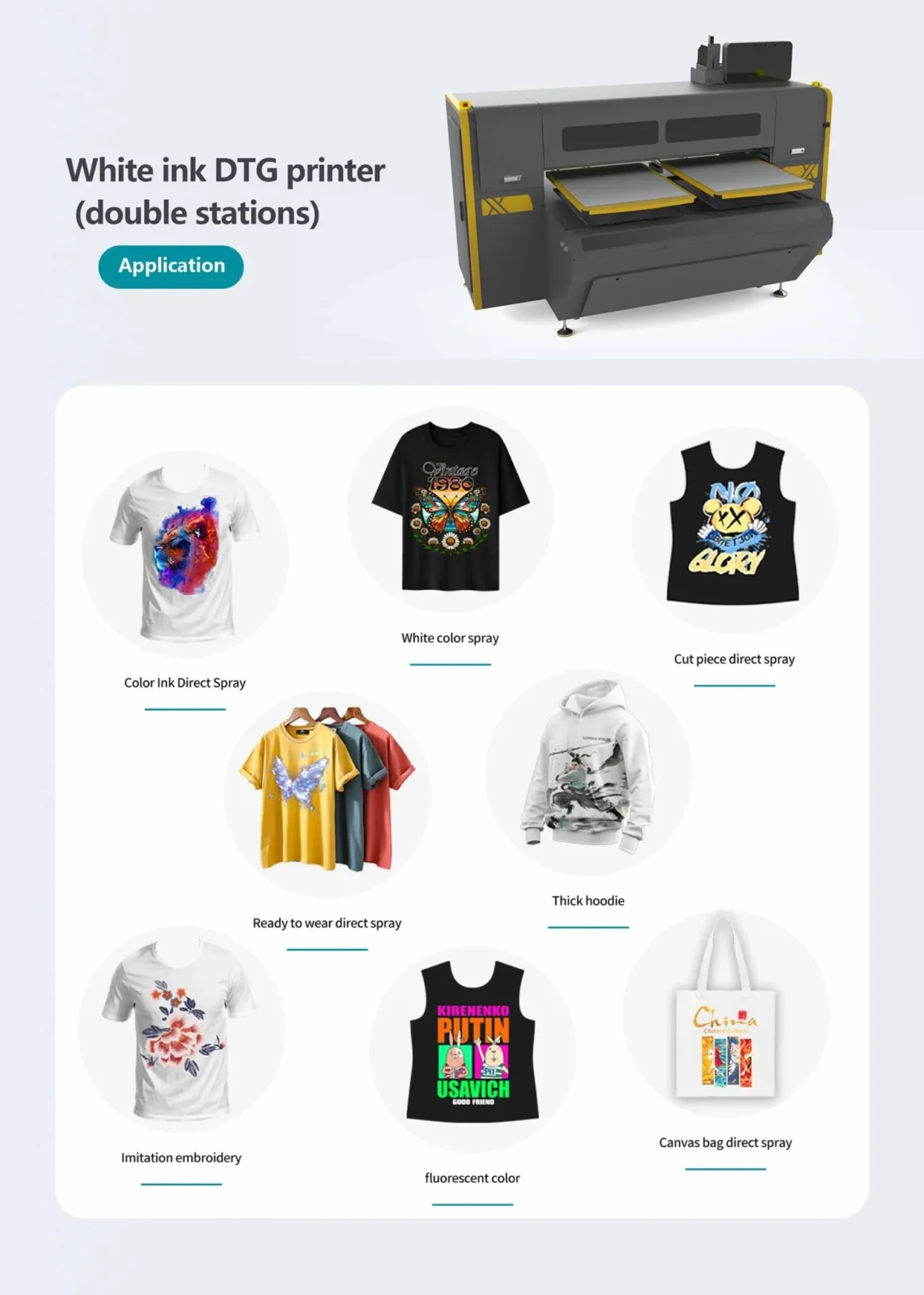
This is the newer grey-and-yellow cabinet version, with two garment platens and an enclosed printing carriage. Alternating loading positions let an operator prepare the next garment while following the machine’s printing sequence. The flat garment surface and consistent platen loading help keep the print position repeatable across a batch.
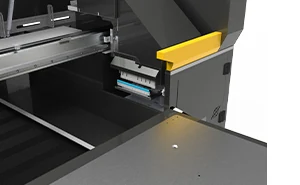
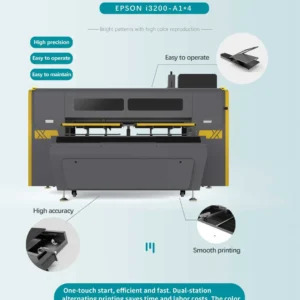
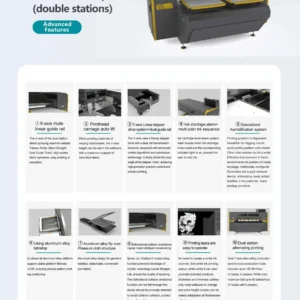
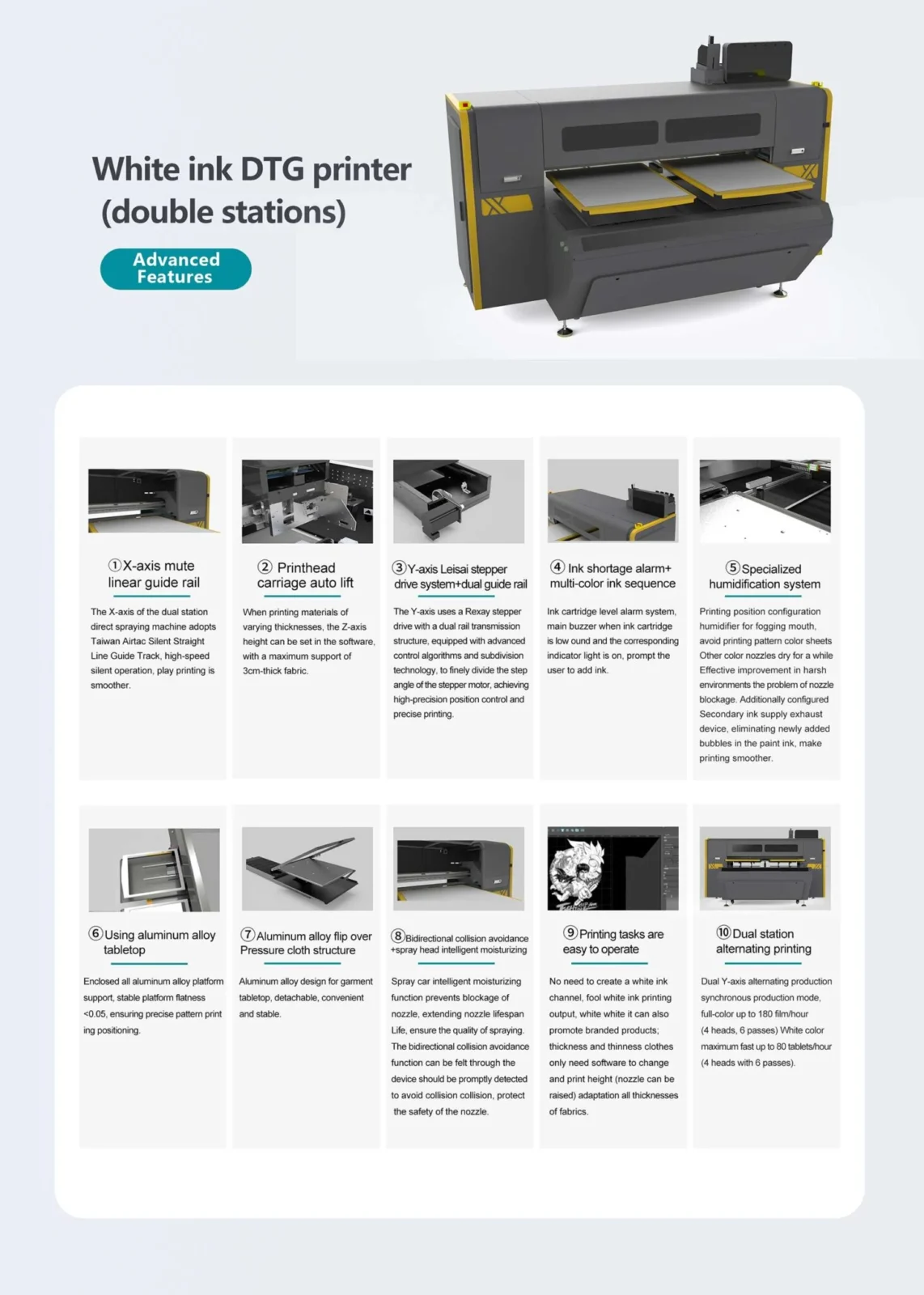
The manufacturer illustrates aluminium platens, garment clamps, an ink-level alarm and carriage height adjustment for this platform.
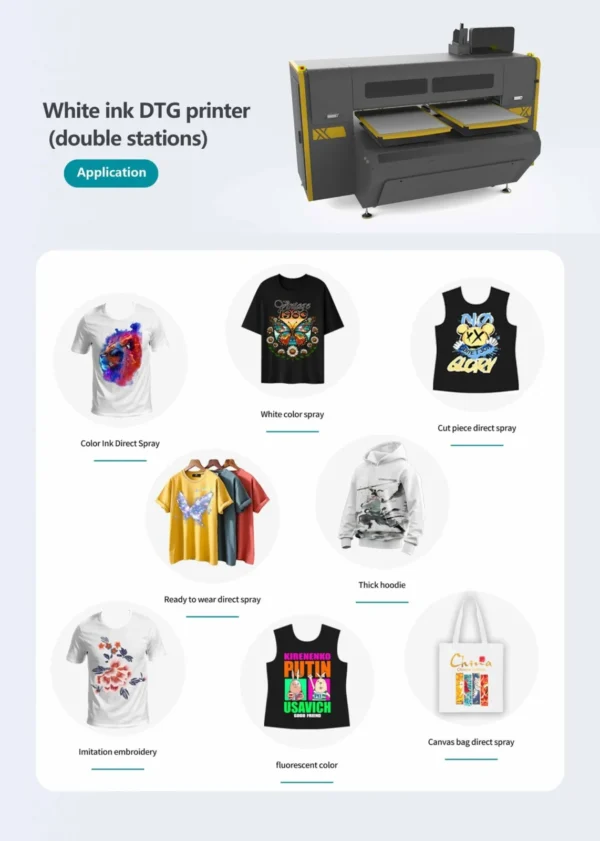
The DTG Printer applies pigment ink directly to prepared garments. Cotton and cotton-rich textiles are the main application described by HJD. Pretreatment, white-underbase settings and heat fixation work together: the printed image is only one stage of producing a finished garment. Fabric composition, pretreatment chemistry and the curing equipment determine the appropriate production recipe.
| Machine version | HJD grey-and-yellow dual-station cabinet |
|---|---|
| Loading arrangement | Two flat garment platen positions |
| Application | Direct garment printing on cotton and cotton-rich textiles |
| Factory-listed features | Ink-level alarm, garment clamps and adjustable carriage height |
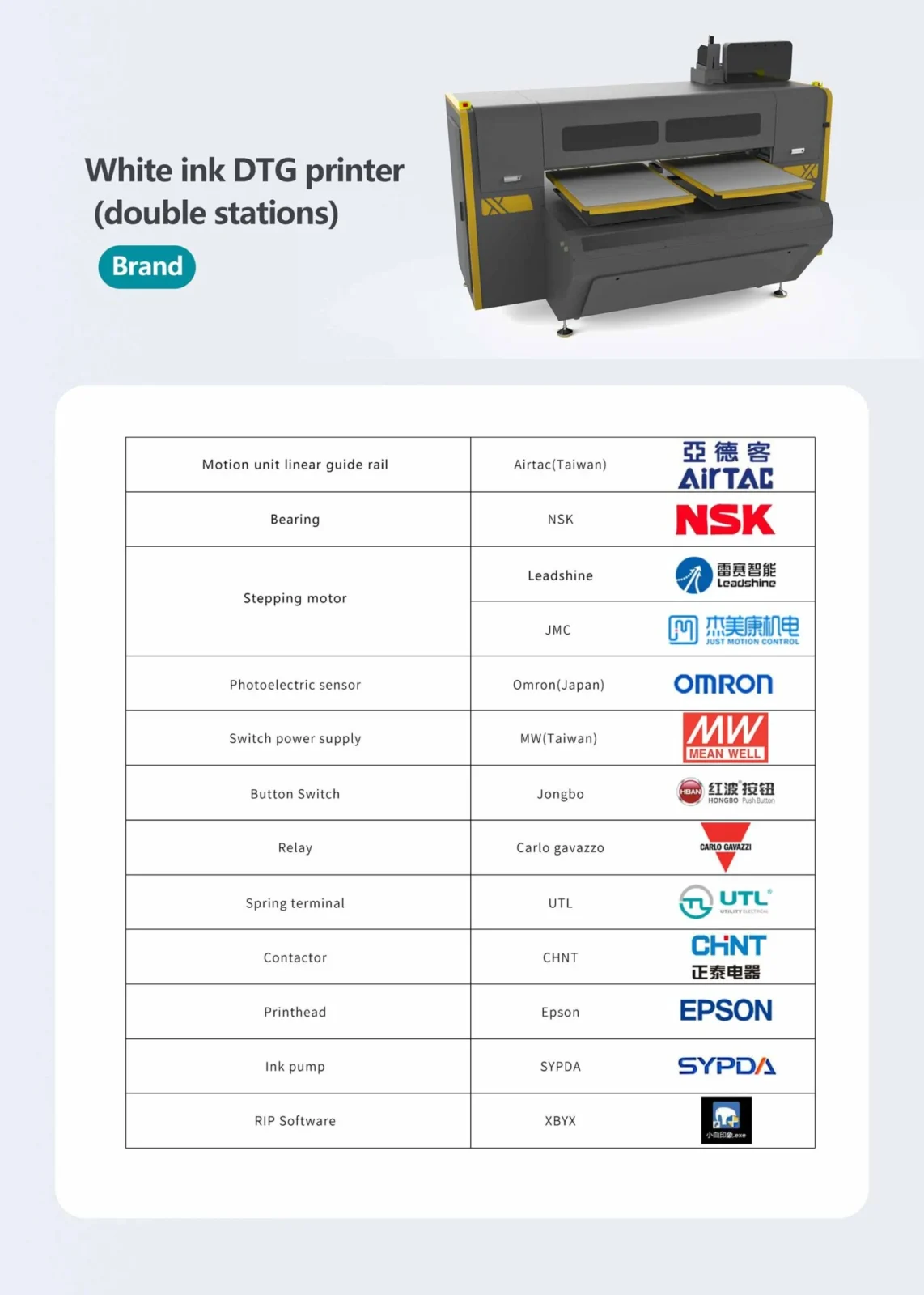
Head configuration, platen dimensions and software are configuration-dependent within the HJD range; this page does not treat optional factory configurations as included accessories.
Production quality is a complete workflow
Assess a machine with representative artwork and the materials used for the intended jobs. Media transport, ink condition, software settings and the downstream process affect usable output. Head count or nominal media width alone does not establish a guaranteed production speed.
Daily use and practical checks
When working with DTG Printer, keep garment placement repeatable between platens. A production rhythm is useful only when print position, surface height and treatment stay consistent.
Operating the equipment consistently
For DTG Printer, keep the supplied maintenance schedule, service access and work area in the daily routine. Record stable settings for each material combination. Use the machine documentation for electrical requirements, ventilation and installation rather than transferring values from a different model.
Building the production workflow around the machine
A printer or processing unit delivers its best practical value when the stages around it are planned together. Artwork preparation, material loading, printing, curing or transfer, and finished-output inspection each take time. The configuration described above establishes the role of this machine in that sequence. Nominal width, head count or platen arrangement are useful specifications, but they do not alone describe completed daily output.
Build the workflow around the actual jobs being produced, including the size of the designs, material changes and the time needed for setup and routine care between batches.

Artwork, output modes and usable quality
Use representative files when establishing an operating baseline. Fine text, solid coverage, gradients and open spaces reveal different aspects of output quality. The selected software mode affects how the machine handles the file and how long the job takes. Save the preset once an acceptable result has been established and retain the approved sample alongside it.
A demonstration file with sparse artwork is not a complete reference for a dense production design. For repeat work, keep the artwork version and intended finished dimensions clear so a later software or layout change does not become an unnoticed production difference.
Media handling and the working area
Material should enter the working zone in the position and condition required by the machine. Roll-fed equipment needs a supported path with consistent alignment, while a platen arrangement needs flat loading and suitable clearance around the item. Keep the operator's loading area, output area and maintenance access practical.
A machine that is awkward to load or clean can lose useful production time even when its printing stage is fast. Plan where consumables and finished work will be held so they remain protected from dust, accidental contact and unnecessary movement through the workshop.
Commissioning and establishing stable settings
Installation is the point at which the supplied configuration, materials and operating instructions should be brought together. Use the machine documentation for electrical requirements, service clearances, ventilation and any auxiliary equipment. Establish a stable baseline before trying to optimise throughput. Confirm the relevant checks for the machine, such as media tracking, nozzle condition, alignment, temperature control or consistent contact.
Record those results along with the working recipe. If a setting is later changed, retain the previous value and sample so the effect can be evaluated rather than relying on memory of how a job looked before the adjustment.
Maintenance as part of normal production
Routine care protects consistency and should have a place in the daily schedule. Clean the specified areas, maintain the relevant fluid or media systems and monitor the components identified in the supplied service instructions. Keep a simple log of maintenance, material changes and unusual observations. A recurring defect is easier to investigate when its timing can be compared with an ink change, cleaning event or new media batch.
Use the correct service method and consumables for the installed technology. Procedures intended for an aqueous garment-transfer printer, a sublimation machine and a UV system should remain distinct.
Assessing capacity with meaningful evidence
The useful capacity measure is accepted finished work in the quality mode required by the business. Include setup, handling, maintenance and the downstream process when estimating that capacity. Compare samples using the same artwork dimensions and acceptance standard. Record rejected output as well as successful output so a faster setting is not mistaken for a better production result.
When the workflow is stable, keep the configuration and approved process documented for other operators. This creates a realistic basis for repeat orders, material planning and support, while avoiding unsupported promises about output speed, unattended operation or compatibility with every application.
Recommended Add-ons from DTFShop
To complete the workflow, you may also check these related DTFShop products when they match your machine or printing process:
Product video guides
DTG workflow
Dual-Platen DTG Printer | Quick T-Shirt Printing Demo
Hybrid dual-platen DTG demonstration.
Source: ProlificGeeks
Watch on YouTubeReference videos explain a method or related model. They do not certify your supplied machine, consumable batch or print results. Follow the exact product manual and recommended settings.
Practical questions
What is a useful production demonstration?
Use artwork and materials similar to the jobs you intend to sell. Inspect finished output, setup time and the downstream processing stage. Head count or nominal width alone does not establish usable production speed at your required quality.
What should the operator save for repeat jobs?
Keep the artwork version, print preset, material identity and approved finished sample together. Record routine maintenance and any setup changes. A known reference job helps distinguish a file change from a transport, ink or calibration problem.
Additional information
| Weight | 500 kg |
|---|---|
| Dimensions | 180 × 80 × 90 cm |


Reviews
There are no reviews yet.