DTFShop benefitSave up to 12.6%
Includes eligible prepaid saving before GST/fees
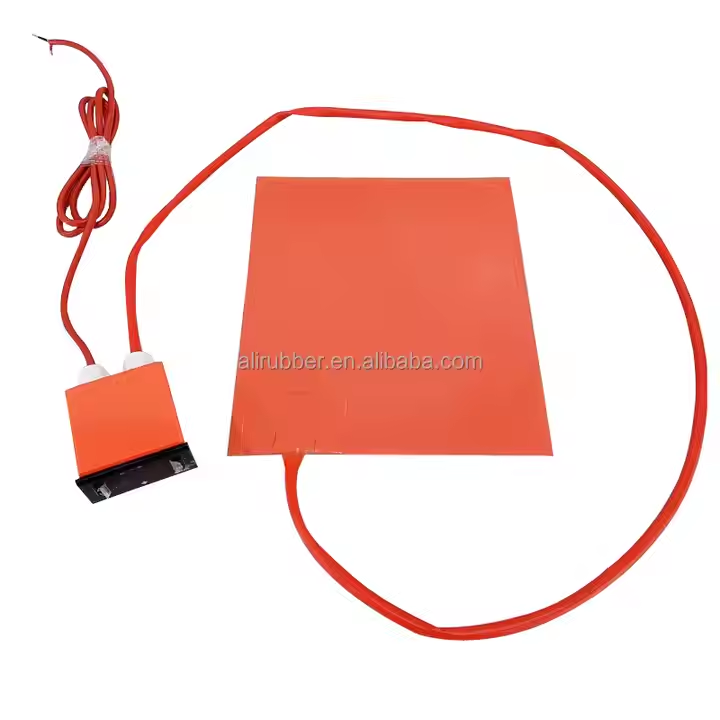
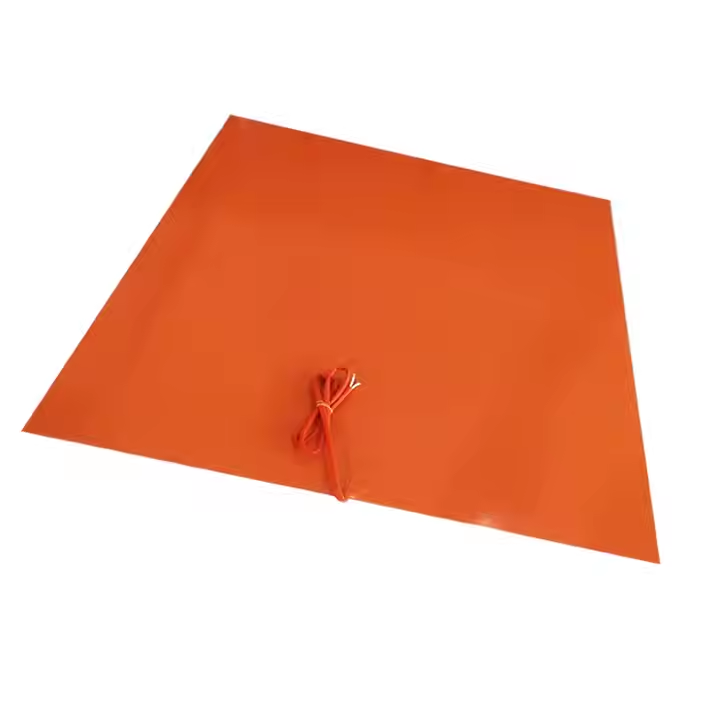
DTF Heat Mat is a 13×19-inch heat-press mat or pad. A pad forms part of the pressing surface and helps support the transfer area.
DTF Heat Mat is a 13×19-inch heat-press mat or pad. A pad forms part of the pressing surface and helps support the transfer area. It is a physical accessory, not an adhesive powder, printer or complete heat press.
What you receive for the listed price
One DTF Heat Mat Sheet 13×19 Inch India in the selected configuration.
This price is for one piece; a complete printer, ink supply and unrelated assemblies are separate.
Applicable taxes and shipping, where relevant, are shown at checkout. Gallery guides and demonstration equipment explain use; they are not additional supplied items.
Availability: 2 in stockSKU: PG-DTF-HM-13X19-STD01Category: DTF Accessories
GST invoice available / Shipping calculated at checkout / Product support
Smart Online SavingsYour order cost, explained
Compare automated website ordering—including COD, card/digital payments, rewards and coupons—with a manual/offline order.
Order on DTFShop.inRecommended
Product value₹8,500.00
Prepaid discount (7.5%)−₹637.50
Website shippingCalculated by weight at checkout
GST (18%)+₹1,415.25
Estimated platform fee (2.36% of total)+₹224.25
Estimated prepaid subtotal₹9,502.00
Weight-based shipping will be added at checkout
Online purchase rewardsEarn and use eligible rewards
Purchase + email couponsGet eligible coupon offers and free promotional coupons by email
✓ Order online anytime, from anywhere✓ Choose COD where available✓ Pay securely by credit card or available digital payment methods✓ Immediate digital payment proof and automatic order confirmation✓ GST invoice available without manual follow-up✓ Automatic tracking and WhatsApp order updates✓ Earn rewards on eligible completed online purchases✓ Receive eligible purchase coupons and free promotional coupons by email
Manual / Offline Order
Product value₹8,500.00
Manual / offline shippingCalculated by actual weight and location
GST (18%)+₹1,530.00
Prepaid website discount₹0
Website rewards / coupon₹0
Estimated manual order subtotal₹10,030.00
Actual weight/location-based courier charge is extra
• Payment coordinated manually through WhatsApp/bank transfer• Confirmation and invoice may require manual processing• Courier charged on the actual/manual booking basis• Shipment timing and updates are coordinated manually
Estimated saving by ordering prepaid on DTFShop.in₹528.00
before weight-based shipping and any additional eligible rewards or coupon saving
How this estimate works:
Website example uses the 7.5% prepaid discount only when the eligible value is ₹10,000 or below, plus GST 18% and an estimated non-EMI platform fee equal to 2.36% of the subtotal including that fee. Shipping, coupons and final taxes are confirmed at checkout.
Website and manual/offline shipping are excluded from these subtotals because courier charges are calculated from actual weight, dimensions and delivery location.
Final checkout or confirmed manual quotation is authoritative and can change with shipping, coupon, rewards, variation and payment method.
Frequently bought together
Complete your setup
Useful add-ons commonly paired with this product. Choose only what you need.
DTF Heat Mat is a 13×19-inch heat-press mat or pad. A pad forms part of the pressing surface and helps support the transfer area. It is a physical accessory, not an adhesive powder, printer or complete heat press.
What you receive for the listed price
One DTF Heat Mat Sheet 13×19 Inch India in the selected configuration.
This price is for one piece; a complete printer, ink supply and unrelated assemblies are separate.
Applicable taxes and shipping, where relevant, are shown at checkout. Gallery guides and demonstration equipment explain use; they are not additional supplied items.
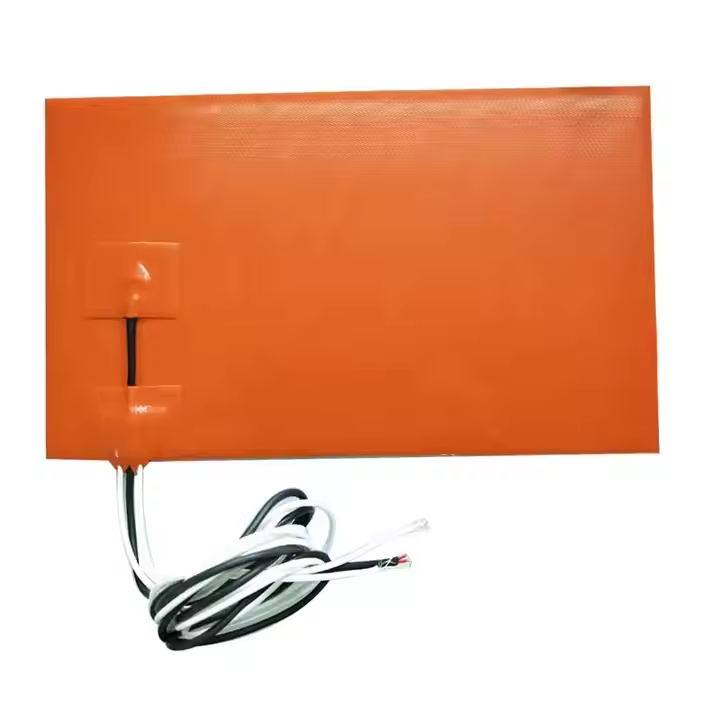
Product view sheet 13×19 inch India for uniform heat press transfer.
A stable support beneath the transfer
A heat-press pad supports the garment beneath the design and contributes to the way pressure is distributed. Surface flatness and the condition of the pad affect contact across the transfer. Deep marks or hardened deposits can leave uneven support beneath otherwise flat artwork.
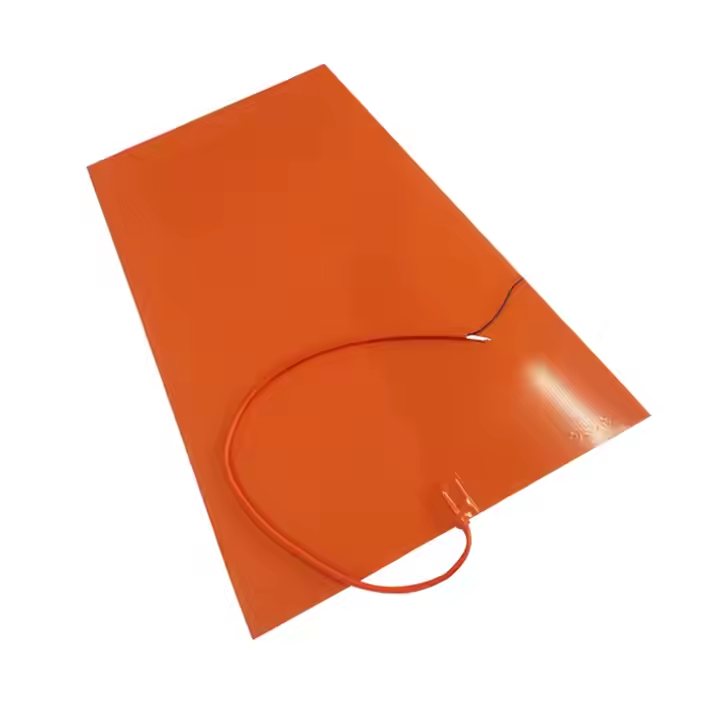
Product view Sheet 13×19 Inch India.
Daily use and practical checks
When working with DTF Heat Mat, keep the pad surface flat and free from hardened residue. Local thickness differences can change pressure across a design and affect transfer consistency.
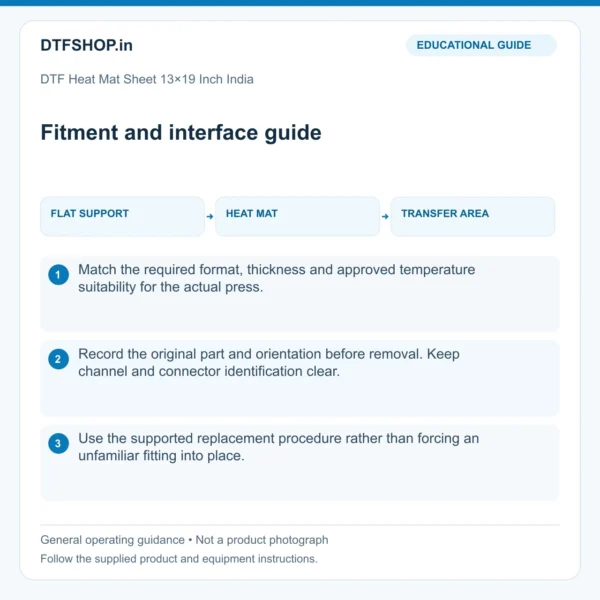
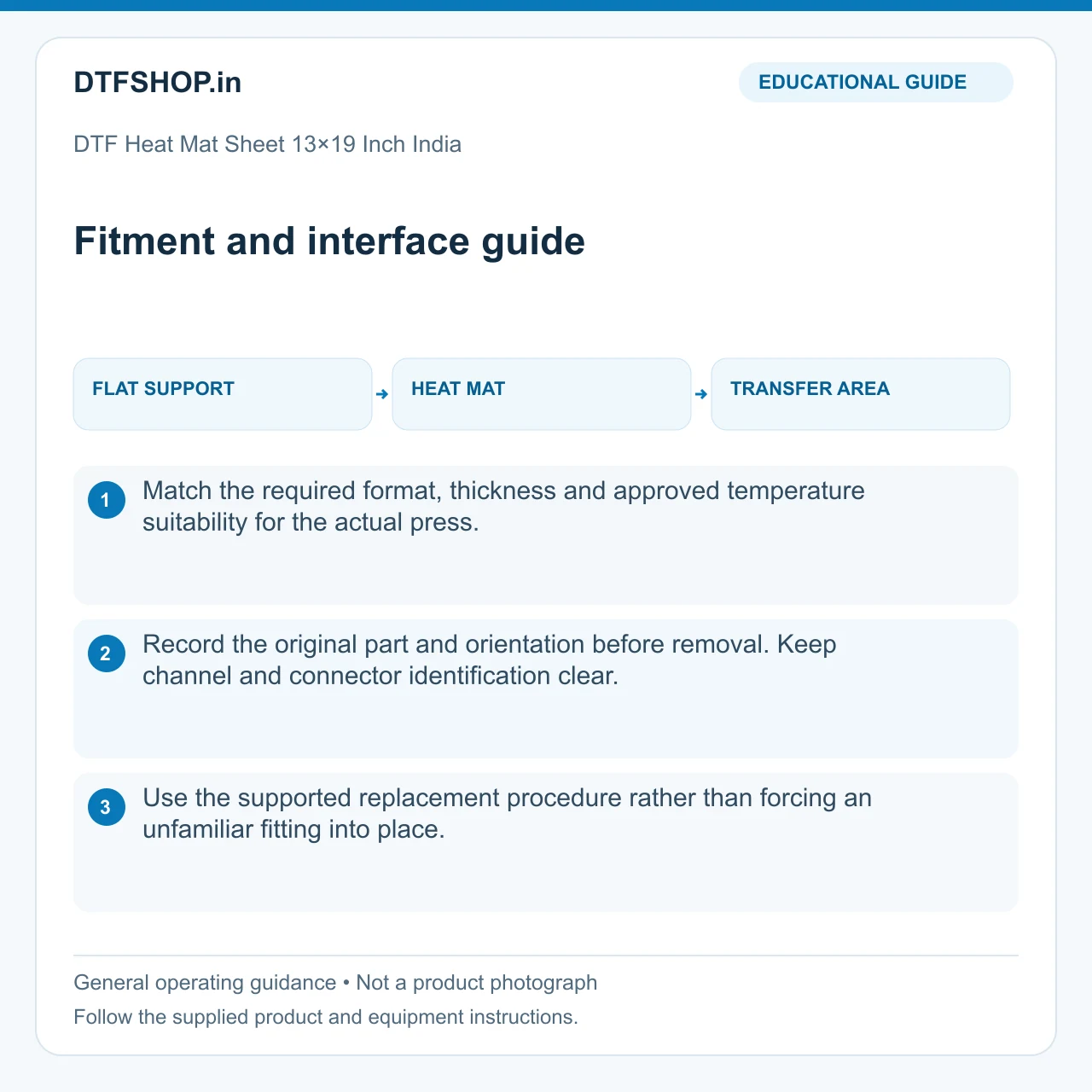
Illustrated guide: fitment and interface guide. Educational illustration, not a product photograph.
Caring for the pressing surface
For DTF Heat Mat, keep the pad aligned with the pressing area and remove loose debris before loading the next garment. Use protective materials suitable for the transfer process. Time, temperature and pressure settings come from the transfer and substrate combination, rather than from the pad dimensions alone.
Product view Sheet 13×19 Inch India.
Where heat pressing fits into production
A heat press brings the transfer and substrate into controlled contact for the process specified by the transfer material. Its platen size describes the available working format, while the actual usable area depends on loading and the shape of the item. Flat garment work, curved blanks and multi-attachment applications have different contact requirements.
The configuration described above identifies this item's role in that arrangement. A consistent press stage helps preserve the work already completed during artwork preparation, printing and curing. It is therefore worth treating garment placement and pressing discipline as production steps in their own right.
Understanding time, temperature and pressure
These three process settings work together, but one cannot reliably compensate for every error in another. Insufficient contact across part of a design can cause a local problem even when the displayed temperature is correct. An unsuitable dwell time can also affect the substrate or transfer.
Use the transfer and blank supplier's process guidance as the starting point and adjust only through a controlled sample procedure. Different film, powder, fabric and coated-blank combinations may require different recipes. Keep those recipes separate instead of applying one familiar setting to every material that enters the workshop.
Product view Sheet 13×19 Inch India.
Loading the garment or blank evenly
Lay the item so the intended transfer area has stable support and lies naturally against the pressing surface. Seams, collars, buttons, zips and bulky edges can divert pressure away from the design. Use the appropriate platen, pad or attachment for the job and avoid pulling the material out of shape during positioning.
Check the artwork location before closing the press. A consistent placement reference helps repeat orders look uniform and reduces rework. On large designs, pay attention to the edges and corners as well as the centre, because a small test logo may not reveal a full-area contact difference.
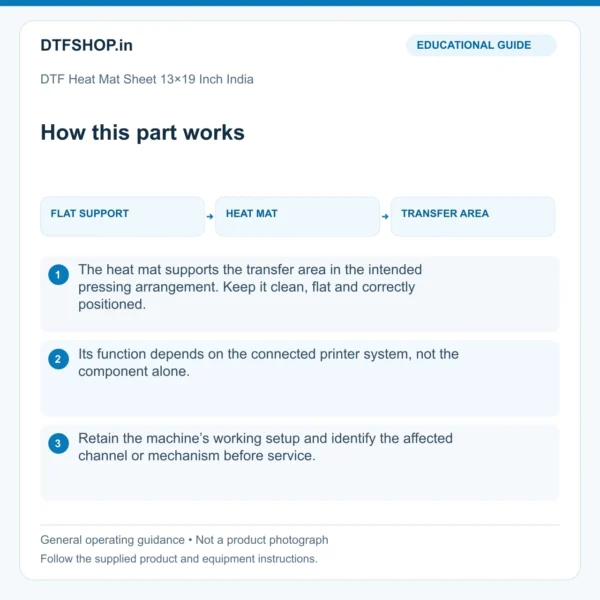
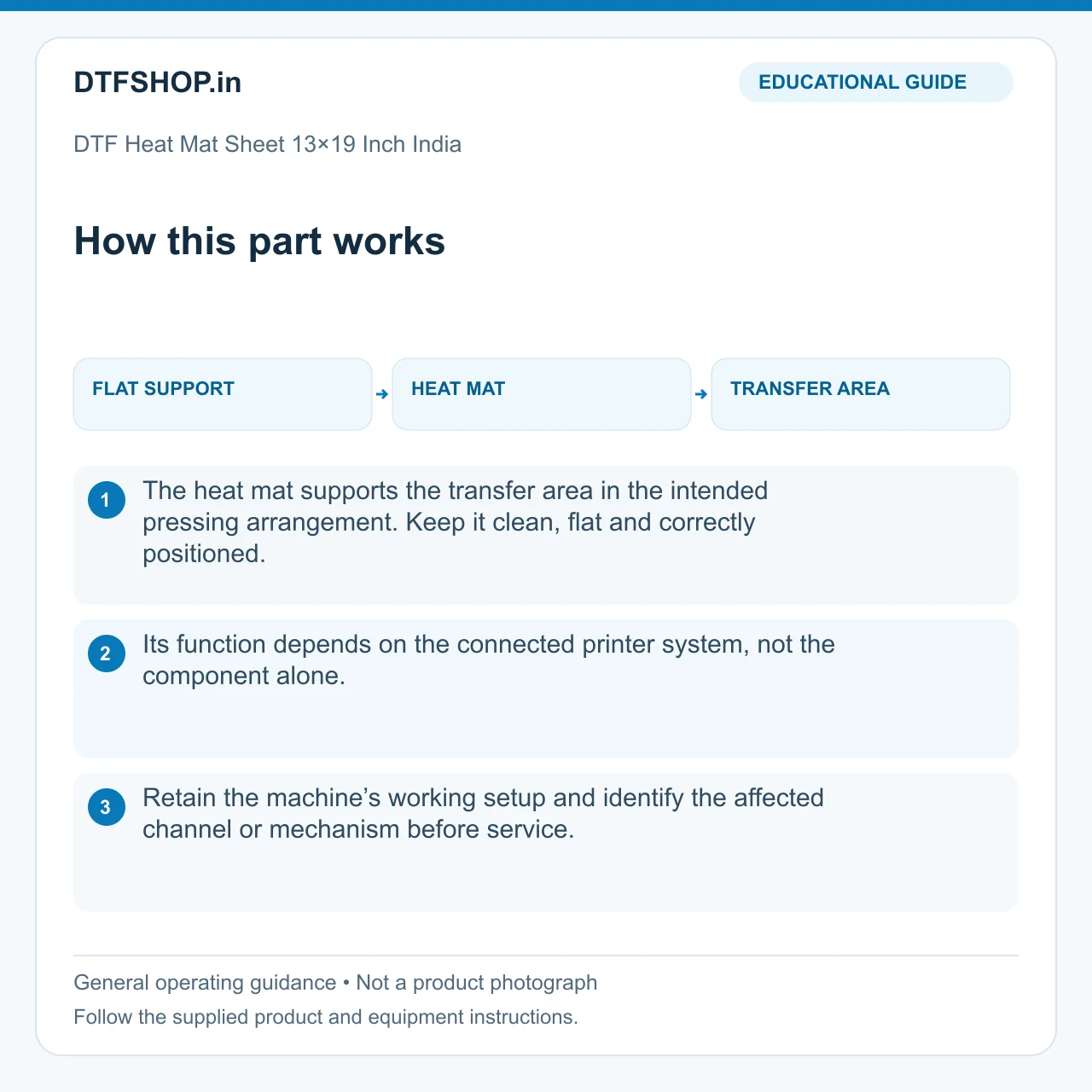
Illustrated guide: how this part works. Educational illustration, not a product photograph.Illustrated guide: finding the cause of a fault. Educational illustration, not a product photograph.
Transfer handling and release sequence
The film or paper supplier's application sequence remains important after the press opens. Some materials require a specific cooling stage, release method or finishing operation. Keep the carrier stable until that stage is reached and remove it in the intended manner. A protective sheet should be suitable for the process and kept clean between jobs.
Hardened residue or debris on the pressing surface can affect appearance and contact on the next item. Evaluate the finished sample after its normal handling stage, rather than deciding that the transfer is successful simply because it looks flat immediately after pressing.
Setting up the equipment responsibly
Use the machine instructions for installation, electrical supply, clearances and safe operating practice. Pneumatic equipment also needs its specified air arrangement and service procedure. Keep the closing area clear, organise loading so hands do not enter a moving mechanism, and retain the supplied safety features. Pads and accessories should be positioned as intended and inspected for damage or permanent distortion.
The temperature display is a control reference; the appropriate equipment checks establish whether the press is behaving consistently. Any service involving electrical controls, heating circuits or pneumatic assemblies belongs with a suitably experienced technician.
Keeping repeat transfers consistent
Retain one accepted sample together with the transfer identity, substrate and pressing recipe. Include placement notes and the attachment or pad used, especially where several operators share the equipment. If a defect appears, separate contact problems from material, printing or curing problems before changing every setting.
Check the same representative design again after an adjustment. For an adhesion or durability assessment, use the appropriate finished-product procedure and allow the specified handling time. This provides a practical basis for production confidence: a repeatable result from the complete process, rather than a universal temperature claim or an assumption based only on platen size.
Recommended Add-ons from DTFShop
To complete the workflow, you may also check these related DTFShop products when they match your machine or printing process:
An exact-product installation and quality-test video is being verified. Unrelated demonstrations have been removed.
Practical questions
Does replacing this part fix every printing fault?
No. Use the original symptom and the component’s function to guide diagnosis. Ink starvation, a poor cap seal, damaged wiring and a failed nozzle can create similar output problems. Compare the normal service checks before and after replacement so a different fault is not mistaken for a defective new part.
What should I record after fitting?
Keep the part identity, installation date and the result of the machine’s normal service test. Note any change to connections, routing or alignment. A short record makes repeat maintenance easier and helps identify a fault that returns elsewhere in the system.
Additional information
Weight
1.5 kg
Dimensions
80 × 55 × 45 cm
4 reviews for DTF Heat Mat Sheet 13×19 Inch India – Reliable Heat Press Pad
4 out of 5
Vikram Singh–
Excellent build quality. Solved our production bottleneck instantly. Highly recommended for commercial print environments. Static handling is excellent and peel properties remain crisp.
5 out of 5
Deepak Chawla–
Outstanding performance! Drastically lowered our maintenance overhead and printhead clogging issues. Static handling is excellent and peel properties remain crisp.
5 out of 5
Shreekanth–
Excellent heat mat! The size is ideal for my 16×20 heat press. It protects garments from overheating and ensures better print results
5 out of 5
Neha Gupta–
Outstanding performance! Drastically lowered our maintenance overhead and printhead clogging issues. Static handling is excellent and peel properties remain crisp.









Vikram Singh –
Excellent build quality. Solved our production bottleneck instantly. Highly recommended for commercial print environments. Static handling is excellent and peel properties remain crisp.
Deepak Chawla –
Outstanding performance! Drastically lowered our maintenance overhead and printhead clogging issues. Static handling is excellent and peel properties remain crisp.
Shreekanth –
Excellent heat mat! The size is ideal for my 16×20 heat press. It protects garments from overheating and ensures better print results
Neha Gupta –
Outstanding performance! Drastically lowered our maintenance overhead and printhead clogging issues. Static handling is excellent and peel properties remain crisp.