DTF Capping Solution — Function and Application
DTF Capping Solution is a wet-capping maintenance fluid supplied in the 100 ml pack. Wet capping keeps the parked nozzle area in contact with an appropriate maintenance fluid during an approved service routine. It is different from filling an ink tank with cleaning liquid.
Chemistry and controlled maintenance
A maintenance fluid or kit should be matched to the installed ink chemistry and service method. Cleaning can address ink residue, but it cannot repair an electrical failure or physical nozzle damage. Different fluids should not be mixed merely because both are described as printer cleaners.
DTF Capping Solution in Daily Use
When working with DTF Capping Solution, the cap must seal evenly against the head. A dried, distorted or leaking cap can defeat a wet-capping procedure even when the liquid itself is suitable.
Handling the maintenance process
For DTF Capping Solution, keep tools clean and labelled, and follow the fluid safety data and machine service instructions. Avoid uncontrolled pressure toward the printhead. After maintenance, assess the nozzle pattern and ink supply before deciding whether another cleaning cycle is appropriate.
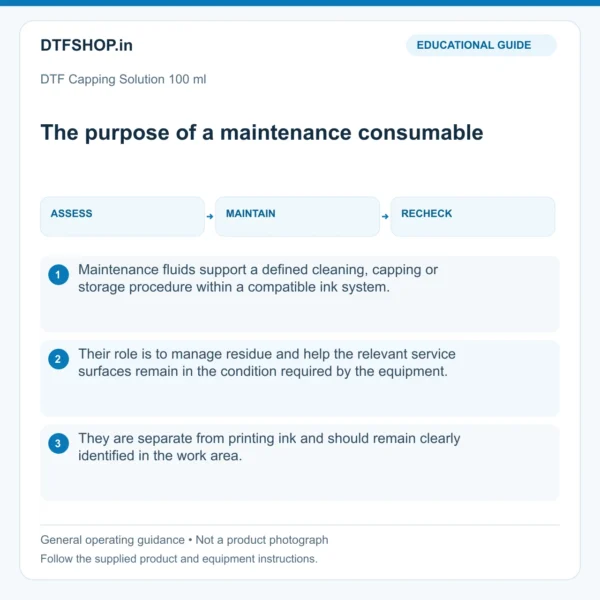
The purpose of a maintenance consumable
Maintenance fluids support a defined cleaning, capping or storage procedure within a compatible ink system. Their role is to manage residue and help the relevant service surfaces remain in the condition required by the equipment. They are separate from printing ink and should remain clearly identified in the work area. The particular purpose described above is the starting point for using this item correctly. A clear liquid, coloured liquid or familiar bottle shape does not identify the underlying chemistry. Matching the fluid to the installed ink and machine procedure is more useful than treating every printer cleaner as interchangeable.
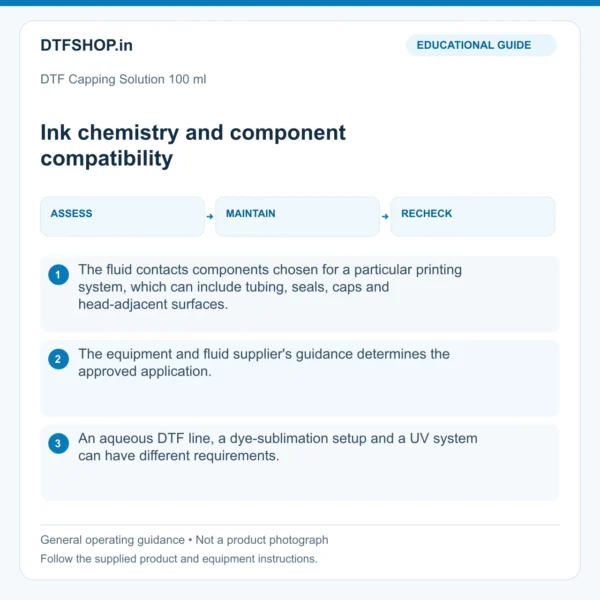
Ink chemistry and component compatibility
The fluid contacts components chosen for a particular printing system, which can include tubing, seals, caps and head-adjacent surfaces. The equipment and fluid supplier's guidance determines the approved application. An aqueous DTF line, a dye-sublimation setup and a UV system can have different requirements. Keep their service materials separate. Mixing maintenance products or using an improvised substitute can make the result unpredictable and complicate later diagnosis. Read the label and supplied handling information, including any safety data, before starting. The correct consumable is one part of the service method; the amount, contact time and application route matter too.
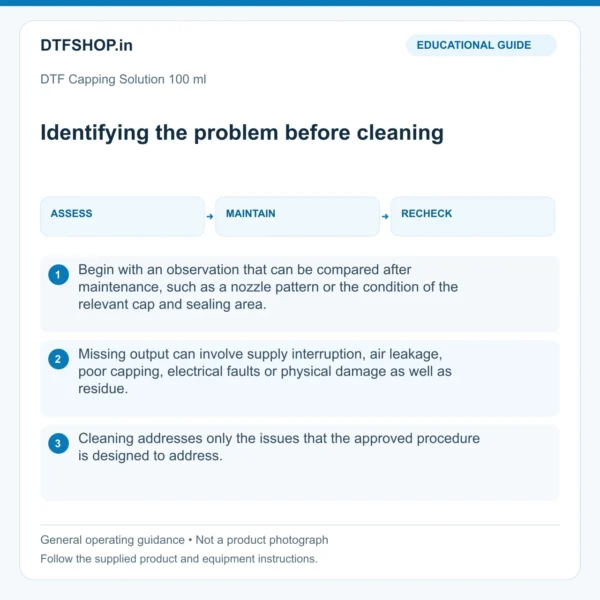
Identifying the problem before cleaning
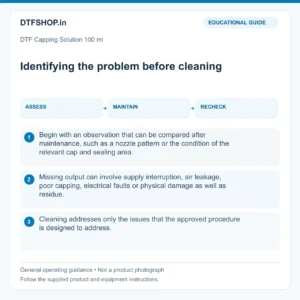
Begin with an observation that can be compared after maintenance, such as a nozzle pattern or the condition of the relevant cap and sealing area. Missing output can involve supply interruption, air leakage, poor capping, electrical faults or physical damage as well as residue. Cleaning addresses only the issues that the approved procedure is designed to address. Record the starting condition and avoid a long sequence of unmeasured cleaning attempts. If the symptom does not respond as expected, review the diagnosis and the surrounding system. A maintenance liquid is useful when it is applied to the right problem through the intended method.
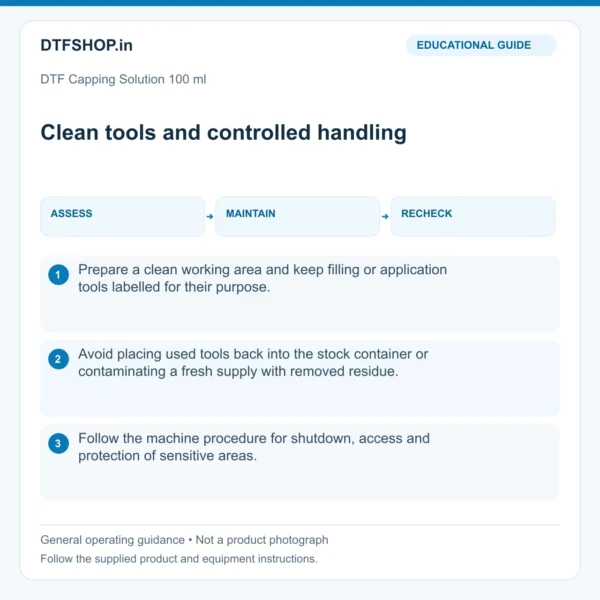
Clean tools and controlled handling
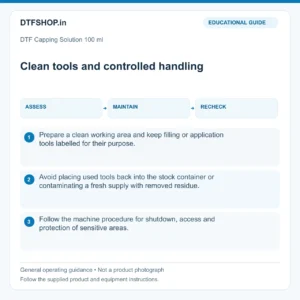
Prepare a clean working area and keep filling or application tools labelled for their purpose. Avoid placing used tools back into the stock container or contaminating a fresh supply with removed residue. Follow the machine procedure for shutdown, access and protection of sensitive areas. Keep liquid away from electrical connections and use suitable handling precautions from the product information. Head-adjacent work needs particular care because an improvised pressure or aggressive application can create damage. Use the required service tool and sequence rather than treating more liquid or more force as evidence of a more thorough maintenance operation.
Capping, idle periods and restart routines
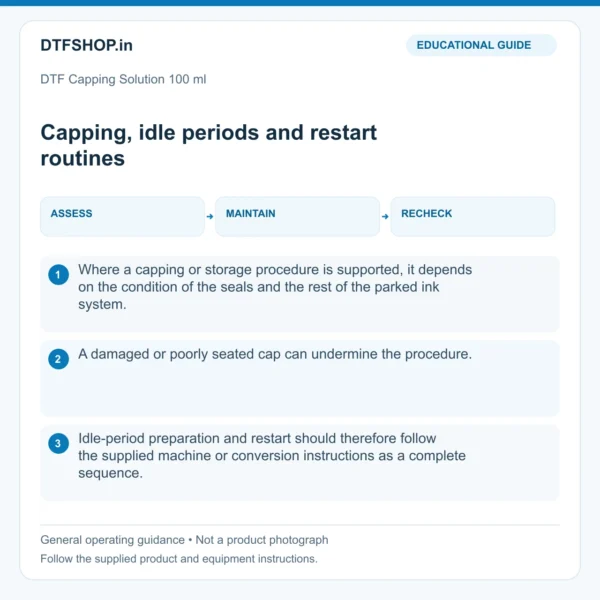
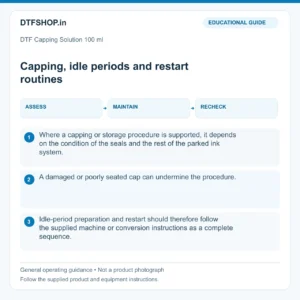
Where a capping or storage procedure is supported, it depends on the condition of the seals and the rest of the parked ink system. A damaged or poorly seated cap can undermine the procedure. Idle-period preparation and restart should therefore follow the supplied machine or conversion instructions as a complete sequence. Label the service record with the fluid used and the date. A bottle of maintenance liquid by itself does not establish that a printer can be left unattended for an unlimited period. The relevant components, environment and restart checks remain part of a sensible planned shutdown.
Assessing the outcome and storing the supply
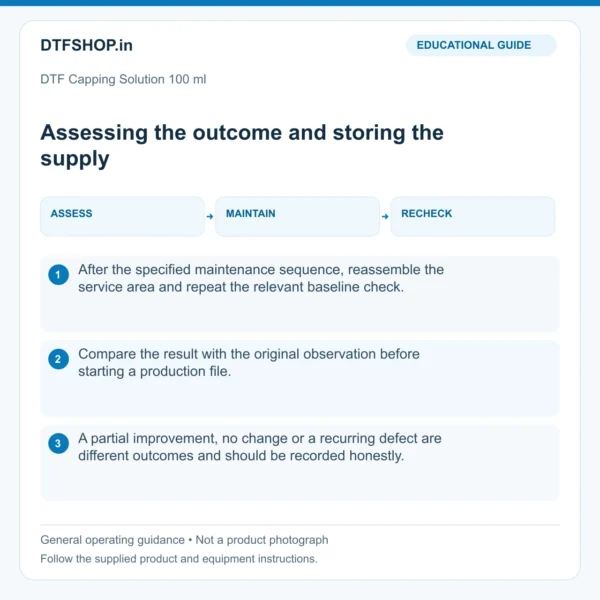
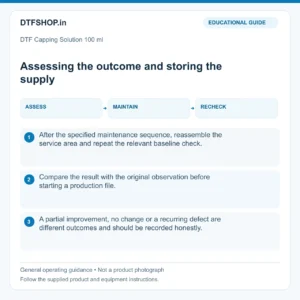
After the specified maintenance sequence, reassemble the service area and repeat the relevant baseline check. Compare the result with the original observation before starting a production file. A partial improvement, no change or a recurring defect are different outcomes and should be recorded honestly. Keep unused fluid in its original identified container, closed and stored according to its supplied instructions. Keep it separate from ink filling supplies and incompatible chemicals. An orderly maintenance record supports repeatable care and useful technical support, while avoiding unsupported promises that a fluid can repair every blocked head or restore a physically damaged component.
Recommended Add-ons from DTFShop
To complete the workflow, you may also check these related DTFShop products when they match your machine or printing process:




Amit Deshmukh –
Highly reliable for long print jobs. Kept my dual printheads wet and clear over a holiday weekend without issues.
Sudha Wagley –
Excellent consistency! Solved our long-standing ink flow capping maintenance issues completely.
Deepak Patel –
Decent performance for everyday maintenance. Packaging could have been a bit better to avoid minor transit scuffs.